896 results for: Performing Arts
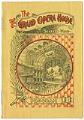
Program
Grand Opera House program, Seattle, 1902
Seattle’s Grand Opera House, at 213-217 Cherry Street, was designed by Edwin H. Houghton, a prominent Pacific Northwest theater designer. Owned by John Cort, the theater stood at the northern end of Seattle’s entertainment district. It was the city’s most important live theater when built, but its popularity declined as the city expanded northwards. It became a movie theater, and…
ID Number:1978.6598.15
Date:1902
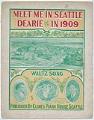
Music, notated
Meet Me in Seattle Dearie in 1909
Seattle held its first world’s fair, the Alaska-Yukon-Pacific Exposition (AYPE) in 1909. The fair promoted the region’s growth and prosperity that had begun with the 1897 arrival of the first shipment of Yukon gold. “Meet Me in Seattle Dearie in 1909," described as a waltz song, was but one of the songs written at the time to promote the AYPE.Harry…
ID Number:1978.6619.1
Date:1909
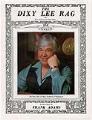
Music, notated
Dixy Lee Rag, 1980
Tacoma-born Dixy Lee Ray (1914-1994) held many prestigious posts in Washington State: first woman on the Atomic Energy Commission, director of the Pacific Science Center, and longtime University of Washington professor. A political novice, Ms. Ray served as Washington's first female governor from 1977-1981, gaining popularity as an outsider and a non-politician. Her blunt style won her as many enemies…
ID Number:1979.6775.12a
Date:1980
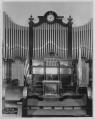
Photograph
Pipe organ with clock at the Elks Club, Seattle, circa 1914
Jos. Mayer and Bros. began in 1897 in Seattle and manufactured many clocks during the first two decades of the 1900s. This clock is part of a pipe organ stand at the Elks Club in Seattle, Washington. The organ was built by the W.W. Kimball Co. of Chicago in 1914 and was located on the seventh floor of the Elks…
ID Number:1980.6877.5.77
Date:Circa 1914
Photograph
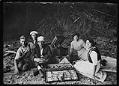
Group listening to wax cylinder recordings on Ballard Beach, Seattle, circa 1913
Carl Henry Moen was born in Seattle in 1892 to Norwegian immigrant parents. His family moved several times as he was growing up, but settled in Ballard when he was nine years old. He helped harvest and sell the produce, milk, and poultry his family raised, and also was a messenger for Western Union, dug clams, and worked for Bemis…
ID Number:1980.6880.317
Date:Circa 1913
Photograph
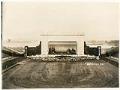
Rehearsal of "The Wayfarer" at Husky Stadium, Seattle, July 1921
In 1921, the Seattle Times organized the "Midsummer Fete," a week-long festival in July that included fireworks displays, dances, a parade of 7,000 members of Elks Lodges, and races between sailors of the U. S. Pacific Fleet, who were anchored in Elliott Bay for the event. In addition, a massive staging was presented of "The Wayfarer," a religious work combining…
ID Number:1980.7005.5
Date:1923
Photograph
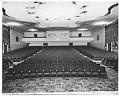
Admiral Theater interior, Seattle, circa 1945
The Admiral Theater in West Seattle opened January 22, 1942. This undated photo shows the interior of the theater, which was decorated in a nautical theme. Fluorescent murals showed undersea life and the ceiling was painted with signs of the zodiac. The movie theater had 1000 seats, which were equipped with a new push-back feature that allowed moviegoers to let…
ID Number:1980.7021.1.3
Date:Circa 1945
Photograph
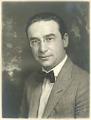
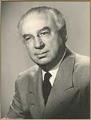
Portrait of B. Marcus Priteca, circa 1916
Scottish-born architect and designer Benjamin Marcus Priteca (1889-1971) arrived in Seattle around 1909. From 1910 to 1929, he worked exclusively for vaudeville magnate Alexander Pantages (1876-1936), designing more than 150 theaters, including Seattle's Coliseum, Orpheum, Paramount, and Admiral Theatres. Priteca also lent his design expertise to several synagogues, Longacres Racetrack, and Seattle Center Opera House. Priteca was named a fellow…
ID Number:1980.7021.62.1
Date:Circa 1916
Photograph
Portrait of B. Marcus Priteca, circa 1955
Scottish-born architect and designer Benjamin Marcus Priteca (1889-1971) arrived in Seattle around 1909. From 1910 to 1929, he worked exclusively for vaudeville magnate Alexander Pantages (1876-1936), designing more than 150 theaters, including Seattle's Coliseum, Orpheum, Paramount, and Admiral Theatres. Priteca also lent his design expertise to several synagogues, Longacres Racetrack, and Seattle Center Opera House. Priteca was named a fellow…
ID Number:1980.7021.62.2
Date:Circa 1955
Drawing
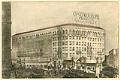
Drawing of Orpheum theater, Seattle, circa 1927
Seattle's Orpheum Theatre opened August 25, 1927, and was heralded as one of the finest vaudeville and "photoplay" houses on the West Coast. Designed in Spanish Renaissance style by the famous architect B. Marcus Priteca, the building stood at the corner of 5th and Stewart until 1967, when it was destroyed for construction of the Washington Plaza Hotel. This pen…
ID Number:1980.7021.62.3
Date:Circa 1927