156 results for: Nature
Photograph
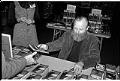
Frank Herbert signing books, Seattle, December 5, 1971
In this image, Tacoma-born author Frank Herbert (1920-1986) signs copies of "Dune" and other books at the Balcony Book Store at the Pacific Science Center. Though he became famous for writing science fiction, Herbert was also a newspaper journalist, photographer, short story writer, book reviewer, ecological consultant, and university lecturer; he was a reporter for the Seattle Post-Intelligencer from 1969…
ID Number:1986.5.55465.23
Date:1971
Ephemera
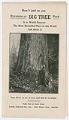
Don't Fail to See Ravenna (or Big Tree Park), 1909
Seattle's Ravenna Park was among the few areas that escaped the logger's ax in the late 1800s, thus preserving stunning examples of giant old-growth Douglas Firs. Centered around a stream that ran from Green Lake to Union Bay, the park opened in 1887 as Ravenna Springs Park, named for the Italian town which sits beside an ancient forest. Owners William…
ID Number:1987.69.1
Date:1909
Ephemera
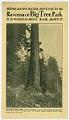
Don't Fail to See Ravenna (or Big Tree Park), 1909
Seattle's Ravenna Park was among the few areas that escaped the logger's ax in the late 1800s, thus preserving stunning examples of giant old-growth Douglas Firs. Centered around a stream that ran from Green Lake to Union Bay, the park opened in 1887 as Ravenna Springs Park, named for the Italian town which sits beside an ancient forest. Owners William…
ID Number:1987.69.2
Date:1909
Photograph
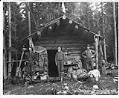
Denny cabin at head of Lake Keechelus, 1901
In the late 1800s and early 1900s, David Denny and other members of the Denny family mined for gold at Gold Creek, on the east side of the Cascade Mountains below Snoqualmie Pass. They lived in a cabin at the north end of Lake Keechelus.In this 1901 photo, Victor W.S. Denny (left), William Denny (center) and Dan Hines (right) stand…
ID Number:1987.89.23
Date:1901
Photograph
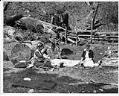
Denny family picnic on Snoqualmie River, circa 1918
In the 1890s and the first several decades of the 1900s, members of the Denny family spent a good deal of the time in the Cascade Mountains, where they mined for gold and enjoyed the outdoors.Sometime around 1917 or 1918, Lawrence Denny Lindsley photographed Victor W. S. Denny and his family eating a picnic lunch near North Bend on the…
ID Number:1987.89.76
Date:Circa 1918
Photograph
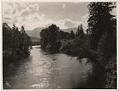
Snoqualmie River from above the falls, circa 1915
In the late 1800s and early 1900s, David Denny and other members of the Denny family mined for gold at Gold Creek, at the north end of Lake Keechelus. In the early days, pack trains of mules and horses carried supplies between the mine and the Denny home at Licton Springs, near Seattle. The pack trains crossed the Snoqualmie River…
ID Number:1987.89.81
Date:Circa 1915
Photograph
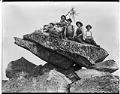
Group of people on top of Mount Pilchuck, circa 1900
Joseph Swartz was a shingle mill owner in Granite Falls, Washington, in the 1890s and early 1900s. By 1908, he had relocated his business to Everett. Swartz was also an amateur photographer. His images of family, friends and local scenery, all on glass plate negatives, document life in Snohomish County at the turn of the 19th century.This Swartz photo shows…
ID Number:1991.40.220
Date:Circa 1900
Photograph
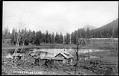
Cedar Falls Lake, circa 1915
Starting in 1895, the City of Seattle began to purchase land in the upper Cedar River watershed to supply water and electric power for the growing city. In 1914, workers completed a large masonry dam just below Cedar Lake (now Chester Morse Lake), and the lake became a reservoir. As the city added more land to its holdings, the people…
ID Number:1992.44.1
Date:Circa 1915
Postcard
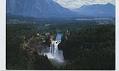
Aerial of Snoqualmie Falls, near Snoqualmie, circa 1965
The Snoqualmie River drops 268 feet at Snoqualmie Falls. The waterfall was spiritually important to the Snoqualmie people who once lived in the area and was a scenic wonder to the settlers who came later. After the Seattle, Lake Shore, and Eastern Railway was built along the south shore in 1889, the falls became a popular place for day trips…
ID Number:1994.27.160
Date:Circa 1965
Photograph
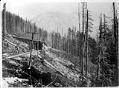
Great Northern Railway snowshed no. 2-B, circa 1898
In the steep areas of Stevens Pass, Washington, where avalanches were common, Great Northern Railway workers built snowsheds to keep snow off the railroad tracks. Early snowsheds were built of logs which were easily cut in the nearby woods. This photo, taken around 1898 by Norwegian photographer Anders Wilse, shows a log snowshed near Stevens Pass.
ID Number:1994.44.12
Date:Circa 1898