587 results for: Asian American
Photograph
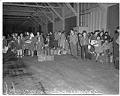
Japanese Americans at Pier 42 for return to Hawaii, Seattle, November 7, 1945
Unlike Japanese Americans on the mainland, Japanese Americans living in Hawaii during World War II were not incarcerated en masse. The approximately 150,000 Japanese Americans were the largest single ethnic group in Hawaii and constituted more than one third of the territory’s population. Hawaii’s economy and society relied on the work done by Japanese Americans, and business and military leaders…
ID Number:PI28089
Date:1945
Photograph
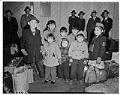
Eight Japanese American children returning from incarceration camps, November 8, 1945
In this image eight Japanese American children pose as they prepare to leave Seattle for their native Hawaii after having been released from incarceration camps.On February 19, 1942, shortly after Japan's attack on Pearl Harbor and United States entry into WWII, President Franklin Roosevelt signed Executive Order 9066, calling for the exclusion of all civilians of Japanese descent from "designated…
ID Number:PI28090
Date:1945
Photograph
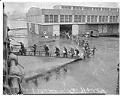
Japanese Americans boarding ship for return to Hawaii, Seattle, November 7, 1945
Unlike Japanese Americans on the mainland, Japanese Americans living in Hawaii during World War II were not incarcerated en masse. The approximately 150,000 Japanese Americans were the largest single ethnic group in Hawaii and constituted more than one third of the territory’s population. Hawaii’s economy and society relied on the work done by Japanese Americans, and business and military leaders…
ID Number:PI28091
Date:1945
Photograph
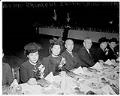
Kameno and Shinichi Seike at Nisei memorial dinner, Seattle, December 13, 1946
Nearly 1000 veterans, family members, and friends attended a Nisei veterans' testimonial banquet at Seattle's Civic Auditorium on December 13, 1946. The event, sponsored by the Japanese American Citizens League (JACL), featured speakers paying tribute to Nisei (second generation Japanese Americans) soldiers who lost their lives during World War II.Close relatives of those who died sat at special tables like…
ID Number:PI28185
Date:1946
Photograph
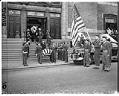
Funeral service for Japanese American serviceman, June 1948
Japanese Americans in the coastal areas of the western United States were removed from their homes in 1942, when the United States entered World War II. In spite of this, Japanese Americans served in the United States armed forces with distinction. Veterans of the war were buried with military honors.In this June 1948 photo, Japanese American veterans honor a unit…
ID Number:PI28191
Date:1948
Photograph
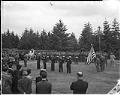
Funeral for Nisei servicemen, Washelli Cemetery, Seattle, June 19, 1948
This image shows a funeral for eight Nisei (second generation Japanese Americans) soldiers who died in World War II. They were members of the 442nd Regiment, which was composed entirely of Japanese Americans. The 442nd is the most decorated unit in US Army history for its size and length of service. Five of the soldiers died in action in France…
ID Number:PI28192
Date:1948
Photograph
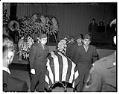
Funeral for Japanese American serviceman in Seattle Buddhist Church, Seattle, December 11, 1948
Japanese Americans in the coastal areas of the western United States were removed from their homes in 1942, when the United States entered World War II. In spite of this, Japanese Americans served in the United States armed forces with distinction. Veterans of the war were buried with military honors.In this December 1948 photo, Japanese American veterans act as pallbearers…
ID Number:PI28194
Date:1948
Photograph
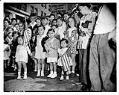
Chinese American children with flags in Victory Square, Seattle, 1944
Handwritten on sleeve: World War II - Seattle - Victory Square, China Day.Date photograph was filed at the Seattle Post-Intelligencer (date of photograph and file date may differ by a month or more): July 10, 1944.
ID Number:PI28269
Date:1944
Photograph
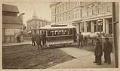
Seattle Street Railway car on first day of service, Seattle, September 1884
In September 1884, Washington Territory's first streetcar line opened in Seattle. By the end of the year, the line had three miles of track and four streetcars which were operated by a total of ten men and twenty horses. One branch ran out to Lake Union, and the other ran to Front Street (First Avenue) and on to Queen Anne…
ID Number:SHS898
Date:1884
Photograph
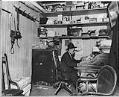
Chin Gee Hee, Chinese labor contractor, circa 1904
In the late 19th and early 20th centuries, Chinese labor contractors brought thousands of Chinese men to the Pacific Northwest to build railroads and to work in canneries, logging camps and coal mines. Companies depended on labor contractors to recruit workers, to move them where they were needed, to feed and house them, and to keep track of their pay.…
ID Number:SHS1152
Date:1901