1580 results for: City of Seattle
Photograph
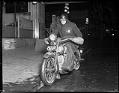
Motorcycle policeman J.K. Weedin, Seattle, March 1928
In early 1910, the Seattle police department invested $1,329 in its first three motorcycles, with seven patrolman selected as the first members of the "motor cops" squad. At the time, speeding fines were paid to King County rather than the city of Seattle, and the city hoped to pass a traffic ordinance which would allow it to keep fines for…
ID Number:1986.5G.3172.1
Date:1928
Photograph
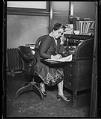
Bertha Knight Landes, circa 1927
Bertha Knight Landes was the first woman mayor of a major American city. Serving a single term from 1926 until 1928, she improved law enforcement, expanded the parks department programs, and improved the management of the City Light department. Active in many civic organizations, she viewed her community and mayoral activities as an extension of her home duties and well-justified…
ID Number:1986.5G.1424.1
Date:Circa 1927
Poster
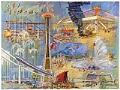
Century 21 Exposition poster, Seattle, April 21 - October 21, 1962
The Century 21 Exposition (also known as the Seattle World's Fair) ran from April 21 to October 21, 1962. Nearly 10 million people attended the fair. The exposition's displays and attractions were centered around themes of science and technology, but included showcases for a variety of word cultures.This poster is based on original artwork attributed to E. Carpenter, Birdart Studio,…
ID Number:1987.59.20
Date:1962
Photograph
Nurses and soldiers at Base Hospital 47 in France, 1918
When the United States entered World War I in 1918, Seattle nurse Abbie Ewart trained with other nurses at Fort Lewis, near Tacoma. Several months later, the group sailed from New York City to France where they cared for the sick and wounded at American Base Hospitals 43 and 47, shown here. Handwritten on verso: 1st World War. Miss Ewart…
ID Number:1987.60.21
Date:1918
Photograph
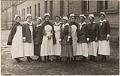
Army nurses at Base Hospital 47 in France, circa 1918
When the United States entered World War I in 1918, Seattle nurse Abbie Ewart trained with other nurses at Fort Lewis, near Tacoma. Several months later, the group sailed from New York City to France where they cared for the sick and wounded at American Base Hospitals 43 and 47.In this photo, Abbie Ewart (far left) and her colleagues, including…
ID Number:1987.60.22
Date:Circa 1918
Document
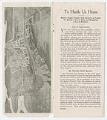
Brochure promoting a rapid transit solution for Seattle, 1926
Seattle’s hourglass shape and steep hills challenged land transportation from the very beginning. By the 1920s, with continuing population growth and the popularity of automobile transportation, traffic congestion had increased drastically. Concurrently, the city’s street railway system was losing money. In 1925, the Rapid Transit Committee of the Seattle City Planning Commission put together an extensive report, proposing that a…
ID Number:1987.66.3
Date:1926
Book
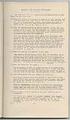
Seattle Rapid Transit Report to the City Planning Commission, 1925
Seattle’s hourglass shape and steep hills challenged land transportation from the very beginning. By the 1920s, with continuing population growth and the popularity of automobile transportation, traffic congestion had increased drastically. Concurrently, the city’s street railway system was losing money. In 1925, the Rapid Transit Committee of the Seattle City Planning Commission put together an extensive report, proposing that a…
ID Number:1987.66.4
Date:1925
Ephemera
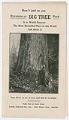
Don't Fail to See Ravenna (or Big Tree Park), 1909
Seattle's Ravenna Park was among the few areas that escaped the logger's ax in the late 1800s, thus preserving stunning examples of giant old-growth Douglas Firs. Centered around a stream that ran from Green Lake to Union Bay, the park opened in 1887 as Ravenna Springs Park, named for the Italian town which sits beside an ancient forest. Owners William…
ID Number:1987.69.1
Date:1909
Ephemera
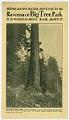
Don't Fail to See Ravenna (or Big Tree Park), 1909
Seattle's Ravenna Park was among the few areas that escaped the logger's ax in the late 1800s, thus preserving stunning examples of giant old-growth Douglas Firs. Centered around a stream that ran from Green Lake to Union Bay, the park opened in 1887 as Ravenna Springs Park, named for the Italian town which sits beside an ancient forest. Owners William…
ID Number:1987.69.2
Date:1909
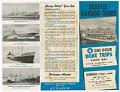
Document
Seattle Harbor Tours brochure, circa 1965
Captain Lynn Hilbert Campbell (1911-2013) moved to Seattle during the Depression, where he worked on a freighter between Seattle and Alaska. According to his obituary, after World War II, Mr. Campbell started a tugboat business in Elliott Bay. In 1949, he formed the Spring Street Water Taxi company, which ferried crews and supplies out to ships anchored in Puget Sound.…
ID Number:1989.68.2
Date:Circa 1965