788 results for: Education
Photograph
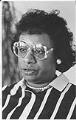
Roz Woodhouse, May 23, 1988
Dr. R.Y (Roz) Woodhouse became the first woman executive in the history of the Urban League of Metropolitan Seattle (formerly Seattle Urban League) when she was appointed its President & Chief Executive Officer in 1984. She served in the position until 1998. Immediately prior to joining the Urban League, Dr. Woodhouse was Vice President and Manager of Employee Relations for…
ID Number:2000.107.232.37.06
Date:1988
Photograph
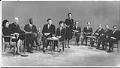
Roberta Byrd Barr with Face to Face panel, February 2, 1966
Roberta Byrd Barr (1919-1993) was a civil rights leader, educator, and journalist. Born in Tacoma, Barr returned to Seattle in 1959, attending University of Washington and working as a teacher at Jefferson Elementary School, and then as librarian at John Muir Elementary. When Seattle teachers and parents boycotted the city’s public schools and demanded desegregation in 1966, Barr headed the…
ID Number:2000.107.243.01.01
Date:1966
Photograph
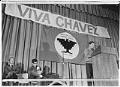
Cesar Chavez speaking at Garfield High School, December 19, 1969
Cesar Estrada Chávez (1927-1993) was a Mexican-American labor leader, community organizer, businessman, and civil rights activist. He co-founded, with Dolores Huerta, the National Farm Workers Association (NFWA), which later merged with the Agricultural Workers Organizing Committee (AWOC) to become the United Farm Workers (UFW) labor union. Chavez advocated for the use of direct but nonviolent actions, such as pickets and…
ID Number:2000.107.243.07.01
Date:1969
Photograph
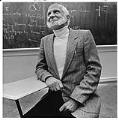
Hans Dehmelt sitting in UW classroom, Seattle, October 12, 1989
In this image, University of Washington physics Professor Hans Georg Dehmelt (1922-2017) sits in a classroom on the Seattle campus after learning that he had been awarded a share of the 1989 Nobel Prize in Physics for co-developing (with Wolfgang Paul) an elegant, precise technique to trap charged atomic particles so they could be studied and measured in near isolation.…
ID Number:2000.107.246.04.01
Date:1991
Photograph
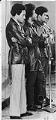
Aaron Dixon, with bodyguards, speaking at rally at HUB Ballroom, Seattle, April 4, 1969
Aaron Dixon was born in Chicago, and grew up in Seattle's Central Area. His father worked at Boeing, and both parents taught Aaron and his brothers the importance of fighting for social justice. As a college student at the University of Washington (UW), Dixon played a key role in the formation of the Black Student Union (BSU) and the Seattle…
ID Number:2000.107.246.07.02
Date:1969
Photograph
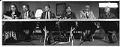
Black community leaders at press conference about Seattle Schools, January 31, 1991
On January 31, 1991, several leaders of Seattle's African-American community held a press conference at Mount Zion Baptist Church, calling for the resignation of Seattle School Superintendent William Kendrick, and a rejection of his school reorganization plan, which they viewed as insensitive to children of color.This image shows the six community leaders seated at a table during the press conference.…
ID Number:2000.107.247.05.02
Date:1991
Photograph
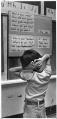
Dai Vu studying questions in his English class, Seattle, October 1979
Ten-year-old Dai Vu, from Vietnam, arrived in the US in August 1979 with his father and two older siblings after living in a Malaysian refugee camp for 5 months. All of the family's money went into the boat passage for the four, and Dai's mother and younger siblings had to be left behind. In Seattle, Dai attended school at Lake…
ID Number:2000.107.289.01.02
Date:1979
Photograph
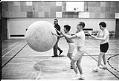
Group playing with a large ball in a PE class for the blind, Seattle, May 6, 1969
While working on a master’s degree project at Seattle’s Northwest Center, Dave Tucker realized the need for better physical education for blind students. He consolidated Seattle Public Schools’ PE programs for the blind and partially sighted and started classes in February 1968. Among his developments was the use of a large ball that students could push, climb on, and fall…
ID Number:2000.107.19720500.1.12
Date:1972
Photograph
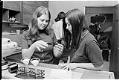
Two women at the Aradia Women's Clinic, Seattle, November 16, 1972
The Aradia Women’s Clinic opened on Seattle’s First Hill in February 1972. A feminist women’s clinic, it provided birth control, health care, counseling, and advocacy by women for women. Once the Supreme Court’s Roe v. Wade decision made abortion legal, it also became one of Seattle’s first abortion clinics and a model for similar operations elsewhere in the country. Aradia…
ID Number:2000.107.19721116.3.14
Date:1972
Photograph
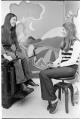
Two staff members at the Aradia Women's Clinic, Seattle, November 16, 1972
The Aradia Women’s Clinic opened on Seattle’s First Hill in February 1972. A feminist women’s clinic, it provided birth control, health care, counseling, and advocacy by women for women. Once the Supreme Court’s Roe v. Wade decision made abortion legal, it also became one of Seattle’s first abortion clinics and a model for similar operations elsewhere in the country. Aradia…
ID Number:2000.107.19721116.3.19
Date:1972