52 results for: Hertz, Stuart B.
Photograph
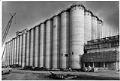
Exterior of Pier 86 grain terminal, Seattle, January 6, 1970
In 1970 the Port of Seattle spent millions of dollars finishing and upgrading container terminals, airport projects, and new property acquisitions to support what is a major contributor to regional economic growth. Seattle's grain exports were moved at the time to the $15 million Pier 86 Grain Facility in the Interbay neighborhood. This property replaced the Port’s Hanford Street Grain…
ID Number:2000.107.171.37.01
Date:1970
Photograph
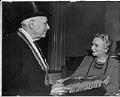
Fremont "Mayor" Bert Williams, Seattle, March 14, 1954
Each year, the Fremont Old Timers' Association elected an honorary "Mayor" of their Seattle neighborhood. In 1954, Albert Paul "Bert" Williams (1876-1955), who had come to Seattle in 1888, accepted the honor. He remembered the Great Seattle Fire and also went to Alaska during the Gold Rush. The retired machinist recalled that when he moved to Fremont in 1901, it…
ID Number:2000.107.173.03.02
Date:1954
Photograph
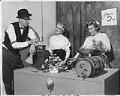
Goodwill Auxiliary members working at bazaar, Seattle, November 23, 1967
Seattle Goodwill was founded in 1923 by a group of local businessmen, and provides employment training and basic education to individuals experiencing significant barriers to economic opportunity. Today a significant portion of its operating funds are derived from its nine thrift stores in the area.In this image Goodwill Women's Auxiliary members dress in old-fashioned clothing and set up a "country…
ID Number:2000.107.173.09.02
Date:1967
Photograph
Old Rocking Chair Club, 115 14th Ave. S., Seattle, May 3, 1945
The origin of Seattle's Jazz scene grew out of the unique political and social climate of Prohibition and 1920s and was centered around Jackson Street in what is now the Chinatown - International District neighborhood. A decade later, the beginning of the swing era attracted new listeners to jazz music, particularly young people. The relatively small size of the jazz…
ID Number:2000.107.174.16.01
Date:1945
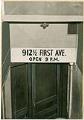
Photograph
Entrance to the Stork Club, 912 1/2 1st Ave., Seattle, May 3, 1945
The repeal of federal prohibition in 1933 was not the end of laws controlling the sale and consumption of liquor in Seattle. Public support for prohibition had waned as liquor-related crime continued to increase and enforcement efforts continued to strain staff and budgets. However, regulating the manufacture and consumption of alcohol remained a regular part of the business of Seattle…
ID Number:2000.107.174.16.05
Date:1945
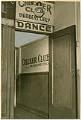
Photograph
Entrance to the Checker Club, 1115 1/2 1st Ave., Seattle, May 3, 1945
The repeal of federal prohibition in 1933 was not the end of laws controlling the sale and consumption of liquor in Seattle. Public support for prohibition had waned as liquor-related crime continued to increase and enforcement efforts continued to strain staff and budgets. However, regulating the manufacture and consumption of alcohol remained a regular part of the business of Seattle…
ID Number:2000.107.174.16.06
Date:1945
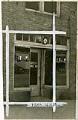
Photograph
Entrance to the U&I Club, 1223 Jackson Street, Seattle, May 3, 1945
The repeal of federal prohibition in 1933 was not the end of laws controlling the sale and consumption of liquor in Seattle. Public support for prohibition had waned as liquor-related crime continued to increase and enforcement efforts continued to strain staff and budgets. However, regulating the manufacture and consumption of alcohol remained a regular part of the business of Seattle…
ID Number:2000.107.174.16.07
Date:1945
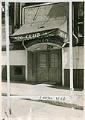
Photograph
Entrance to the 420 Club, 420 2nd Ave., Seattle, May 3, 1945
The repeal of federal prohibition in 1933 was not the end of laws controlling the sale and consumption of liquor in Seattle. Public support for prohibition had waned as liquor-related crime continued to increase and enforcement efforts continued to strain staff and budgets. However, regulating the manufacture and consumption of alcohol remained a regular part of the business of Seattle…
ID Number:2000.107.174.16.08
Date:1945
Photograph
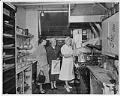
Visitors touring the kitchen of the old Ballard hospital, Seattle, April 20, 1952
In 1952 residents of Seattle's thriving Ballard neighborhood began raising money for a new hospital to replace the aging Ballard Accident and General Hospital, which had opened in 1928 with 21 beds on the third floor of the Ballard Building on Market Street. Ballard General Hospital (later Ballard Community Hospital) opened in 1954 at 5300 Tallman Avenue with 100 beds…
ID Number:2000.107.175.05.02
Date:1952
Photograph
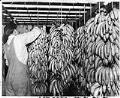
Fruit supplier tending to imported bananas, Seattle, July 24, 1950
In this image Harry Martindale trims a stalk of ripened bananas at Rogge Commission Company, 1013 Western Avenue. At the time there was concern that disruption in shipping by the Korean War (1950-1953) would cause tropical fruit shortages in the Pacific Northwest. Caption information derived from captions written by Post-Intelligencer staff and attached to the back of the photo.
ID Number:2000.107.176.37.01
Date:1950