172 results for: Agriculture and Farms
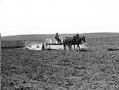
Photograph
Horse-drawn equipment breaking up raw ground, circa 1913
Because of the "rain shadow" formed by the Cascade Mountains, eastern Washington is very dry. To create suitable farmland, farmers and engineers irrigated with water from the Yakima and other rivers.In this photo, a farmer drives his horse-drawn harrow to break up the ground for planting. Webster & Stevens number: 15984
ID Number:1983.10.8805.2
Date:1913
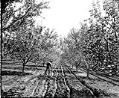
Photograph
Tending irrigation ditches in an orchard near Yakima, circa 1913
Farmers need a good and dependable supply of water to raise crops on the dry lands of eastern Washington. Native Americans and settlers began the practice of irrigating their crops with water from the six rivers that feed into the Columbia River. It would be impossible for Washington to grow its important fruit crops without such irrigation.In this photo, taken…
ID Number:1983.10.8811
Date:Circa 1913
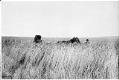
Photograph
Man and buggy in wheat field, circa 1910
In 1907, twelve eastern Washington counties produced nearly 41 million bushels of wheat on land that was once open range. Some wheat farms produced up to 100 bushels of wheat per acre. Wheat was ground into flour or made into breakfast foods and other cereal products for both local and foreign tables. That year, wheat and wheat flour were Washington…
ID Number:1983.10.9042
Date:Circa 1910
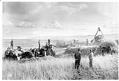
Photograph
Threshing wheat at harvest time, near Waterville, circa 1907
Much wheat is grown in eastern Washington. During the harvest, the threshing process separates the grain from the rest of the plant. In the early 1900s, many farmers used steam-powered, belt-driven threshing machines. Instead of buying their own machines, farmers often hired migrant laborers and their equipment for the harvest season.This photo, taken around 1907 by eastern Washington photographer Alfred…
ID Number:1983.10.9047
Date:Circa 1907
Photograph
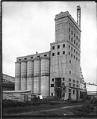
Grain elevator under construction, Seattle, 1915
Handwritten on sleeve: Grain Elevator 1915.Webster & Stevens number: 44198
ID Number:1983.10.10059
Date:1915
Photograph
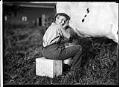
Mrs. Conian milking a cow, circa 1920
Handwritten on sleeve: Mrs. Conian - Farm Story Callahan.Webster & Stevens number: 98111
ID Number:1983.10.11110.1
Date:Circa 1920
Photograph
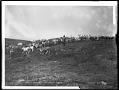
Herd of reindeer at Port Clarence, Alaska, 1900
Beginning in 1892, the United States government brought reindeer from Asia and Europe into Alaska as a new food source for the Native Peoples. The idea was to replace hunting with herding, particularly after newly arrived gold miners had killed so much of the local game.This 1900 photo by Eric Hegg shows a herd of reindeer near Port Clarence, on…
ID Number:1983.10.13163
Date:1900
Photograph
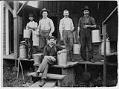
Fruit pickers, 1911
Yakima County is still a center for the tree fruit industry. Irrigation efforts started in the 1870s, and by 1907, area orchards were producing apples, cherries, pears, peaches, plums, prunes, and apricots. About two million young fruit trees were planted in 1906 and early 1907 alone.This photo shows a group of fruit pickers with their pails at a Washington orchard.…
ID Number:1983.10.PA11.51
Date:1911
Photograph
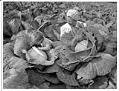
Woman and boy in a cabbage field, 1943
In 1943, workers harvested some 15,500 tons of cabbage in Bellevue and Bothell and in the White River and Sammamish Valleys. This wartime record exceeded the 1942 crop by 50%. Sauerkraut factories canned most of the crop, and the rest was dried into flakes for military meals or sold fresh to homemakers. That year, fresh cabbage was not rationed. This…
ID Number:1986.5.1346.1
Date:1943
Photograph
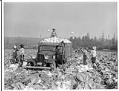
Workers harvesting cabbage near Kent, October 25, 1943
In 1943, workers harvested a record-breaking 15,500 tons of cabbage in Bellevue and Bothell and in the White River and Sammamish Valleys. Many of the wartime farmworkers were volunteers. Sauerkraut factories canned most of the crop. The rest was dried into flakes for military meals or sold fresh to homemakers.This 1943 photo shows workers harvesting cabbages at Ivan Unbedacht's farm…
ID Number:1986.5.1346.2
Date:1943