844 results for: Puget Sound
Photograph
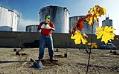
Planting trees at Commencement Bay cleanup site, Tacoma, November 9, 2002
In November of 2002 the Seattle Post-Intelligencer completed a six-month investigation into the ecological health of the Puget Sound. They published their findings in a series of articles from November 18-22, outlining the ways in which recent efforts to curtail dumping and pollution had failed to negate decades of human-caused damage to sea life and the marine environment.This image shows…
ID Number:2000.107.20021101.CD01.014
Date:2002
Photograph
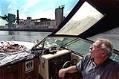
John Beal on Duwamish waterway, November 9, 2002
In November of 2002 the Seattle Post-Intelligencer completed a six-month investigation into the ecological health of the Puget Sound. They published their findings in a series of articles from November 18-22, outlining the ways in which recent efforts to curtail dumping and pollution had failed to negate decades of human-caused damage to sea life and the marine environment.In this image,…
ID Number:2000.107.20021101.CD01.015
Date:2002
Photograph
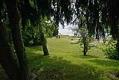
Old Man House Park, Suquamish, June 11, 2004
One-acre Old Man House Park is but a fragment of the Kitsap peninsula land occupied by the Suquamish people. The Tribe’s “mother village” had been located here, as was Chief Seattle’s 600-foot-long cedar longhouse, known as Old Man House. After the US military burned the longhouse in 1870, the Tribe rebuilt the village, only to have the US acquire the…
ID Number:2000.107.20040611.CD01.001
Date:2004
Photograph
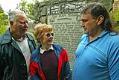
William and Virginia Whiteley with Rob Purser at Old Man House Park, Suquamish, June 11, 2004
One-acre Old Man House Park is but a fragment of the Kitsap peninsula land occupied by the Suquamish people. The Tribe’s “mother village” had been located here, as was Chief Seattle’s 600-foot-long cedar longhouse, known as Old Man House. After the US military burned the longhouse in 1870, the Tribe rebuilt the village, only to have the US acquire the…
ID Number:2000.107.20040611.CD01.002
Date:2004
Photograph
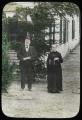
Henry and Sarah Yesler, Seattle, 1883
Henry Yesler arrived in Seattle in 1852 looking for a waterfront sawmill location. Other settlers moved the boundaries of their land claims to accommodate space for the mill, its pier, and a skid road, now Yesler Way. Yesler's sawmill, the first steam-powered mill on Puget Sound, started operation in the spring of 1853. In addition to his mill, Yesler owned…
ID Number:2002.3.488
Date:1883
Photograph
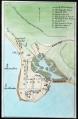
Plan of city during Battle of Seattle, 1856
During the early 1850s, hostility grew between the Native Peoples and the European American settlers in the Puget Sound region. The "Decatur" and several other government ships were moved to the area to protect the settlers. On January 26, 1856, following word of a planned attack on Seattle, troops on the "Decatur" fired howitzers into the forest beyond Third Avenue…
ID Number:2002.3.549
Date:1856
Ephemera
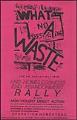
Operation Homestead poster, Seattle, May 1991
Through the 1980s, low-income housing was steadily disappearing in Seattle. Many older downtown apartment buildings which offered affordable housing were condemned by their landowners as, in many cases, it was more profitable to have an abandoned property then to pay for management and upkeep. The direct-action group Operation Homestead, formed in 1988, occupied abandoned buildings to draw attention to this…
ID Number:2002.23.8.7.1
Date:1991
Postcard
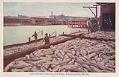
Men with load of salmon on dock, Seattle, circa 1900
The salmon canning industry started in the late 1860s along the Columbia River. By the 1890s, the fishing ground and market had shifted to Puget Sound. Seattle was the home base of the salmon fishing fleet for many years. In this photo, taken around 1900, workers unload salmon from barges at a Seattle cannery wharf south of downtown. Caption on…
ID Number:2002.48.817
Date:Circa 1900
Postcard
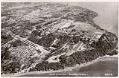
Aerial of Fort Lawton from northwest, Seattle, circa 1940
In 1897, the city of Seattle donated land on Magnolia Bluff to the US government to build a new Army post as part of a defense system for Puget Sound; this was designated as Fort Lawton in 1900. During most of its active service, the fort served as an embarkation station where troops gathered before being sent to duty in…
ID Number:2002.48.823
Date:Circa 1940
Postcard
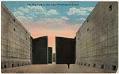
Empty chamber in Ballard Locks, Seattle, circa 1917
For years, there was no easy or cheap way to move logs, coal, and other resources directly from the east side of Lake Washington to Elliott Bay. There were many plans and several attempts to build a canal via Lake Union. However, none was successful until the Lake Washington Ship Canal was built in 1911 to 1917. The Hiram Chittenden…
ID Number:2002.48.947
Date:Circa 1917