733 results for: Labor and Labor Unions
Photograph
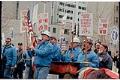
Union workers demonstrating at WTO protests, Seattle, December 3, 1999
The Third Ministerial Conference of the World Trade Organization (WTO) was held in Seattle from November 30 to December 3, 1999. Trade ministers and other officials from the WTO's 135 member nations met in an unsuccessful attempt to plan negotiations to further deregulate free trade. Tens of thousands of activists for many causes gathered to protest what they saw as…
ID Number:2000.107.19991203.1.28
Date:1999
Photograph
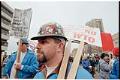
Union workers marching at WTO protest, Seattle, December 3, 1999
The Third Ministerial Conference of the World Trade Organization (WTO) was held in Seattle from November 30 to December 3, 1999. Trade ministers and other officials from the WTO's 135 member nations met in an unsuccessful attempt to plan negotiations to further deregulate free trade. Tens of thousands of activists for many causes gathered to protest what they saw as…
ID Number:2000.107.19991203.13.20
Date:1999
Photograph
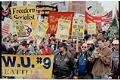
Union workers marching at WTO protest, Seattle, December 3, 1999
The Third Ministerial Conference of the World Trade Organization (WTO) was held in Seattle from November 30 to December 3, 1999. Trade ministers and other officials from the WTO's 135 member nations met in an unsuccessful attempt to plan negotiations to further deregulate free trade. Tens of thousands of activists for many causes gathered to protest what they saw as…
ID Number:2000.107.19991203.15.07
Date:1999

Photograph
Dockworkers rally in support of their union, Seattle, September 18, 2002
A contract dispute between the Pacific Maritime Association (PMA), representing shipping and stevedoring employers, and the International Longshore and Warehouse Union (ILWU), representing 10,500 West Coast dockworkers, arose in July 2002 and resulted in PMA's closure of all 29 ports on the West Coast. Beginning September 27, 2002, workers were locked out for 11 days, the first major work stoppage…
ID Number:2000.107.20020918.CD01.01.001
Date:2002

Photograph
Union members at rally in support of Dockworker's union, Seattle, September 18, 2002
A contract dispute between the Pacific Maritime Association (PMA), representing shipping and stevedoring employers, and the International Longshore and Warehouse Union (ILWU), representing 10,500 West Coast dockworkers, arose in July 2002 and resulted in PMA's closure of all 29 ports on the West Coast. Beginning September 27, 2002, workers were locked out for 11 days, the first major work stoppage…
ID Number:2000.107.20020918.CD01.01.002
Date:2002

Photograph
Dockworkers rally in support of their union, Seattle, September 18, 2002
A contract dispute between the Pacific Maritime Association (PMA), representing shipping and stevedoring employers, and the International Longshore and Warehouse Union (ILWU), representing 10,500 West Coast dockworkers, arose in July 2002 and resulted in PMA's closure of all 29 ports on the West Coast. Beginning September 27, 2002, workers were locked out for 11 days, the first major work stoppage…
ID Number:2000.107.20020918.CD01.01.003
Date:2002

Photograph
Francisco Hernandez hauling apples at Brandt Orchards, Orondo, Washington, October 16, 2002
Apple growers in Washington State contribute significantly to the state's economy, especially in the eastern regions of the state, such as the Wenatchee apple district.In this image, Francisco Hernandez transports a bin of Cameo apples at Brandt Orchards in Orondo, Douglas County. In 2002 growers harvested a particularly good crop, bringing apple prices up by about $2 box that year.…
ID Number:2000.107.20021016.CD02.001
Date:2002
Photograph
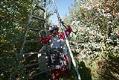
Employees working at Brandt Orchards, Orondo, Washington, October 16, 2002
Apple growers in Washington State contribute significantly to the state's economy, especially in the eastern regions of the state, such as the Wenatchee apple district.In this image, two workers pick apples at Brandt Orchards in Orondo, Douglas County. In 2002 growers harvested a particularly good crop, bringing apple prices up by about $2 box that year. Caption information written by:…
ID Number:2000.107.20021016.CD02.002
Date:2002

Photograph
Frank Mihelick after layoff from Weyerhaeuser, Enumclaw, Washington, October 22, 2002
The Weyerhaeuser Timber Company opened its first sawmill in 1903 in Washington State and grew to become a giant in the industry, employing generations of workers. In 2002, the company announced plans to sell 115,000 acres of timberland and close plants in Enumclaw and Snoqualmie, a move that affected 260 employees.In this image, Frank Mihelich, far right, discusses losing his…
ID Number:2000.107.20021022.CD01.001
Date:2002

Photograph
Steven Oles after layoff from Weyerhaeuser, Enumclaw, Washington, October 22, 2002
The Weyerhaeuser Timber Company opened its first sawmill in 1903 in Washington State and grew to become a giant in the industry, employing generations of workers. In 2002 the company announced plans to sell 115,000 acres of timberland and close plants in Enumclaw and Snoqualmie, a move that affected 260 employees.In this image, Steven Oles, president of the local Woodworkers'…
ID Number:2000.107.20021022.CD01.002
Date:2002