1580 results for: City of Seattle
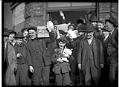
Photograph
A group of men and a boy carrying groceries during the Seattle general strike, February 7, 1919
During the Seattle General Strike in 1919, union members refused to report to their jobs. Businesses and stores were closed, and streetcars didn't run. Union members met the city's basic and emergency needs, however. They set up food lines, delivered milk to babies, and brought drugs to hospitals. They also maintained the city's electrical power and kept ambulances running. Webster…
ID Number:1983.10.10698.2
Date:1919
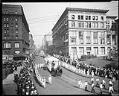
Photograph
Labor Day parade, September 2, 1918
For many years, Seattle's industries closed on Labor Day, and trade union members marched in the annual Labor Day parade. In 1918, the United States' armed forces were still fighting in Europe. Union members serving at forts and naval stations in the Seattle area marched in the parade in uniform. The Seattle Times reported that 40,000 union members were expected…
ID Number:1983.10.10777.8
Date:1918
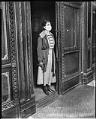
Photograph
Elevator worker with flu mask, 1918
In the fall of 1918, the worldwide influenza epidemic hit Seattle. The flu was sudden and deadly. The city's health commissioner banned dances and closed theaters, churches, and schools. At the height of the epidemic, anyone going out in public was required by law to wear a mask made of six layers of gauze. This was supposed to keep the…
ID Number:1983.10.10779
Date:1918
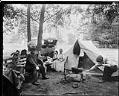
Photograph
Campers in Woodland Park, circa 1919
As cars got less expensive and people had more free time, many people started to take car camping vacations. They camped in farmyards, by the roadside, or in city parks. Cities and towns soon started building organized campgrounds. In 1920, Seattle's park department opened an "Automobile Tourist Camp" in the northern part of Woodland Park, overlooking Green Lake.This photo shows…
ID Number:1983.10.10781
Date:1918
Photograph
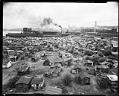
Hooverville, Seattle, March 1933
During the hard times of the 1930s economic depression, many unemployed and homeless people settled just west of where Seattle's sports stadiums now stand. They built ramshackle houses out of scrap material and elected their own mayor. The area was nicknamed Hooverville or Hoover City by people who blamed President Herbert Hoover for causing the Depression. This 1933 photo, taken…
ID Number:1983.10.10788
Date:1933
Photograph
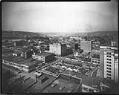
View northeast from Securities Building, Seattle, 1929
Handwritten on sleeve: City View NE from Security Bldg., 1929.Webster & Stevens number: 133103
ID Number:1983.10.10790
Date:1929
Photograph
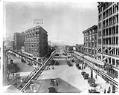
Artist's concept drawing of Fourth Avenue and Westlake Avenue monorails, Seattle, circa 1920
As early as 1910, inventors and businessmen believed that a monorail would solve Seattle's downtown traffic problems. The Universal Elevated Railway Company tried to convince the city to build monorails on Fourth and Westlake Avenues, but the city decided to develop a ground-level trolley system instead. About fifty years later, a monorail was built along part of Westlake Avenue to…
ID Number:1983.10.10813
Date:Circa 1920
Photograph
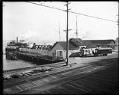
Buses at West Seattle ferry dock, circa 1920
Before 1900, people who lived in West Seattle traveled to Seattle by steamer or ferry. The first ferry on the West Seattle run across Elliott Bay was the "City of Seattle," which made the run in about eight minutes. A larger ferry, called the "West Seattle," joined it in 1907 and stayed on the route until 1920. Connecting roads and…
ID Number:1983.10.10816
Date:Circa 1920
Photograph
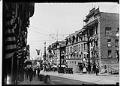
Go Hing Festival decorations on King Street, Seattle, May 1921
On May 23 through 28, 1921, Seattle's Chinese residents held a week-long carnival to raise money for the Chinese Famine Fund, which was raising money for the those impacted by famine in northern China. The event was called Go-Hing and was sponsored by the China Club, Chinese consul Goon Dip, and an advisory committee of Seattle and Washington state civic…
ID Number:1983.10.10959.2
Date:1921
Photograph
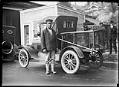
James W. Abell with dogcatching truck, September 14, 1921
On September 14, 1921, The Seattle Times reported that a coyote was cornered on the roof of a foundry building on Westlake Avenue North. The city's African American dogcatcher cornered the animal and took it to the Woodland Park Zoo. In this photo, the dogcatcher who caught the coyote stands by his truck. Webster & Stevens number: 91156
ID Number:1983.10.11014.1
Date:1921