450 results for: Military
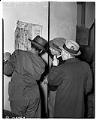
Photograph
Japanese American men looking at map of exclusion districts, Seattle, April 11, 1942
On February 19, 1942, shortly after Japan's attack on Pearl Harbor and United States entry into WWII, President Franklin Roosevelt signed Executive Order 9066, calling for the exclusion of all civilians of Japanese descent from "designated military areas." More than 9,000 Japanese and Japanese American people living in the Pacific Northwest were forced into incarceration camps in Idaho and California…
ID Number:PI28060
Date:1942
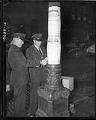
Photograph
Two policemen posting Civilian Exclusion Order No. 17, Seattle, June 16, 1942
In this image two Seattle Police officers, J. O. Deng and A. N. Barger post copies of Civilian Exclusion Order No. 17. Exclusion Order notices were posted on buildings, billboards, telephone poles, and other high visibility spots within the exclusion area. The notice announced the exclusion of Japanese Americans and gave them one week to prepare. A member of each…
ID Number:PI28061
Date:1942
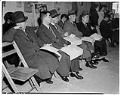
Photograph
Japanese Americans waiting to register for exclusion, Seattle, April 26, 1942
In this image Japanese American residents of Seattle wait to be processed at the civil control station at 2100 Second Avenue in preparation for exclusion. The envelope they are carrying contains the different blanks used by all of the various government agencies working on the registration. After Civilian Exclusion Order No. 17 was posted Japanese Americans were given one week…
ID Number:PI28062
Date:1942
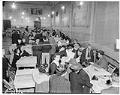
Photograph
Japanese Americans registering for exclusion, Seattle, April 26, 1942
In this image Japanese American residents of Seattle are processed for exclusion at the civil control station, converted from an old theater, at 1319 Rainier Avenue. After Civilian Exclusion Order No. 17 was posted Japanese Americans were given one week to register and to prepare for departure. Those that failed to comply by remaining in the area after the appointed…
ID Number:PI28063
Date:1942
Photograph
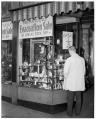
"Evacuation sale" at Japanese store, Seattle, 1942
On February 19, 1942, shortly after Japan's attack on Pearl Harbor and United States entry into WWII, President Franklin Roosevelt signed Executive Order 9066, calling for the exclusion of all civilians of Japanese descent from "designated military areas." More than 9,000 Japanese and Japanese American people living in the Pacific Northwest were forced into incarceration camps in Idaho and California…
ID Number:PI28065
Date:1942
Photograph
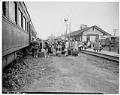
Japanese Americans boarding train for Minidoka War Relocation Center, Puyallup, 1942
In this image Japanese American residents of the Seattle area are boarding the train at North Puyallup for their transfer to a concentration camp in Minidoka, Idaho. The Puyallup Assembly Center, better known by the euphemism Camp Harmony, was situated at the Western Washington fairgrounds in the heart of Puyallup. The assembly center was a temporary facility into which Japanese…
ID Number:PI28081
Date:1942
Photograph
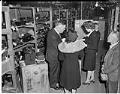
Room with property confiscated from Japanese Americans, Seattle, November 1945
On February 19, 1942, shortly after Japan's attack on Pearl Harbor and United States entry into WWII, President Franklin Roosevelt signed Executive Order 9066, calling for the exclusion of all civilians of Japanese descent from "designated military areas." In March 1942 Japanese Americans living on Bainbridge Island were the first in the country to be taken from their homes by…
ID Number:PI28086
Date:1945
Photograph
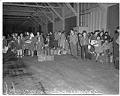
Japanese Americans at Pier 42 for return to Hawaii, Seattle, November 7, 1945
Unlike Japanese Americans on the mainland, Japanese Americans living in Hawaii during World War II were not incarcerated en masse. The approximately 150,000 Japanese Americans were the largest single ethnic group in Hawaii and constituted more than one third of the territory’s population. Hawaii’s economy and society relied on the work done by Japanese Americans, and business and military leaders…
ID Number:PI28089
Date:1945
Photograph
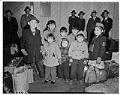
Eight Japanese American children returning from incarceration camps, November 8, 1945
In this image eight Japanese American children pose as they prepare to leave Seattle for their native Hawaii after having been released from incarceration camps.On February 19, 1942, shortly after Japan's attack on Pearl Harbor and United States entry into WWII, President Franklin Roosevelt signed Executive Order 9066, calling for the exclusion of all civilians of Japanese descent from "designated…
ID Number:PI28090
Date:1945
Photograph
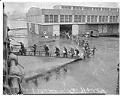
Japanese Americans boarding ship for return to Hawaii, Seattle, November 7, 1945
Unlike Japanese Americans on the mainland, Japanese Americans living in Hawaii during World War II were not incarcerated en masse. The approximately 150,000 Japanese Americans were the largest single ethnic group in Hawaii and constituted more than one third of the territory’s population. Hawaii’s economy and society relied on the work done by Japanese Americans, and business and military leaders…
ID Number:PI28091
Date:1945