120 results for: Mining
Photograph
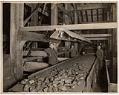
Men at picking table at Cannon Mine bunkers, Franklin, circa 1915
A picking table was an area where the newly mined coal and slag would pass over a moving or vibrating table. Miners would separate the shiny, lighter coal from the heavier shale and rock. Laborers generally did this work above ground in large buildings called bunkers. Jobs on the picking table were often given to new and inexperienced help, or…
ID Number:1978.6585.43b
Date:Circa 1915
Photograph
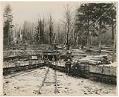
Mouth of slope at Issaquah mine, circa 1900
Issaquah, Washington, was one of several King County towns which grew up around the coal mines. The Issaquah Coal Company mine was located near present-day Wildwood Boulevard and Mine Hill Road. This photo, probably taken sometime between 1895 and 1904, shows the mine entrance with loaded coal cars. Miners used the lumber stacked on the right to shore up the…
ID Number:1978.6585.53b
Date:Circa 1900
Photograph
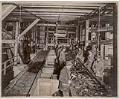
Men working at picking table at Issaquah mine, circa 1913
Coal seams in King County, Washington are interlayered with clay, shale and other materials. As a result, cleaning and sorting were important parts of the mining process. This photo, probably taken around 1913, shows workers breaking out coal at the picking tables at the Issaquah & Superior Mine in Issaquah.
ID Number:1978.6585.53d
Date:Circa 1913
Photograph
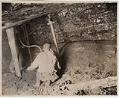
Man using pneumatic drill in Issaquah mine, circa 1915
Coal miners drilled into the seams of coal to lay charges of dynamite. The exploding dynamite broke the coal loose. In this photo from Issaquah, Washington, probably taken around 1915, a coal miner uses a pneumatic drill to make holes about five feet deep for the dynamite charges. The air-powered drill is attached to the vertical post for stability.
ID Number:1978.6585.53e
Date:Circa 1915
Photograph
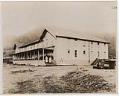
Issaquah & Superior Hotel, circa 1916
The Issaquah & Superior Hotel was built in 1913 on German Count Alvo von Alvensleben's Issaquah coal mining property. In 1919, shortly after the end of World War I, a nearby building blew up and badly damaged the unoccupied hotel. While most people believed that the explosion was an accident, there was some speculation that it might have been a…
ID Number:1978.6585.53g
Date:Circa 1916
Photograph
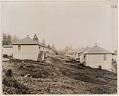
Miners' cottages at Issaquah, circa 1915
Sometime around 1913, German Count Alvo von Alvensleben bought 2,000 or so acres at Issaquah and planned a modern coal mining operation. Unlike other local companies, his Issaquah & Superior Coal Mining Company welcomed miners' unions and offered decent pay and work hours to the miners. Unfortunately, World War I put an end to Alvensleben's plans by cutting off funding…
ID Number:1978.6585.53i
Date:Circa 1915
Photograph
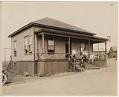
Mine office at Black Diamond, Washington, circa 1920
In the early 1880s, prospectors from the Black Diamond Coal Company, a California firm, found rich coal deposits in King County, Washington. Over the next fifty years, the mines at Black Diamond were among the county's highest producers.This photo, taken around 1920, shows the mine office in Black Diamond. It was located just west of the Pacific Coast Coal Company's…
ID Number:1978.6585.31
Date:Circa 1920
Photograph
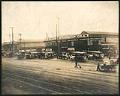
Alaska Steamship Company at Piers 1 and 2, Seattle, circa 1898
The Alaska Steamship Company was formed in 1894, initially to ship passengers and fishing products between Alaska and the Pacific Northwest. In 1896 gold was discovered on the banks of the Klondike River in Canada's Yukon Territory, triggering a stampede of prospectors into Seattle and an era of prosperity that lasted for more than a decade. The Alaska Steamship Company…
ID Number:1978.6603.1
Date:Circa 1898
Ephemera
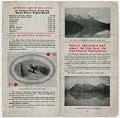
White Pass & Yukon Route leaflet, circa 1910
When gold was discovered in the Yukon in 1897, prospectors had to make the dangerous journey on foot from the Alaska coast to the gold fields, some 550 miles into the Canadian interior. After the building of the first section of the White Pass & Yukon Route railroad in 1898-1899, the trip, which had formerly taken days, could now be…
ID Number:1981.7290.3
Date:1910
Ephemera
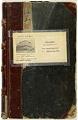
Hotel Kalmar guest register, Seattle, 1903-1914
August Niklasson Brand (1862-1950) and Anna Amelia (Erlandson) Brand (1869-1952), were Swedish immigrants who married in 1893 in Seattle. In 1903, August and Anna bought the Western Hotel (aka, The Michigan), which was built around 1880 and located at the corner of Sixth Avenue and James Street. They renamed it the Hotel Kalmar, after Anna's home town in Sweden, and…
ID Number:1981.7328.176
Date:1903-1914