145 results for: Global Connections
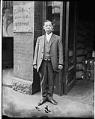
Photograph
Shozo Tsutakawa in front of the Japanese American Commission Company, Seattle, circa 1919
Shozo Tsutakawa (1877-1951) was a successful Japanese businessman who immigrated to the US around 1904 and started the Japanese American Commission Company, importing and exporting food and other goods to and from Japan. He was also president of the Japanese Commercial Club in Seattle. In 1919, Tsutakawa wrote an article in the Seattle Times about the huge growth in trade…
ID Number:1983.10.1617.1
Date:Circa 1919
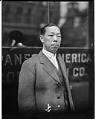
Photograph
Shozo Tsutakawa in front of Japanese American Commission Company, circa 1919
Shozo Tsutakawa (1877-1951) was a successful Japanese businessman who immigrated to the US around 1904 and started the Japanese American Commission Company, importing and exporting food and other goods to and from Japan. He was also president of the Japanese Commercial Club in Seattle. In 1919, Tsutakawa wrote an article in the Seattle Times about the huge growth in trade…
ID Number:1983.10.1617.2
Date:Circa 1919
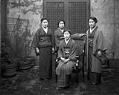
Photograph
Japanese silk weavers, circa 1920
During the 1920s, millions of dollars of Japanese raw silk came through the port of Seattle on the way to mills in the eastern United States. From time to time, groups of Japanese businessmen and other Japanese citizens visited the city to promote the silk trade. In this photo, taken around 1920, four Japanese silk weavers in kimonos pose for…
ID Number:1983.10.1970.3
Date:Circa 1920
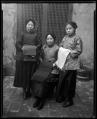
Photograph
Women from the Chinese Silk Commission, circa 1920
Since the late 19th century, trade with China and other countries bordering the Pacific Ocean has been very important to Seattle. Over the years, various groups of people from these Asian nations have visited Seattle to promote their countries' products. In 1920, nearly 14 million dollars worth of Chinese goods came through Washington ports. This photo, taken about 1920, shows…
ID Number:1983.10.1971.1
Date:Circa 1920
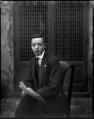
Photograph
Chinese Silk Commission member, probably in Seattle, circa 1920
Since the late 19th century, trade with China and other countries bordering the Pacific Ocean has been very important to Seattle. Over the years, various groups of people from these Asian nations have visited Seattle to promote their countries' products. In 1920, nearly 14 million dollars worth of Chinese goods came through Washington ports. Handwritten on sleeve: Chinese Silk CommissionWebster…
ID Number:1983.10.1971.2
Date:Circa 1920
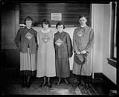
Photograph
Paper clothes, circa 1921
Some ideas have trouble catching on. In the early 1920s, German and Austrian manufacturers showed off their paper clothing and accessories in Seattle. The clothing was not very stylish, compared with other clothing of the time. On the other hand, it might have been an interesting and inexpensive new product idea for Seattle's wood products industry to investigate. In this…
ID Number:1983.10.2113.2
Date:Circa 1921
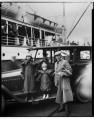
Photograph
Roald Amundsen with Chukchi girls on waterfront, Seattle, 1921
Norwegian explorer Roald Amundsen was the first to reach the South Pole, but the Arctic was his first love. He designed his own ship, named it for Queen Maud of Norway, and christened it with a block of ice. The well-equipped expedition set off from Norway in June 1918 to explore the area near the North Pole. The ship spent…
ID Number:1983.10.2160
Date:1921
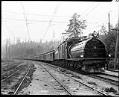
Photograph
Chicago, Milwaukee, and St. Paul Railroad silk train, circa 1921
By the end of the 1920s, the single most valuable import coming through Seattle was Japanese silk. This luxury material came to Seattle on fast steamships and was sent by express train to eastern markets. Because it was both expensive and perishable, silk needed to be handled very carefully. One train carried a cargo of silk valued at $5 million.…
ID Number:1983.10.2199.1
Date:Circa 1921
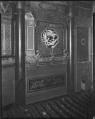
Photograph
Fifth Avenue Theatre interior, Seattle, circa 1926
Audiences were fascinated with the decor of the new Fifth Avenue Theatre. Its brightly-painted woodwork had been inspired by traditional Chinese decorated wood structures in Beijing's Forbidden City. The Asian theme was in keeping with Seattle's position as a gateway for Pacific trade. Handwritten on sleeve: Fifth Ave Theatre Interior DecorationsPhotographer's Reference Number: 120300
ID Number:1983.10.3378.1
Date:Circa 1926
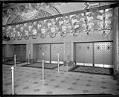
Photograph
Fifth Avenue Theatre entrance, September 1926
Audiences were fascinated with the decor of the new Fifth Avenue Theatre. Its brightly-painted woodwork had been inspired by traditional Chinese decorated wood structures in Beijing's Forbidden City. The Asian theme was in keeping with Seattle's position as a gateway for Pacific trade. This photo was taken around the time of the 1926 opening of the Fifth Avenue Theatre. It…
ID Number:1983.10.3439
Date:1926