76 results for: Disabilities
Photograph
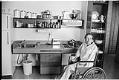
Woman in a finished Center Park apartment, Seattle, August 30, 1970
Center Park Apartments in Seattle’s Rainier Valley was the first apartment complex in the nation built solely for people with physical and mental disabilities and their caregivers. Largely through the tireless efforts of local activist Ida May Daly and others in the community, the Seattle Housing Authority received state and federal funds for the project. Accessible features in the 150…
ID Number:1986.5.52708.36
Date:1970
Photograph
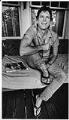
Ned Behnke in his studio, Seattle, August 1981
Robert E. "Ned" Behnke (1948-1989) began painting while a student at Bellevue High School, and had a career as an artist, teacher, and advocate for the deaf community. Born deaf, Behnke helped found an arts program for deaf students at Cornish College of the Arts in 1974. He also taught art in the public schools through a Seattle Arts Commission…
ID Number:2000.107.018.33.01
Date:1981
Photograph
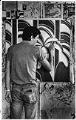
Ned Behnke painting in his studio, Seattle, August 1981
Robert E. "Ned" Behnke (1948-1989) began painting while a student at Bellevue High School, and had a career as an artist, teacher, and advocate for the deaf community. Born deaf, Behnke helped found an arts program for deaf students at Cornish College of the Arts in 1974. He also taught art in the public schools through a Seattle Arts Commission…
ID Number:2000.107.018.33.02
Date:1981
Photograph
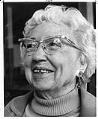
Ida May Daly, Seattle, September 1979
Ida May Daly, born in Cedar Rapids, Iowa, developed muscular dystrophy at age three. While this progressive disease weakened her muscles and confined her to a wheelchair in her thirties, it challenged her to become a tireless advocate for people with disabilities. In the 1950s, she worked with the Seattle Parks Department to found and run the Handicapped Center, which…
ID Number:2000.107.044.037.01
Date:1979
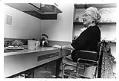
Photograph
Ida Daly at Center Park Apartments for the Handicapped, Seattle, September 1979
Ida May Daly, born in Cedar Rapids, Iowa, developed muscular dystrophy at age three. While this progressive disease weakened her muscles and confined her to a wheelchair in her thirties, it challenged her to become a tireless advocate for disabled people. In the 1950s, she worked with the Seattle Parks Department to found and run the Handicapped Center, which provided…
ID Number:2000.107.044.037.02
Date:1979
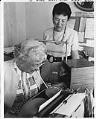
Photograph
Ida Daly in her office with Hazel Flagler Begeman, Seattle, August 1973
Ida May Flagler Daly, born in Cedar Rapids, Iowa, developed muscular dystrophy at age three. While this progressive disease weakened her muscles and confined her to a wheelchair in her thirties, it challenged her to become a tireless advocate for people with disabilities. In the 1950s, she worked with the Seattle Parks Department to found and run the Handicapped Center,…
ID Number:2000.107.044.037.03
Date:1973
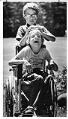
Photograph
Campers at Children's Orthopedic Hospital special summer camp, Enumclaw, July 1981
Seattle’s Children’s Orthopedic Hospital, now Seattle Children’s Hospital and Regional Medical Center, ran a week long summer camp at Sunset Lake Youth Camp near Enumclaw, WA. At the camp, children with complex medical conditions could enjoy a variety of outdoor activities. In this 1981 photo, camper Danny Duncan (in wheelchair) makes a face as his fellow camper Bobby Carlson pulls…
ID Number:2000.107.082.13.02
Date:1981
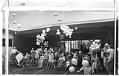
Photograph
Students with disabilities at Lowell Elementary School's Easter Seal drive kick off, Seattle, March 1, 1973
In early March 1973, children and adults gathered at Lowell Elementary School to launch the Easter Seal Society’s annual campaign. As helium balloons rose, a clown and other adults joined the celebration. The children pictured use wheelchairs or crutches, and Easter Seals partially supports their programs.Easter Seals, now Easterseals, is a nationwide organization providing direct services to children and adults…
ID Number:2000.107.082.13.03
Date:1973
Photograph
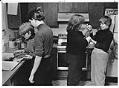
Staff and residents at Daybreak adult family home for people with disabiities, Seattle, December 1984
In 1983, Washington state developed a program for people with certain disabilities to live more independently than they would in institutions. An individualized plan was developed for each person. Two people who benefited from this were Kristina Lasicka and Karolann Elliott, both aged 22 and both deaf and partially blind. With the help of two assistants who knew sign language,…
ID Number:2000.107.082.13.04
Date:1984
Photograph
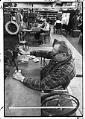
Paul Koyne at a drill press making parts for Boeing at the United Cerebral Palsy machine shop, Seattle, October 1975
Sheltered workshops offer people with disabilities training opportunities and paid work. Starting around 1950, the Boeing Company began contracting with sheltered workshops to make some of its aircraft parts. These might range from simple clips to complex machine parts. Employees had 40-hour work weeks.In 1975, the United Cerebral Palsy Association ran one of the six workshops doing work for Boeing.…
ID Number:2000.107.082.13.05
Date:1975