365 results for: Discrimination
Photograph
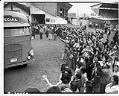
Japanese Americans leaving the Puyallup Assembly Center for incarceation, ca. August 9, 1942.
By August 1942, the United States Army was ready for the large scale removal of Japanese and Japanese Americans from Seattle, King County and the rest of western Washington State. The Puyallup Assembly Center, euphemistically named "Camp Harmony," was a processing facility at the Puyallup Fairgrounds and accommodated 8,000 people at a time. In the rush to process so many…
ID Number:PI28080
Date:1942
Photograph
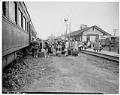
Japanese Americans boarding train for Minidoka War Relocation Center, Puyallup, 1942
In this image Japanese American residents of the Seattle area are boarding the train at North Puyallup for their transfer to a concentration camp in Minidoka, Idaho. The Puyallup Assembly Center, better known by the euphemism Camp Harmony, was situated at the Western Washington fairgrounds in the heart of Puyallup. The assembly center was a temporary facility into which Japanese…
ID Number:PI28081
Date:1942
Photograph
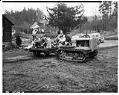
Uni group assisting returning Japanese Americans, 1945
On December 18, 1944, the United States Government announced that Japanese Americans in incarceration camps could return to their homes after January 1, 1945. In Seattle, and elsewhere on the West Coast, this was a controversial issue. When the first returnees arrived in Seattle in January, some found a cold welcome and vandalized property. The Seattle Civic Unity Committee, the…
ID Number:PI28082
Date:1945
Photograph
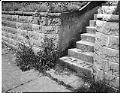
Racist graffiti in front of Japanese American home, Seattle, May 11, 1945
On December 18, 1944, the United States government announced that Japanese Americans in incarceration camps could return to their homes after January 1, 1945. In Seattle, and elsewhere on the West Coast, this was a controversial issue. When the first returnees arrived in Seattle in January, some found a cold welcome and vandalized property. Groups like the Remember the Pearl…
ID Number:PI28083
Date:1945
Photograph
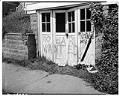
Graffiti on Japanese American home, Seattle, 1945
On December 18, 1944, the United States government announced that Japanese Americans in incarceration camps could return to their homes after January 1, 1945. In Seattle, and elsewhere on the West Coast, this was a controversial issue. When the first returnees arrived in Seattle in January, some found a cold welcome and vandalized property. Groups like the Remember the Pearl…
ID Number:PI28084
Date:1945
Photograph
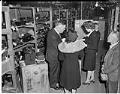
Room with property confiscated from Japanese Americans, Seattle, November 1945
On February 19, 1942, shortly after Japan's attack on Pearl Harbor and United States entry into WWII, President Franklin Roosevelt signed Executive Order 9066, calling for the exclusion of all civilians of Japanese descent from "designated military areas." In March 1942 Japanese Americans living on Bainbridge Island were the first in the country to be taken from their homes by…
ID Number:PI28086
Date:1945
Photograph
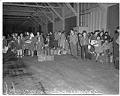
Japanese Americans at Pier 42 for return to Hawaii, Seattle, November 7, 1945
Unlike Japanese Americans on the mainland, Japanese Americans living in Hawaii during World War II were not incarcerated en masse. The approximately 150,000 Japanese Americans were the largest single ethnic group in Hawaii and constituted more than one third of the territory’s population. Hawaii’s economy and society relied on the work done by Japanese Americans, and business and military leaders…
ID Number:PI28089
Date:1945
Photograph
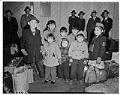
Eight Japanese American children returning from incarceration camps, November 8, 1945
In this image eight Japanese American children pose as they prepare to leave Seattle for their native Hawaii after having been released from incarceration camps.On February 19, 1942, shortly after Japan's attack on Pearl Harbor and United States entry into WWII, President Franklin Roosevelt signed Executive Order 9066, calling for the exclusion of all civilians of Japanese descent from "designated…
ID Number:PI28090
Date:1945
Photograph
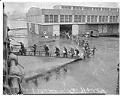
Japanese Americans boarding ship for return to Hawaii, Seattle, November 7, 1945
Unlike Japanese Americans on the mainland, Japanese Americans living in Hawaii during World War II were not incarcerated en masse. The approximately 150,000 Japanese Americans were the largest single ethnic group in Hawaii and constituted more than one third of the territory’s population. Hawaii’s economy and society relied on the work done by Japanese Americans, and business and military leaders…
ID Number:PI28091
Date:1945
Photograph
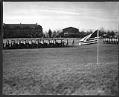
Signal Corps troops marching at Fort Lawton, January 29, 1944
In 1897, the city of Seattle donated land on Magnolia Bluff to the US government to build a new Army post as part of a defense system for Puget Sound; this was designated as Fort Lawton in 1900. During most of its active service, the fort served as an embarkation station where troops gathered before being sent to duty in…
ID Number:SHS822
Date:1944