780 results for: Activism
Photograph
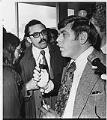
Keo Capastany and Robert Gogerty at Mayor's office sit-in, April 5, 1973
Seattle had a growing Latino population in the late 1960s, and activists had been pressing the city for a building in which to establish a Chicano community center. Tired of having their requests ignored, in October 1972 they took over the abandoned Beacon Hill School on 16th Avenue South and renamed it El Centro de la Raza. After a 75-day…
ID Number:2000.107.124.39.13
Date:1973
Photograph
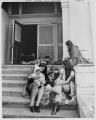
Women and children on steps of Beacon Hill School during occupation, October 1972
Seattle had a growing Latino population in the late 1960s, and activists had been pressing the city for a building in which to establish a Chicano community center. Tired of having their requests ignored, in October 1972 they took over the abandoned Beacon Hill School on 16th Avenue South and renamed it El Centro de la Raza. After a 75-day…
ID Number:2000.107.124.39.17
Date:1972
Photograph
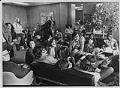
Sit-in at mayor's office, Seattle, April 5, 1973
Seattle’s Latino community was rapidly growing in the late 1960s and community activists pushed for the building of a Chicano community center, which they named El Centro de la Raza. After Chicano activists occupied the abandoned Beacon Hill School in late 1972, the city agreed to lease them the building for $1 per year. However, Seattle mayor Wes Uhlman refused…
ID Number:2000.107.124.39.20
Date:1973
Photograph
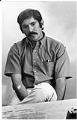
Roberto Trevino, Seattle, August 20, 1970
In this image, Roberto Trevino, a senior at University of Washington, discusses a summer voter registration drive for Mexican-Americans in Yakima Valley that he headed in his hometown of Granger, Washington. During this same period, Mr. Trevino, along with his brother Carlos Trevino and fellow student Guadalupe Gamboa, formed the first strike organizing committee in the hop fields of Yakima…
ID Number:2000.107.124.40.07
Date:1970
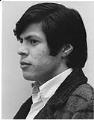
Photograph
Jesus Lemos discussing the Chicano Movement, Seattle, May 9, 1970
During the summer of 1970 Brown Berets from the University of Washington led a voter registration drive in the Yakima Valley, and helped push the United States Supreme Court to hear the case against Yakima Valley registrars who refused to permit Spanish speaking Mexican-Americans to vote. The Brown Berets organized pickets, welfare protests, and interrupted community meetings to promote bills…
ID Number:2000.107.124.40.08
Date:1970
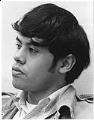
Photograph
Antonio Salazar discussing the Chicano Movement, Seattle, May 9, 1970
During the summer of 1970, Brown Berets from the University of Washington led a voter registration drive in the Yakima Valley and helped push the United States Supreme Court to hear the case against Yakima Valley registrars who refused to permit Spanish speaking Mexican-Americans to vote. The Brown Berets organized pickets, welfare protests, and interrupted community meetings to promote bills…
ID Number:2000.107.124.40.09
Date:1970
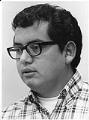
Photograph
Luis Gamboa discussing the Chicano Movement, Seattle, May 9, 1970
During the summer of 1970, Brown Berets from the University of Washington led a voter registration drive in the Yakima Valley and helped push the United States Supreme Court to hear the case against Yakima Valley registrars who refused to permit Spanish speaking Mexican-Americans to vote. The Brown Berets organized pickets, welfare protests, and interrupted community meetings to promote bills…
ID Number:2000.107.124.40.10
Date:1970
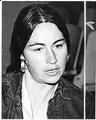
Photograph
Joan Augerot at Conferencia - Chicanas en El Movimiento, Seattle, August 22, 1974
This image of Joan Augerot, a curriculum specialist, was taken at the first annual Conferencia - Chicanas en El Movimiento (Women in the Movement conference), held over three days at El Centro de La Raza on Beacon Hill. Ms. Augerot was a speaker at the conference. The event was an initial step in establishing a state-wide network for job listings,…
ID Number:2000.107.124.40.12
Date:1974
Photograph
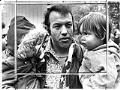
Leroy Mills carrying two children at protest, Seattle, October 14, 1975
On October 14, 1975, about 150 Native American protesters and sympathizers held a demonstation at the U.S. Courthouse in Seattle. Originally publicized as a protest against the Columbus Day holiday, the demonstration became a call for the closure of all Bureau of Indian Affairs federal offices across the country. Protesters argued that the agency had refused to respond to treaty…
ID Number:2000.107.126.03.01
Date:1975
Photograph
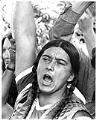
Sid Mills protesting outside Exhibition Hall, Seattle, September 5, 1975
On September 4, 1975, about 200 protesters greeted President Gerald Ford as he entered the Exhibition Hall at Seattle Center for a fundraising luncheon. Led by Sid Mills, director of the Survival of the American Indian Association, the group demanded that Ford restore Native American treaty rights, and stop the "FBI and U.S. Army war in South Dakota," a reference…
ID Number:2000.107.126.04.01
Date:1975