3246 results for: Seattle Post-Intelligencer, The
Photograph
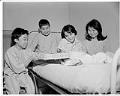
Young patient giving another a gift at Firland Sanatorium, Seattle, December 1, 1954
Firland Sanatorium, Seattle’s municipal tuberculosis hospital, opened on May 2, 1911, to help combat what was at the time Seattle’s leading cause of death. Firland was located north of Seattle, on land donated by railroad magnate Horace C. Henry (1844-1928), whose son Walter had died of TB. The hospital served there until its move in 1947 to a former Naval…
ID Number:1986.5.9391.3
Date:1954
Photograph
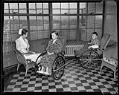
Nurse reading to boys in wheelchairs at Harborview Hospital, Seattle, 1933
Handwritten on image: Harborview Hosp.Handwritten on sleeve: SEATTLE, Hospitals, Harborview.Date photograph was filed at the Seattle Post-Intelligencer (date of photograph and file date may differ by a month or more): May 6, 1933.
ID Number:1986.5.9399.2
Date:1933
Photograph
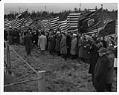
Veteran's Hospital dedication ceremony, Seattle, 1948
Handwritten on sleeve: SEATTLE, Hospitals, Veterans. Date photograph was filed at the Seattle Post-Intelligencer (date of photograph and file date may differ by a month or more): November 29, 1948.
ID Number:1986.5.9547.4
Date:1948
Photograph
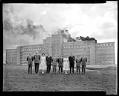
Veteran's Administration hospital, Seattle, April 1951
After World War II, a hospital was needed in metropolitan Seattle to serve the many veterans returning to the area. The City of Seattle deeded 44 acres of land, originally part of Jefferson Park in Beacon Hill, to the U.S. government for the project. Constructed from 1949 to 1951, the 325-bed Seattle Division Veterans' Hospital sits high on a hill…
ID Number:1986.5.9555.1
Date:1951
Photograph
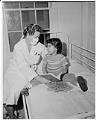
Teacher reading to young girl at Firland Sanitarium, Seattle, November 8, 1955
Firland Sanatorium, Seattle’s municipal tuberculosis hospital, opened on May 2, 1911, to help combat what was at the time Seattle’s leading cause of death. Firland was located north of Seattle, on land donated by railroad magnate Horace C. Henry (1844-1928), whose son Walter had died of TB. The hospital served there until its move in 1947 to a former Naval…
ID Number:1986.5.9564.1
Date:1955
Photograph
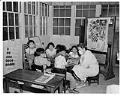
Teacher reading to students at Firland Sanitarium, Seattle, November 8, 1955
Firland Sanatorium, Seattle’s municipal tuberculosis hospital, opened on May 2, 1911, to help combat what was at the time Seattle’s leading cause of death. Firland was located north of Seattle, on land donated by railroad magnate Horace C. Henry (1844-1928), whose son Walter had died of TB. The hospital served there until its move in 1947 to a former Naval…
ID Number:1986.5.9564.2
Date:1955
Photograph
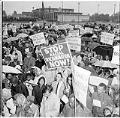
Open housing demonstration at Garfield playfield, Seattle, October 20, 1963
In the mid-20th century, protesters began challenging long-established inequitable practices in housing. Racially restrictive housing covenants and discriminatory lending (“redlining”) excluded people of color from buying or renting housing in most of Seattle’s neighborhoods. In 1963, the Seattle Human Rights Commission drafted an open housing ordinance and presented it to the City Council for approval. The Council held public hearings…
ID Number:1986.5.9653.7
Date:1963
Photograph
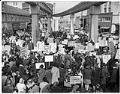
Civil rights supporters demonstrate at Westlake Plaza, Seattle, March 7, 1964
This image was taken as more than 1,500 demonstrators attended a rally at Westlake Plaza in support of open-housing in Seattle. Several local clergy and representatives of the NAACP spoke to the crowd, encouraging everyone to vote for a local ordinance that would provide for criminal penalties for acts of housing discrimination on the basis of race, ethnic origin, or…
ID Number:1986.5.9654.1
Date:1964
Photograph
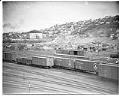
Hooverville in Interbay neighborhood, Seattle, 1938
During the Great Depression of the 1930s, many unemployed and homeless people throughout the United States built shantytowns on vacant lots. The settlements were called Hoovervilles, after President Herbert Hoover whom many blamed for the depression. In Seattle, shantytowns grew in the waterfront areas south of downtown Seattle and north near Smith Cove, shown here. When the United States entered…
ID Number:1986.5.9684.1
Date:1938
Photograph
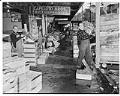
Capeloto brothers unloading fruit at market, Seattle, November 4, 1948
Louis, Joseph, and Salvo Capeloto were three of the nine children of Moisin "Morris" and Behora "Dora" Capeloto. The Jewish family immigrated together from Rhodes to Washington State in 1912, around the time that Italy seized Rhodes from Turkey during the Italo-Turkish War, a significant precursor of the First World War.In this image the three Capeloto brothers pose in the…
ID Number:1986.5.9812.1
Date:1948