653 results for: Urban
Photograph
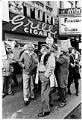
Supporters of the Turf Grill and Smoke Shop gathering for protest, Seattle, November 28, 1984
The Turf Grill and Smoke Shop opened in Seattle in the 1920s at 1407 Third Avenue. In addition to food, it sold beer and wine, cigars and cigarettes, and also had a barber shop. The Turf moved to Second and Pike in 1984 when 3rd Avenue was closed for the building of the Bus Tunnel (now the Transit Tunnel). In…
ID Number:2000.107.185.26.02
Date:1984
Photograph
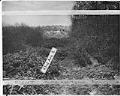
View of sanitary landfill on 43rd. Ave. S. looking south, Seattle, December 1942
This image shows a sanitary landfill on 43rd Ave S between Genesee St. and Lake Washington Boulevard. A sanitary landfill, or fill, was a type of garbage dump in which trash was deposited, spread out and compacted, then covered in several inches of dirt. The city had proposed to expand the fill eastward to 45th Ave S, but residents of…
ID Number:2000.107.188.33.01
Date:1942
Photograph
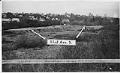
View of sanitary landfill on 43rd. Ave. S. looking west, Seattle, December 1942
This image shows a sanitary landfill on 43rd Ave S between Genesee St. and Lake Washington Boulevard. A sanitary landfill, or fill, was a type of garbage dump in which trash was deposited, spread out and compacted, then covered in several inches of dirt. The city had proposed to expand the fill eastward to 45th Ave S, but residents of…
ID Number:2000.107.188.33.02
Date:1942
Photograph
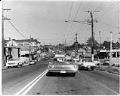
Street in the Central Area, Seattle, May 8, 1969
The Central Area (also called the Central District or the CD) is one of the oldest residential neighborhoods in Seattle. Known historically as Seattle’s Black neighborhood, other ethnic groups also called the Central Area home in the early 20th century. Urban development in the area first accelerated in the 1890s, as Seattle’s population rapidly grew. The first settlers were mostly…
ID Number:2000.107.189.01.01
Date:1969
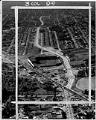
Photograph
Aerial view of Empire Way and Sick's Stadium, July 11, 1953
Empire Way’s route was first laid out in 1913, as a state highway heading southeast out of Seattle. It was named for James J. Hill, the head of the Great Northern Railway, who was nicknamed the “Empire Builder.” At first, Empire Way was put together from parts of older roads on the same route. From the 1930s to the 1950s,…
ID Number:2000.107.189.11.01
Date:1953
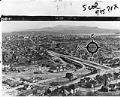
Photograph
View of Rainier Avenue and Lake Way looking east, March 1954
Seattle's Atlantic neighborhood (which has also been referred to as Yesler/Atlantic and Judkins Park) is a triangular community in the Central District area, between Mount Baker Ridge and Beacon Hill. One of oldest residential neighborhoods, it was home to Seattle's largest Italian enclaves during the early years of the twentieth century. Like other neighborhoods in central and southeast Seattle, Black…
ID Number:2000.107.189.16.01
Date:1954
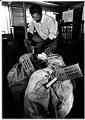
Photograph
Ron Sims fastening tags to sacks of campaign mail, Seattle, September 13, 1985
In 1985, Ronald Cordell "Ron" Sims (1948-) became the first African American elected to county government in Washington state, winning a seat on the King County Council. He served on the council for three terms and in 1996 was appointed to fill King County Executive Gary Locke's position when he became Washington State Governor; he was re-elected in 1997, 2001…
ID Number:2000.107.198.12.01
Date:1985
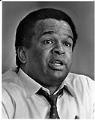
Photograph
Ron Sims speaking at King County Council meeting, Seattle, April 12, 1988
In 1985, Ronald Cordell "Ron" Sims (1948-) became the first African American elected to county government in Washington state, winning a seat on the King County Council. He served on the council for three terms and in 1996 was appointed to fill King County Executive Gary Locke's position when he became Washington State Governor; he was re-elected in 1997, 2001…
ID Number:2000.107.198.12.02
Date:1988
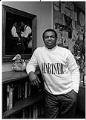
Photograph
Ron Sims in his office, Seattle, January 1, 1989
In 1985, Ronald Cordell "Ron" Sims (1948-) became the first African American elected to county government in Washington state, winning a seat on the King County Council. He served on the council for three terms and in 1996 was appointed to fill King County Executive Gary Locke's position when he became Washington State Governor; he was re-elected in 1997, 2001…
ID Number:2000.107.198.12.03
Date:1989
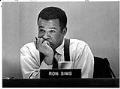
Photograph
Ron Sims listening to testimony at King County Council meeting, Seattle, March 13, 1992
In 1985, Ronald Cordell "Ron" Sims (1948-) became the first African American elected to county government in Washington state, winning a seat on the King County Council. He served on the council for three terms and in 1996 was appointed to fill King County Executive Gary Locke's position when he became Washington State Governor; he was re-elected in 1997, 2001…
ID Number:2000.107.198.12.04
Date:1992