1189 results for: Black/African American
Photograph
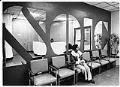
Florence Donley sitting in lobby of new SOIC building, Seattle, January 17, 1975
The Seattle Opportunities Industrialization Center, or SOIC (pronounced "So I see"), was established in 1966, largely through a grant from the Office of Economic Opportunity, the federal agency funding "war on poverty" programs. Modeled after the original OIC started by a Philadelphia minister two years earlier, the community-based program recruited, trained and placed unemployed people in the labor market. The…
ID Number:2000.107.177.26.01
Date:1979
Photograph
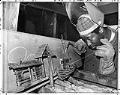
Man learning to weld at SOIC, August 1975
The Seattle Opportunities Industrialization Center, or SOIC (pronounced "So I see"), was established in 1966, largely through a grant from the Office of Economic Opportunity, the federal agency funding "war on poverty" programs. Modeled after the original OIC started by a Philadelphia minister two years earlier, the community-based program recruited, trained and placed unemployed people in the labor market. The…
ID Number:2000.107.177.26.02
Date:1975
Photograph
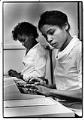
Women learning keypunch at SOIC, January 1979
The Seattle Opportunities Industrialization Center, or SOIC (pronounced "So I see"), was established in 1966, largely through a grant from the Office of Economic Opportunity, the federal agency funding "war on poverty" programs. Modeled after the original OIC started by a Philadelphia minister two years earlier, the community-based program recruited, trained, and placed unemployed people in the labor market. The…
ID Number:2000.107.177.26.03
Date:1979
Photograph
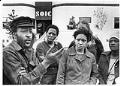
Students complaining about problems at SOIC, April 21, 1980
The Seattle Opportunities Industrialization Center, or SOIC (pronounced "So I see"), was established in 1966, largely through a grant from the Office of Economic Opportunity, the federal agency funding "war on poverty" programs. Modeled after the original OIC started by a Philadelphia minister two years earlier, the community-based program recruited, trained and placed unemployed people in the labor market. The…
ID Number:2000.107.177.26.05
Date:1980
Photograph
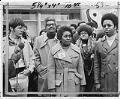
Ethel Mitchell announcing the formation of the Black Alliance of Educators, Seattle, March 4, 1972
In the 1960s, after decades of discrimination in housing had created an increasingly segregated school system in Seattle, civil rights activists wanted the School Board to promote integration and, with it, intercultural empathy and understanding. After various attempts to promote voluntary integration, and faced with the threat of legal action from advocates of integration, in 1972 the School District launched…
ID Number:2000.107.185.38.01
Date:1972
Photograph
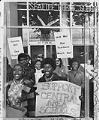
Garfield students picketing at Seattle Public School's Administrative and Service Center, May 28, 1976
In this image taken outside the Seattle School District's Administrative and Service Center, students from Garfield High School protest minority staff transfers planned to comply with federal regulations on equal minority staffing throughout the district. The protest was part of a boycott of Central Area schools, which emptied classrooms in the area's 13 schools. Caption information source: The Seattle Times,…
ID Number:2000.107.186.01.01
Date:1976
Photograph
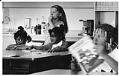
Students at the African American Academy, Seattle, 1991
In hopes of improving the academic achievement of minority students, and following years of pressure from parents, the Seattle School Board approved the opening of the African American Academy in January 1991. The Afro-centric program opened at Colman School with grades K through 5. In September 2000, after several moves, the Academy occupied a new facility designed for grades K-8.…
ID Number:2000.107.186.03.01
Date:1991
Photograph
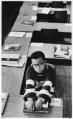
Kennedy Franklin, a student at the African American Academy, Seattle, February 26, 1993
In hopes of improving the academic achievement of minority students, and following years of pressure from parents, the Seattle School Board approved the opening of the African American Academy in January 1991. The Afro-centric program opened at Colman School with grades K through 5. In 1993, parents complained about the school’s instability and lack of resources.In September 2000, after several…
ID Number:2000.107.186.03.02
Date:1993
Photograph
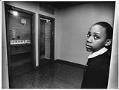
Anna Stanton, student at African American Academy, Seattle, 1993
In hopes of improving the academic achievement of minority students, and following years of pressure from parents, the Seattle School Board approved the opening of the African American Academy in January 1991. The Afro-centric program opened at Colman School with grades K through 5. In 1993, parents complained about the school’s instability and lack of resources.In September 2000, after several…
ID Number:2000.107.186.03.03
Date:1993
Photograph
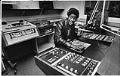
Student Eddie Releford in Cleveland High School's radio/television studio, Seattle, November 25, 1979
In the late 1970s, community and Seattle School District planners worked on a 1990 building plan to be adopted the following year. Faced with shrinking enrollments and the need to desegregate, they recommended that a number of schools, including Cleveland High School, on Seattle’s Beacon Hill, be shut down and teachers and students be moved to other schools. Cleveland students…
ID Number:2000.107.186.14.01
Date:1979