333 results for: World War II, 1941-1945 (WWII)
Photograph
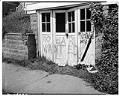
Graffiti on Japanese American home, Seattle, 1945
On December 18, 1944, the United States government announced that Japanese Americans in incarceration camps could return to their homes after January 1, 1945. In Seattle, and elsewhere on the West Coast, this was a controversial issue. When the first returnees arrived in Seattle in January, some found a cold welcome and vandalized property. Groups like the Remember the Pearl…
ID Number:PI28084
Date:1945
Photograph
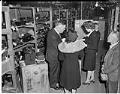
Room with property confiscated from Japanese Americans, Seattle, November 1945
On February 19, 1942, shortly after Japan's attack on Pearl Harbor and United States entry into WWII, President Franklin Roosevelt signed Executive Order 9066, calling for the exclusion of all civilians of Japanese descent from "designated military areas." In March 1942 Japanese Americans living on Bainbridge Island were the first in the country to be taken from their homes by…
ID Number:PI28086
Date:1945
Photograph
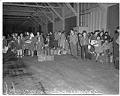
Japanese Americans at Pier 42 for return to Hawaii, Seattle, November 7, 1945
Unlike Japanese Americans on the mainland, Japanese Americans living in Hawaii during World War II were not incarcerated en masse. The approximately 150,000 Japanese Americans were the largest single ethnic group in Hawaii and constituted more than one third of the territory’s population. Hawaii’s economy and society relied on the work done by Japanese Americans, and business and military leaders…
ID Number:PI28089
Date:1945
Photograph
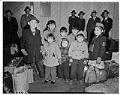
Eight Japanese American children returning from incarceration camps, November 8, 1945
In this image eight Japanese American children pose as they prepare to leave Seattle for their native Hawaii after having been released from incarceration camps.On February 19, 1942, shortly after Japan's attack on Pearl Harbor and United States entry into WWII, President Franklin Roosevelt signed Executive Order 9066, calling for the exclusion of all civilians of Japanese descent from "designated…
ID Number:PI28090
Date:1945
Photograph
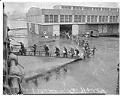
Japanese Americans boarding ship for return to Hawaii, Seattle, November 7, 1945
Unlike Japanese Americans on the mainland, Japanese Americans living in Hawaii during World War II were not incarcerated en masse. The approximately 150,000 Japanese Americans were the largest single ethnic group in Hawaii and constituted more than one third of the territory’s population. Hawaii’s economy and society relied on the work done by Japanese Americans, and business and military leaders…
ID Number:PI28091
Date:1945
Photograph
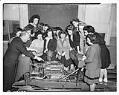
Young women in war workers class, ca. February 20, 1943.
During World War II, many women were trained to fill the jobs left by men serving in the military. Women did auto repair, aircraft assembly and other jobs once considered men's work. This photo, taken in West Seattle in February 1943, shows young women studying a car engine. The auto mechanics class may have been photographed at West Seattle High…
ID Number:PI28092
Date:1943
Photograph
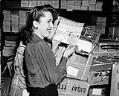
Nola Hines with ration book, Seattle, 1942
As part of the war effort of World War II each family in the country was granted monthly ration coupon books for consumer goods such as meat, tobacco, and coffee. Rationing was based on an equal sharing method where each consumer was allowed the same amount of a product. Here Nola Hines holds up a sample of the first sugar…
ID Number:PI28103
Date:1942
Photograph
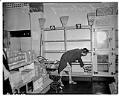
Empty shelves in grocery store, Seattle, 1942
Limited quantities and empty shelves were not unusual during World War II. Consumer products rationing was in effect throughout the country with each family receiving ration coupon books for such items as butter, sugar, meat, coffee, and tobacco. Here a shopper makes her selection from a dwindling supply of canned goods. Handwritten on negative: Food rationing - empty shelves.Handwritten on…
ID Number:PI28107
Date:1942
Photograph
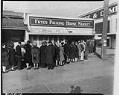
Crowd outside Fryes Packing House Market, Seattle, 1943
Long lines formed at meat markets throughout the country during World War II. Every month each family in the country received food rationing coupons based on equal sharing, each consumer was granted an equal ration per month. Here Frye & Company's retail store at 2203 Airport Way serves shoppers waiting to use their monthly meat ration coupons. Signs in image:…
ID Number:PI28112
Date:1943
Photograph
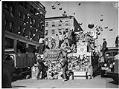
Pots and pans flying through the air during scrap drive, July 1941
Even before the United States entered World War II in 1941, groups were collecting scrap aluminum and other metals for the industries supporting the war in Europe. Throughout the war, people all over the country turned in their extra metal items to help the war effort. One scrap metal depository was set up in downtown Seattle at University Place, a…
ID Number:PI28150
Date:1941