771 results for: Transportation
Photograph
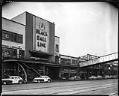
Black Ball ferry terminal, Seattle, 1946
The Black Ball Line began operating ferries on Puget Sound in 1928, running ferries between downtown Seattle's Colman Dock and both Bremerton and Port Orchard, and between Seabeck and Brinnon. This photo shows the terminal on the Seattle waterfront. Signs in image: Sunde & d'Evers Co. Ye Olde Curiosity Shop. Campbell [Ba...]. Black Ball Line. Cafe - Sea Foods. Palace…
ID Number:1983.10.12301
Date:1946
Photograph
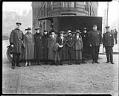
Seattle police women and police van, 1919
The Seattle Police Department hired women to look after female prisoners in the city jail and to work with women and children in cases of crime or domestic violence. As early as 1901, a police matron was assigned to King Street Station to protect women traveling alone. Another early police matron cared for runaway children in her home, because the…
ID Number:1983.10.12318
Date:1919
Photograph
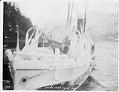
Steamer "Cutch" covered with ice, February 19, 1900
Any ships sailing Alaskan and Canadian waters in cold weather ran the risk of ice. This photo shows the steamer "Cutch" in Skagway harbor in February 1900. The "Cutch" made regular runs between Skagway and Dyea, Alaska, for the North American Transportation & Trading Company. Original title: Steamer Cutch Feb. 19, 1900Webster & Stevens number: 1948
ID Number:1983.10.13082
Date:1900
Photograph
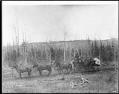
Wagon on the White Pass & Yukon Route, circa 1902
Starting in 1901, summer travelers between Whitehorse and Dawson had a choice of transportation. They could book passage on a river steamer or they could take the White Pass and Yukon Route's Yukon Stage Line. The stage line ran wagons during the summer and sleighs in the wintertime.This photo, taken sometime between 1901 and 1905, shows the Yukon Stage wagon…
ID Number:1983.10.13085
Date:Circa 1902
Photograph
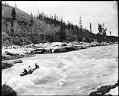
Shooting White Horse Rapids in a canoe, 1905
People traveling to the Klondike had to survive the dangers of the Yukon River to reach the gold fields. The river's White Horse Rapids were so treacherous that the Royal Canadian Mounted Police allowed only men to run them in boats. Women and children had to walk around the rapids.In this 1905 photo, taken at the Yukon River, three men…
ID Number:1983.10.13100
Date:1905
Photograph
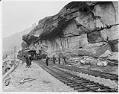
A section of the White Pass & Yukon Route railroad, circa 1899
The trek over Chilkoot and White Passes was grueling at best, particularly since gold seekers had to carry a ton or more of food and supplies. In 1898, businessmen got together to build a railroad through White Pass. The terrain and weather made construction very difficult, but the line was completed as far as Lake Bennett in July 1899.This photo…
ID Number:1983.10.13124
Date:Circa 1899
Photograph
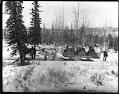
White Pass & Yukon Route sleigh, 1905
Some of the people heading to the Yukon gold fields sailed to Skagway and then packed their equipment and food through White Pass on horses and mules. Conditions along the trail were poor, and thousands of pack animals died. In 1900, the White Pass & Yukon Route railroad was completed between Skagway on the coast and Whitehorse on the Yukon…
ID Number:1983.10.13146
Date:1905
Photograph
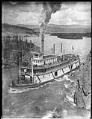
Riverboat "White Horse," circa 1905
The steamer "White Horse," nicknamed "The Old Gray Mare" was one of many Yukon River steamers which carried miners and other travelers to the Klondike gold fields near Dawson. At Five Finger Rapids, the Yukon divided into five channels around four rocky islands. The rapids were so dangerous that a cable was installed and steamboats pulled themselves along through the…
ID Number:1983.10.13153
Date:Circa 1905
Photograph
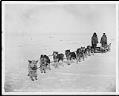
B.T. Dyer and Crosby Keen's dogsled on record trip from Seattle to Nome, April 10, 1906
On April 11, 1906, the Nome Nugget reported that Nome residents B.T. Dyer and Crosby Keen had arrived from Seattle in a record breaking 35 days. They had gone by ship to Valdez and then traveled on to Fairbanks. The men said that if they hadn't run into heavy snow on the trails and storms on the Yukon River, they…
ID Number:1983.10.13156
Date:1906
Photograph
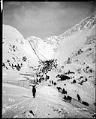
Chilkoot Pass, circa 1898
Some of the people rushing to the Klondike gold fields went by ship to Dyea, Alaska, and continued into Canada on foot by way of Chilkoot Pass. The Canadian government required each person to bring enough food and equipment to last a year. This generally weighed a thousand pounds or more, and it took several trips to carry it over…
ID Number:1983.10.13188
Date:Circa 1898