780 results for: Activism
Photograph
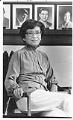
Cherry Kinoshita, Seattle, July 22, 1988
Born in Seattle, Cherry Tanaka Kinoshita (1923-2008) was interned at Minidoka Relocation Center during World War II. She married, returned to Seattle in 1950, and raised a family. Kinoshita was particularly active in efforts obtain an apology and reparations from the United States government for the wartime incarceration of Japanese Americans. In 1980, Kinoshita became a founder of the Washington…
ID Number:2000.107.105.35.02
Date:1988
Photograph
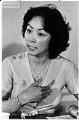
Elaine Ko speaking at press conference, Seattle, August 5, 1982
Elaine Ko (b. 1954) is a community activist in Seattle who has worked for decades on behalf of the Asian and Pacific Islander community, immigrants, refugees, women, and victims of domestic violence in the Puget Sound area. In 2006, Ko succeeded Bob Santos as Executive Director of the Inter*Im Community Development Association in Seattle's Chinatown - International District (previously the…
ID Number:2000.107.107.16.01
Date:1982
Photograph
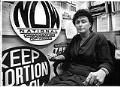
Norleen Koponen, state director of N.O.W., Seattle, October 24, 1990
This photo shows Norleen Koponen, Washington state director of the National Organization for Women (N.O.W.) and executive director of the Seattle chapter, in her office the day before N.O.W. leaders celebrated the 20th anniversary of the Seattle chapter. Over those 20 years, the chapter had brought big changes to the rights of women, including giving married women the legal right…
ID Number:2000.107.107.28.01
Date:1990
Photograph
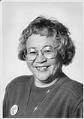
Aki Kurose, Seattle, 1992
Akiko “Aki” Kurose (1925-1998) was a peace activist and teacher in Seattle. She was Nisei, a second generation Japanese American. When Japanese Americans were forcibly removed from the West Coast, Kurose and her family were sent to the temporary detention center in Puyallup, then the Minidoka concentration camp. Kurose returned to Seattle in 1950 and soon became active in movements…
ID Number:2000.107.108.24.01
Date:1992
Photograph
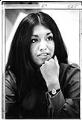
Laverne Lane, December 3, 1971
This photo shows Laverne Lane, a Seattle University (SU) junior who was the Indian-Chicano coordinator for ethnic cultural activities at SU. Part of her job was recruiting Native students for the university from reservation high schools. Lane grew up on the Lummi reservation in Bellingham and had first hand experience of the problems that Native students from a reservation faced…
ID Number:2000.107.110.02.01
Date:1971
Photograph
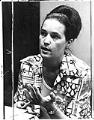
Elaine LaTourelle talking about NOW, Seattle, June 12, 1974
Elaine Day LaTourelle (b. 1938) is an architect and women's rights activist based in Seattle. She received her Bachelors degree in Architecture from the University of Washington (UW) in 1961, and her Master's from Yale University. LaTourelle practiced architecture with her husband as LaTourelle Associates from 1968-1980, and later as Elaine Day LaTourelle and Associates Architecture & Design. She taught…
ID Number:2000.107.110.34.01
Date:1974
Photograph
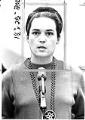
Elaine Day Latourelle speaking at anti-war forum, Seattle, January 13, 1973
Elaine Day LaTourelle (b. 1938) is an architect and women's rights activist based in Seattle. She received her Bachelors degree in Architecture from the University of Washington (UW) in 1961, and her Master's from Yale University. LaTourelle practiced architecture with her husband as LaTourelle Associates from 1968-1980, and later as Elaine Day LaTourelle and Associates Architecture & Design. She taught…
ID Number:2000.107.110.34.02
Date:1973
Photograph
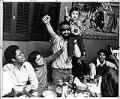
Roberto Maestas, Larry Gossett and others celebrating in restaurant , Seattle, December 26, 1972
Seattle had a growing Latino population in the late 1960s, and activists had been pressing the city for a building in which to establish a Chicano community center. Tired of having their requests ignored, in October 1972 they took over the abandoned Beacon Hill School on 16th Avenue South and renamed it El Centro de la Raza. After a 75-day…
ID Number:2000.107.117.04.01
Date:1972
Photograph
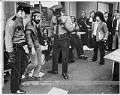
Roberto Maestas being escorted out of mayor's office, Seattle, April 5, 1973
Seattle had a growing Latino population in the late 1960s, and activists had been pressing the city for a building in which to establish a Chicano community center. Tired of having their requests ignored, in October 1972 they took over the abandoned Beacon Hill School on 16th Avenue South and renamed it El Centro de la Raza. After a 75-day…
ID Number:2000.107.117.04.02
Date:1973
Photograph
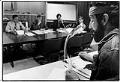
Roberto Maestas speaking to city council members, Seattle, June 11, 1974
Seattle had a growing Latino population in the late 1960s, and activists had been pressing the city for a building in which to establish a Chicano community center. Tired of having their requests ignored, in October 1972 they took over the abandoned Beacon Hill School on 16th Avenue South and renamed it El Centro de la Raza. After a 75-day…
ID Number:2000.107.117.04.03
Date:1974