1668 results for: Webster
Photograph
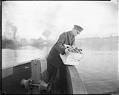
Policeman disposing of firearms in Elliott Bay, circa 1922
The Seattle Police Department got rid of guns and other weapons when they no longer needed them for evidence. In this photo, taken about 1922, a policeman empties a crate of firearms over the side of a boat in Elliott Bay. Webster & Stevens number: 103312
ID Number:1983.10.113.2
Date:Circa 1922
Photograph
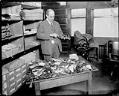
Firearms and other weapons in the police department property room, circa 1922
Seattle police took guns and other weapons from people arrested for crimes. The weapons were tagged as evidence and kept for use during trials. In this photo, taken about 1922, a staff member checks a pile of firearms and other weapons. Webster & Stevens number: 103312
ID Number:1983.10.113.4
Date:Circa 1922
Photograph
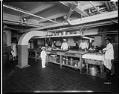
Workers in galley of steamship President Jackson, probably in Seattle, circa 1923
The "President Jackson" carried passengers and freight between Seattle and Asian ports in the 1920s and 1930s. One of its most important cargoes was Japanese raw silk, headed for mills in the eastern United States. The workers in the galley shown in this photo are probably from the Philippines. Handwritten on sleeve: Admiral Oriental Line Co., President Jackson, storage quarters,…
ID Number:1983.10.123.2
Date:Circa 1923
Photograph
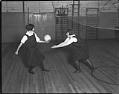
Women playing volleyball at the University of Washington , circa 1923
Women's sports became very popular at universities in the 1920s. For much of the 1800s, athletic activities for women were considered improper and even harmful. In this photo, two University of Washington students pose with a volleyball. They are wearing typical women's athletic uniforms of the 1920s: a blouse and jumper with bloomers. Webster & Stevens number: 103533
ID Number:1983.10.134.5
Date:Circa 1923
Photograph
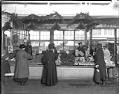
Valley Vegetable Gardens stall at Pike Place Market, Seattle, circa 1928
Before the Pike Place Market opened in 1907, King County farmers had a harder time making a steady income. They either had to sell their produce to wholesalers or travel to town to sell directly to hotels, restaurants, and residents. If no buyers were found, the fruits and vegetables were left to rot. The market gave farmers a permanent place…
ID Number:1983.10.140.3
Date:Circa 1928
Photograph
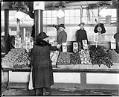
Buying lettuce at the Pike Place Market, January 1924
Even in January, Seattle shoppers could choose from neatly-piled lettuce, brussels sprouts, potatoes, and other fresh vegetables at the Pike Place Market. The price signs looks like the ones still in use today, but the prices have changed! In this photo, a woman shops for lettuce, at 10 cents per head. The onions are 5 cents a pound, or 6…
ID Number:1983.10.140.5
Date:1924
Photograph
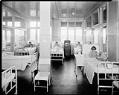
Girls' ward at the Children's Orthopedic Hospital, 1929
In 1909, a group of Seattle women founded Children's Orthopedic Hospital. Until that time, the city had no hospital wards designed specifically for children. Until that time, sick children and adults stayed in the same wards. The hospital's first building was on Warren Avenue on Queen Anne Hill. In the 1950s, the hospital moved to the Laurelhurst area. It is…
ID Number:1983.10.194.2
Date:1929
Photograph
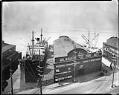
Pier 6, Seattle, circa 1915
Pier 6 (now Pier 57) was built in 1902 by John B. Agen and acquired by the Milwaukee Road railroad company in 1912. Known as Milwaukee Pier, it was used by shipping lines and other companies until the Port of Seattle bought the pier in 1968. Hal Griffith Jr. obtained the pier in 1989 and turned it into the attraction…
ID Number:1983.10.196.1
Date:Circa 1915
Photograph
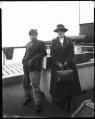
Red Cross nurse Elizabeth Brady and Indigenous man, Seattle, circa 1924
Born in Ireland, Elizabeth Brady was a member of the Providence School of Nursing's first graduating class. At the time this photo was taken, she was working as a Red Cross nurse for the city of Seattle. Her job was to follow up with patients originally seen by a doctor at the Seattle Health Department. She later worked as a…
ID Number:1983.10.202
Date:Circa 1924
Photograph
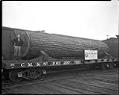
Man and large log on railroad flatcar, circa 1909
Sometime around 1909, the St. Paul & Tacoma Lumber Company advertised the firm using a huge log of Douglas fir. This photo shows a man and the log on a Chicago, Milwaukee and St. Paul Railroad flatcar. The sign reads, "This fir log is a sample of the raw material used by St. Paul & Tacoma Lumber Co., Tacoma, Washington…
ID Number:1983.10.208.1
Date:1909