705 results for: KING - TV
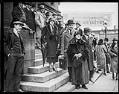
Photograph
Roy and Elise Olmstead with Roy's mother Sarah at courthouse, Seattle, 1926
During Seattle's Prohibition years in the 1920s, Roy Olmstead became one of the largest and most successful bootleggers in King County. Learning how the trade operated from involvement in raids and arrests while serving as a Seattle Police Lieutenant, Olmstead noted the lack of organization of many bootleggers and began his own operation. After an arrest and dismissal from the…
ID Number:1986.5G.2267.1
Date:1926
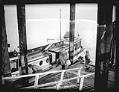
Photograph
Roy Olmstead in a boat arriving at a dock, Steilacoom, 1931
During Seattle's Prohibition years in the 1920s, Roy Olmstead became one of the largest and most successful bootleggers in King County. Learning how the trade operated from involvement in raids and arrests while serving as a Seattle Police Lieutenant, Olmstead noted the lack of organization of many bootleggers and began his own operation. After an arrest and dismissal from the…
ID Number:1986.5G.2269.1
Date:1931
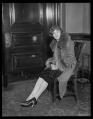
Photograph
Elise Olmstead, Seattle, circa 1926
Elise Olmstead was the second wife of Roy Olmstead, one of the largest and most successful bootleggers in King County during the 1920s Prohibition years. Born in London, England in 1899 as Elsie Parsche, Elise originally immigrated to Vancouver, and after some back and forth across the border, by 1922 she was living full-time in Seattle as Elsie Campbell. At…
ID Number:1986.5G.2278.1
Date:Circa 1926
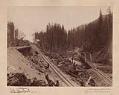
Photograph
Northern Pacific line in Green River Valley, circa 1888
This view of the Northern Pacific Railroad along upper reaches of the Green River was taken in the 1880s. It has been suggested that the smoke in the background is the town of Weston, established in 1886, which lay at the base of the heaviest grade on the west side of the mountains, following a drop of 1,000 feet in…
ID Number:1986.17.8
Date:Circa 1888
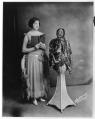
Photograph
Elise Olmstead reading story book into microphone, circa 1924
Elise Olmstead, originally from England, was the second wife of Roy Olmstead, one of the most notorious bootleggers in King County during the Prohibition years of the 1920s. The Olmsteads started a radio station in their Mt. Baker home. Elise Olmstead read children's stories that were broadcast, and Prohibition agents speculated that the stories contained coded messages for rumrunners. This…
ID Number:1987.30.2
Date:Circa 1924
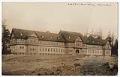
Photograph
Hospital building at Firlands Sanatorium, circa 1915
In 1911, Firlands Sanatorium began accepting patients suffering from highly infectious tuberculosis (TB). The hospital's country setting in Richmond Highlands, well north of Seattle, isolated patients from the healthy populace and provided the fresh air which doctors considered essential. In 1948, Firlands housed nearly 1,050 patients. It closed in 1968 after new antibiotic treatments allowed patients to live at home.This…
ID Number:1987.60.23
Date:Circa 1915
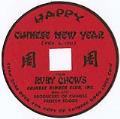
Ephemera
Ruby Chow's New Year's Coin coaster, February 6, 1951
Ruby Chow and her husband Ping opened Ruby Chow's restaurant in an old mansion at Broadway and Jefferson Street in 1948, the first Chinese restaurant in Seattle located outside of Chinatown. Ruby Chow would spend a lifetime as a community leader, including service as the first Asian American on the King County Council, first elected in 1973 and serving for…
ID Number:1989.43.3
Date:1951
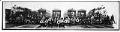
Photograph
King Street Station employees posing in coach yard, Seattle, October 2, 1929
From 1888 through the 1950s trains dominated travel in and out of Seattle, via the King Street Station and Union Station in Seattle's Pioneer Square neighborhood. Built between 1904 and 1906, the King Street Station served the Great Northern Railway and Northern Pacific Railway until the creation and start of Amtrak in 1971. The depot with its 242-foot clock tower…
ID Number:1989.87.1
Date:1929
Poster
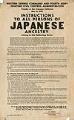
Civilian Exclusion Order No. 80 poster, King County, March 1942
On February 19, 1942, President Franklin Roosevelt signed Executive Order 9066, authorizing the incarceration of all people of Japanese descent, including American citizens, from "designated military areas." Just a few weeks later, the U. S. Army began posting notices detailing the Civilian Exclusion Orders issued in cities along the West Coast. As instructed on these signs, incarcerees could take with…
ID Number:1991.72.12
Date:1942
Poster
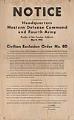
Civilian Exclusion Order No. 80 poster, King County, March 1942
On February 19, 1942, President Franklin Roosevelt signed Executive Order 9066, authorizing the incarceration of all people of Japanese descent, including American citizens, from "designated military areas." Just a few weeks later, the U. S. Army began posting notices detailing the Civilian Exclusion Orders issued in cities along the West Coast. As instructed on these signs, incarcerees could take with…
ID Number:1991.72.13
Date:1942