525 results for: Government and Public Services
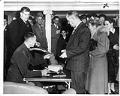
Photograph
Arrivals from Alaska, Seattle, December 25, 1952
The 1952 McCarran Act combined various disparate United States immigration laws into a single statute. One effect of the law required that residents of the Territory of Alaska arriving in the continental U.S. had to prove their identity. Seattle's first test of the new law was the arrival of the S.S. Baranof from Seward, Alaska.Here, District Immigration Director John P.…
ID Number:2000.107.095.22.01
Date:1952
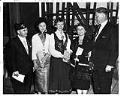
Photograph
New citizens of the United States, July 4, 1963
Each year, the Immigration and Naturalization Service holds ceremonies for new immigrants to become U.S. citizens. In 1963, the July 4th naturalization ceremonies were held at the Aqua Theater at Green Lake.Here, three new citizens stand between American Legion Commander (Seattle Post 1) Dan P. Danilov and John. P. Boyd, district director of the INS, who had presented the certificates.…
ID Number:2000.107.095.22.02
Date:1963
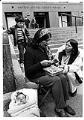
Photograph
Jean Halliday sitting outside federal courthouse, Seattle, April 6, 1970
Fort Lawton was a United States Army post located in the Magnolia neighborhood of Seattle, overlooking Puget Sound. In 1968 the site was rejected for proposed defense upgrades, and the Army began downsizing the property. In 1970 the United Indians of All Tribes Foundation (UIATF) presented a claim to all lands that might be declared surplus by the Army. Led…
ID Number:2000.107.095.26.01
Date:1970
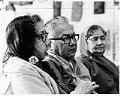
Photograph
Lottie J. Fenton, Charles James, and Ione H. Knox in Seattle, May 2, 1971
This image shows Lottie J. Fenton, left, Charles James, and Ione H. Knox, all members of the Duwamish Tribe, at the Indian Center on Boren Avenue and Stewart Street. They are listening to a description as to how local Native peoples might obtain permission from the State Department of Fisheries to harvest some of the expected heavy salmon run into…
ID Number:2000.107.095.26.02
Date:1971
Photograph
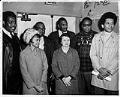
Officers of Citizens Advisory Council for Model Cities posing together, Seattle, January 13, 1969
In response to urban problems of poverty and race in the United States, in November 1966 Congress initiated the Model Cities Program. The program's objectives were to reduce social and economic disadvantages in designated neighborhoods, provide training and employment opportunities, and establish health services for residents. Financial and technical assistance was made available to cities through the Department of Housing…
ID Number:2000.107.099.31.05
Date:1969
Photograph
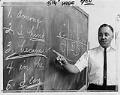
Rex Jones teaching management trainees, Seattle, August 16, 1967
The Seattle Opportunities Industrialization Center, or SOIC (pronounced "So I see") was established in 1966, largely through a grant from the Office of Economic Opportunity, the federal agency funding "war on poverty" programs. Modeled after the original OIC started by a Philadelphia minister two years earlier, the community-based program recruited, trained and placed unemployed people in the labor market. The…
ID Number:2000.107.101.12.01
Date:1967
Photograph
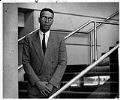
James Kelly standing outside building, Seattle, November 8, 1991
James Kelly came to Seattle from his native Illinois in 1976, and received a Masters degree in Social Work from the University of Washington in 1980. Kelly worked as an investigator for Washington State Child Protective Services, and in the Seattle City Attorney’s Office, before being appointed by Governor Booth Gardner to head the newly created Commission on African-American Affairs…
ID Number:2000.107.103.19.02
Date:1991
Photograph
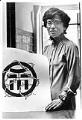
Cherry Kinoshita holding symbol of Japanese American incarceration, Seattle, July 22, 1988
Born in Seattle, Cherry Tanaka Kinoshita (1923-2008) was incarcerated at Minidoka Relocation Center during World War II. She married, returned to Seattle in 1950, and raised a family. Kinoshita was particularly active in efforts to obtain an apology and reparations from the United States government for the wartime incarceration of Japanese Americans. In 1980, Kinoshita became a founder of the…
ID Number:2000.107.105.35.01
Date:1988
Photograph
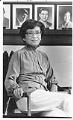
Cherry Kinoshita, Seattle, July 22, 1988
Born in Seattle, Cherry Tanaka Kinoshita (1923-2008) was interned at Minidoka Relocation Center during World War II. She married, returned to Seattle in 1950, and raised a family. Kinoshita was particularly active in efforts obtain an apology and reparations from the United States government for the wartime incarceration of Japanese Americans. In 1980, Kinoshita became a founder of the Washington…
ID Number:2000.107.105.35.02
Date:1988
Photograph
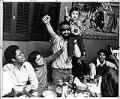
Roberto Maestas, Larry Gossett and others celebrating in restaurant , Seattle, December 26, 1972
Seattle had a growing Latino population in the late 1960s, and activists had been pressing the city for a building in which to establish a Chicano community center. Tired of having their requests ignored, in October 1972 they took over the abandoned Beacon Hill School on 16th Avenue South and renamed it El Centro de la Raza. After a 75-day…
ID Number:2000.107.117.04.01
Date:1972