436 results for: Urban Planning
Photograph
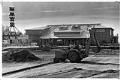
Ray's Boathouse rebuilt after fire, Seattle, March 11, 1988
One of Seattle’s landmark waterfront restaurants, Ray’s Boathouse, burned in a spectacular fire on May 26, 1987. A wiring problem beneath Ray’s pier caused plumes of smoke, which spread up into the restaurant through the kitchen floor and prompted the evacuation of customers and staff. Some 50 to 60 fire fighters, plus 20 fire trucks and boats fought the four-alarm…
ID Number:2000.107.185.24.03
Date:1988
Photograph
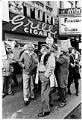
Supporters of the Turf Grill and Smoke Shop gathering for protest, Seattle, November 28, 1984
The Turf Grill and Smoke Shop opened in Seattle in the 1920s at 1407 Third Avenue. In addition to food, it sold beer and wine, cigars and cigarettes, and also had a barber shop. The Turf moved to Second and Pike in 1984 when 3rd Avenue was closed for the building of the Bus Tunnel (now the Transit Tunnel). In…
ID Number:2000.107.185.26.02
Date:1984
Photograph
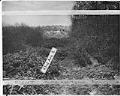
View of sanitary landfill on 43rd. Ave. S. looking south, Seattle, December 1942
This image shows a sanitary landfill on 43rd Ave S between Genesee St. and Lake Washington Boulevard. A sanitary landfill, or fill, was a type of garbage dump in which trash was deposited, spread out and compacted, then covered in several inches of dirt. The city had proposed to expand the fill eastward to 45th Ave S, but residents of…
ID Number:2000.107.188.33.01
Date:1942
Photograph
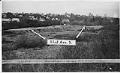
View of sanitary landfill on 43rd. Ave. S. looking west, Seattle, December 1942
This image shows a sanitary landfill on 43rd Ave S between Genesee St. and Lake Washington Boulevard. A sanitary landfill, or fill, was a type of garbage dump in which trash was deposited, spread out and compacted, then covered in several inches of dirt. The city had proposed to expand the fill eastward to 45th Ave S, but residents of…
ID Number:2000.107.188.33.02
Date:1942
Photograph
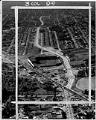
Aerial view of Empire Way and Sick's Stadium, July 11, 1953
Empire Way’s route was first laid out in 1913, as a state highway heading southeast out of Seattle. It was named for James J. Hill, the head of the Great Northern Railway, who was nicknamed the “Empire Builder.” At first, Empire Way was put together from parts of older roads on the same route. From the 1930s to the 1950s,…
ID Number:2000.107.189.11.01
Date:1953
Photograph
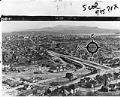
View of Rainier Avenue and Lake Way looking east, March 1954
Seattle's Atlantic neighborhood (which has also been referred to as Yesler/Atlantic and Judkins Park) is a triangular community in the Central District area, between Mount Baker Ridge and Beacon Hill. One of oldest residential neighborhoods, it was home to Seattle's largest Italian enclaves during the early years of the twentieth century. Like other neighborhoods in central and southeast Seattle, Black…
ID Number:2000.107.189.16.01
Date:1954
Photograph
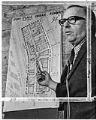
Victor Steinbrueck at press conference about saving Pike Place Market, Seattle, March 5, 1969
In 1964 the Seattle city government, in cooperation with a consortium of downtown business leaders, proposed the redevelopment and “urban renewal” of Pike Place Market. However, many Seattle residents feared that redevelopment would destroy not only the historic buildings but also the atmosphere of the market. They banded together and founded the Friends of the Market to oppose redevelopment plans.…
ID Number:2000.107.205.03.01
Date:1969
Photograph
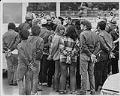
UCWA protesters arrested after entering SCCC construction site, June 22, 1972
The United Construction Workers Association (UCWA) was founded in 1970 by Tyree Scott (1940-2003), an electrician who had become a Seattle civil rights activist. The UCWA began with the goal of uniting minority construction workers to promote their employment in the construction industry and prevent discrimination. Because of union control over the local labor market, it was almost impossible for…
ID Number:2000.107.216.06.10
Date:1972
Photograph
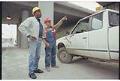
Art Pearson and Enas Epperson at job site, April 8, 1993
In 1969, Black construction workers and activists began to protest racially exclusionary hiring practices in Seattle, using direct action protests to shut down construction of several major work sites, and launching a successful lawsuit against five prominent unions in Seattle, requiring them to open membership to Black workers and to create a special apprenticeship program. Initiated and led by local…
ID Number:2000.107.19930408.1.08
Date:1993
Photograph
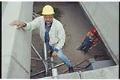
Art Pearson and Enas Epperson at job site, April 8, 1993
In 1969, Black construction workers and activists began to protest racially exclusionary hiring practices in Seattle, using direct action protests to shut down construction of several major work sites, and launching a successful lawsuit against five prominent unions in Seattle, requiring them to open membership to Black workers and to create a special apprenticeship program. Initiated and led by local…
ID Number:2000.107.19930408.1.29
Date:1993