3246 results for: Seattle Post-Intelligencer
Photograph
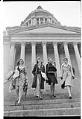
League of Women Voters members outside Washington State Capitol, Olympia, January 1974
In January 1974, a group of about 90 members of the Seattle chapter of the League of Women Voters (LWV) made their annual trip to Olympia to sit in on sessions of the Washington House of Representatives and Senate. They also spoke to Governor Dan Evans and met with several legislators representing their districts. The League members' highest priorities were…
ID Number:2000.107.19740129.1.23A
Date:1974
Photograph
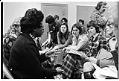
League of Women Voters members speaking to Representative Peggy Joan Maxie, Olympia, January 1974
In January 1974, a group of about 90 members of the Seattle chapter of the League of Women Voters (LWV) made their annual trip to Olympia to sit in on sessions of the Washington House of Representatives and Senate. They also spoke to Governor Dan Evans and met with several legislators representing their districts. The League members' highest priorities were…
ID Number:2000.107.19740129.1.25A
Date:1974
Photograph
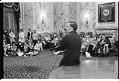
League of Women Voters listening to Dan Evans, Olympia, January 1974
In January 1974, a group of about 90 members of the Seattle chapter of the League of Women Voters (LWV) made their annual trip to Olympia to sit in on sessions of the Washington House of Representatives and Senate. They also spoke to Governor Dan Evans and met with several legislators representing their districts. The League members' highest priorities were…
ID Number:2000.107.19740129.1.33A
Date:1974
Photograph
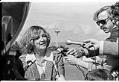
Peggy Maze, director of Neighbors in Need, announcing run for State Senate, Seattle, June 27, 1974
In the late 1960s and early 1970s, the Boeing Bust and national economic problems caused severe unemployment and poverty in Seattle and elsewhere. Peggy Maze of Seattle volunteered with an emergency assistance group, Neighbors in Need, and later became its director. NIN grew into a network of 80 food banks in 20 Washington counties. The project was so successful that…
ID Number:2000.107.19740628.1.22A
Date:1974
Photograph
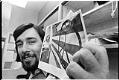
Harold Spence with a photo of his controversial peace symbol flag, June 28, 1974
In May 1970, 23-year-old Harold Spence taped a peace sign to an American flag and hung it outside his University District apartment to protest the US invasion of Cambodia and the Kent State killings. Spence was arrested and convicted at trial for improperly displaying the flag. Spence eventually petitioned the Supreme Court, which heard the case in January 1974. The…
ID Number:2000.107.19740628.2.08
Date:1974
Photograph
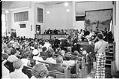
Congregation at Mount Zion Baptist Church after murder of Alberta Williams King, Seattle, June 30, 1974
Alberta Williams King (1904-1974) was an activist, organist, and the mother of martyred civil rights leader Martin Luther King, Jr. (1929-1968). She organized and led the Ebenezer Women's Committee at Ebenezer Baptist Church in Atlanta, where her husband and son were pastors, and was active in the NAACP, the Women's International League for Peace and Freedom, and the YWCA. On…
ID Number:2000.107.19740630.1.17A
Date:1974
Photograph
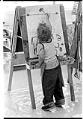
Terrez Weir painting at El Centro de la Raza's bilingual child care program, Seattle, September 1974
As more women started working outside the home, child day care and after-school activities became critical. In the Seattle area, El Centro de la Raza (The Center for People of All Races) stepped in to provide this. In 1974, El Centro opened a bilingual day care program in the basement of Beacon Hill United Methodist Church. The center, run by…
ID Number:2000.107.19740924.2.11
Date:1974
Photograph
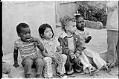
Children at El Centro de la Raza's bilingual child care program, Seattle, September 1974
As more women started working outside the home, child day care and after-school activities became critical. In the Seattle area, El Centro de la Raza (The Center for People of All Races) stepped in to provide this. In 1974, El Centro opened a bilingual day care program in the basement of Beacon Hill United Methodist Church. The center, run by…
ID Number:2000.107.19740924.2.14
Date:1974
Photograph
Director Lucia Rios at bilingual child care program sponsored by El Centro de la Raza, Seattle, September 1974
As more women started working outside the home, child day care and after-school activities became critical. In the Seattle area, El Centro de la Raza (The Center for People of All Races) stepped in to provide this. In 1974, El Centro opened a bilingual day care program in the basement of Beacon Hill United Methodist Church. The center, run by…
ID Number:2000.107.19740924.2.20
Date:1974
Photograph
Bobby Richmond with teacher Jack Esparza at El Centro de la Raza's bilingual child care program, Seattle, September 1974
As more women started working outside the home, child day care and after-school activities became critical. In the Seattle area, El Centro de la Raza (The Center for People of All Races) stepped in to provide this. In 1974, El Centro opened a bilingual day care program in the basement of Beacon Hill United Methodist Church. The center, run by…
ID Number:2000.107.19740924.2.36
Date:1974