3246 results for: Seattle Post-Intelligencer
Photograph
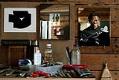
Artist Weldon Butler in his studio, Seattle, February 13, 2002
Weldon Butler (1941-2019) began studying to become an artist when he was a teenager, looking at art at the local museum and training at Fleischer Art Memorial in Philadelphia. He moved to the Pacific Northwest in 1968 and studied art at Green River College before moving to Seattle in 1973, where he first showed his works at Bumbershoot and the…
ID Number:2000.107.2002.CD01.02.03.003
Date:2002
Photograph
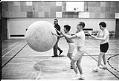
Group playing with a large ball in a PE class for the blind, Seattle, May 6, 1969
While working on a master’s degree project at Seattle’s Northwest Center, Dave Tucker realized the need for better physical education for blind students. He consolidated Seattle Public Schools’ PE programs for the blind and partially sighted and started classes in February 1968. Among his developments was the use of a large ball that students could push, climb on, and fall…
ID Number:2000.107.19720500.1.12
Date:1972
Photograph
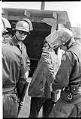
State Representative Mike Ross being arrested at UCWA protest, June 7, 1972
A 1970 federal court order established minority hiring percentages for construction unions. Two years later, the United Construction Workers Association (UCWA), a minority group, protested Seattle’s ongoing non-compliance with the order. In early June, they closed down a number of construction sites around Seattle. Despite a temporary restraining order from the King County Superior Court, UCWA members gathered June 7…
ID Number:2000.107.19720608.2.05
Date:1972
Photograph
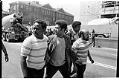
UCWA leaders at head of march at Seattle Central Community College, June 7, 1972
A 1970 federal court order established minority hiring percentages for construction unions. Two years later, the United Construction Workers Association (UCWA), a minority group, protested Seattle’s ongoing non-compliance with the order. In early June, they closed down a number of construction sites around Seattle. Despite a temporary restraining order from the King County Superior Court, UCWA members gathered June 7…
ID Number:2000.107.19720608.2.31
Date:1972
Photograph
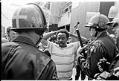
Tyree Scott being arrested at UCWA protest at Seattle Central Community College, June 7, 1972
A 1970 federal court order established minority hiring percentages for construction unions. Two years later, the United Construction Workers Association (UCWA), a minority group, protested Seattle’s ongoing non-compliance with the order. In early June, they closed down a number of construction sites around Seattle. Despite a temporary restraining order from the King County Superior Court, UCWA members gathered on June…
ID Number:2000.107.19720608.2.36
Date:1972
Photograph
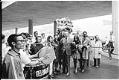
John Cherberg cutting ribbon to open new parking lot on King Street, Seattle, June 14, 1972
This image shows the opening of a parking lot on King Street at 8th Avenue S. in the Chinatown - International District. The lot is located beneath an elevated section of I-5 and was leased to the International District Improvement Association (InterIm). InterIm hoped the lot would generate profit to reinvest in the community. As of 2025, the lot is…
ID Number:2000.107.19720612.1.08
Date:1972
Photograph
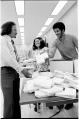
"Target 50" workers delivering voter registration cards, Seattle, July 14, 1972
The City of Seattle launched the Target 50 voter registration drive in June 1972, with the goal of registering 50,000 new voters by the end of August. Funded by Model Cities and the Office of Human Resources Youth Division, the program recruited about 50 people aged 18-21 to spend the summer registering voters across the city. The project met its…
ID Number:2000.107.19720714.3.08
Date:1972
Photograph
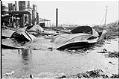
Mud and scrap at the future Gas Works Park site, Seattle, August 25, 1972
The Seattle Gas Light Company opened a coal and oil gasification plant at the north end of Lake Union in 1906. It supplied gas to homes and industries in and near Seattle, until natural gas became more available in the mid-1950s. Over the years, the gas works and a nearby tar plant badly polluted the soil, air, and water in…
ID Number:2000.107.19720825.2.20
Date:1972
Photograph
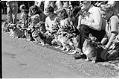
Corgis and their owners at Seattle Center, Seattle, August 27, 1972
On August 27, 1972, members of the Cascade Welsh Corgi Club gathered with their dogs at Seattle Center for the club's second annual “Corgi Walk.” This wasn’t a competition but a demonstration of the dogs’ obedience as they walked around the park. Here, members of the club and their pets wait for the beginning of the walk. Caption information source:…
ID Number:2000.107.19720827.2.27
Date:1972
Photograph
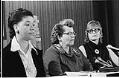
Panel at a quarterly meeting of NOW board members, Seattle, October 9, 1972
In October 1972, board members of the National Organization of Women (NOW) held a three-day quarterly meeting in Seattle. At the end, they called a press conference to voice dissatisfactions and to present priorities for upcoming months. Aileen Hernandez, NOW’s immediate past president, stated their observation that the current emphasis on law and order didn't’t seem to include the enforcement…
ID Number:2000.107.19721004.1.28
Date:1972