333 results for: World War II, 1941-1945 (WWII)
Photograph
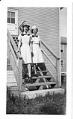
Laura Burnham and another woman in WAVES uniforms, circa 1945
The WAVES--short for Women Accepted for Volunteer Emergency Service--was the women's branch of the US Naval Reserve, established in 1942 to help release officers and enlisted men for sea duty and replace them with women in shore positions during the war. This photo shows Laura Burnham (left) and "Jeanie" in their WAVES uniform dresses. The women are standing on the…
ID Number:2014.84.7
Date:Circa 1945
Program
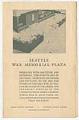
Seattle War Memorial Plaza opening program, January 1951
During World War II, the King County War Finance Committee's Victory Square in downtown Seattle was a gathering place and symbol of Seattle's war efforts. After the war, Mayor William F. Devin (1898-1982) established a War Memorial Committee who oversaw design and construction of a memorial plaza that was built as part of the new Public Safety Building. The building…
ID Number:2018.3.3.34
Date:1951
Program
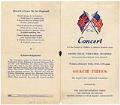
Gracie Fields benefit concert program, January 24, 1941
Dame Gracie Fields (1898-1979) was an English actress, singer, comedian, and star of both cinema and music hall. During World War II, Ms. Fields lived in California and spent much of her time entertaining Allied troops and otherwise supporting the war effort outside Great Britain. The program pictured here is from a concert featuring Gracie Fields held in Seattle at…
ID Number:2018.3.3.120
Date:1941
Ephemera
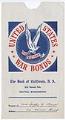
War Bond envelope, circa 1942
Sarah Sophia "Sophie" (Frye) Bass (1867-1947) was a granddaughter of Seattle pioneers Arthur Armstrong Denny (1822-1899) and Mary Ann (Boren) Denny (1822-1910). She wrote two children's books about the early history of Seattle, "When Seattle Was A Village," and "Pigtail Days in Old Seattle." Ms. Bass was a prolific collector of historical books and manuscripts, and in 1914 donated her…
ID Number:2018.3.3.121
Date:Circa 1942
Scrapbook
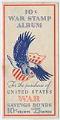
Stamp Out the Axis war savings stamp album, circa 1943
During World War II, The Greeting Card Industry, Inc. published this small album for collecting the US Treasury's War Savings Stamps. By pasting stamps in the album, the owners covered up racist caricatures of Hitler, Mussolini, a Japanese soldier, and other Axis figures.A full album of 10-cent stamps meant that the owner had contributed $18.70 to the war effort and,…
ID Number:2018.3.3.122
Date:Circa 1943
Ephemera
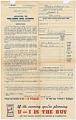
Application for home canning sugar allowance, 1944
The U.S. Office of Price Administration was created to control prices and rationing during World War II. President Franklin D. Roosevelt established the OPA by executive order in August 1941. Sugar was one of many rationed products, and each consumer was allowed five pounds of sugar for home use. Additional sugar was available by application, but its use was restricted…
ID Number:2018.3.3.123
Date:1944
Ephemera
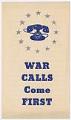
Leaflet on war-time telephone calls, July 1942
During World War II, the telephone company called on citizens to keep personal phone calls to a minimum so lines would be free for war-related communication. This leaflet from Seattle's Pacific Telephone and Telegraph Company, gives guidelines for making long distance and local calls.
ID Number:2018.3.3.125
Date:1942
Ephemera
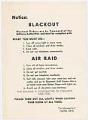
Hotel Frye air raid blackout notice, circa 1943
Seattle, with its military bases and industries, was considered an important target for Japanese air raids. Homes and businesses turned out lights and covered windows to darken the city at night. In order to keep guests safe, Seattle's Hotel Frye posted notices detailing how to black out rooms and what to do in case of an air raid.
ID Number:2018.3.3.126
Date:Circa 1943
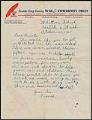
Correspondence
Letter from Francis Clowers about donating to the War & Community Chest campaign, Seattle, October 25, 1945
Seattle & King County’s 1945 War & Community Chest campaign kicked off on October 11th. In an equivalent to today’s United Way, volunteers and businesses solicited funds from area residents to support military service clubs, overseas war victims, and a number of local agencies. Fundraising was slow, and the campaign was extended into early November. In late October, as part…
ID Number:2018.64.23
Date:1945
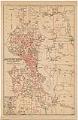
Cartographic material
Share the Ride Zone Map, Seattle, 1942
In 1942, during World War II, the federal government’s War Production Transport Commission mandated that citizens cut back on the use of gasoline and rubber tires for the war effort. Seattle and other cities developed city-wide carpooling plans. Businesses and neighborhoods formally registered share-the-ride groups, and members were eligible for additional gasoline stamps once rationing began. By the fall of…
ID Number:2019.3.46
Date:1942