1804 results for: wdh24metadata
Poster
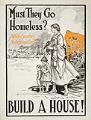
Must They Go Homeless? While Seattle's Industries Grow, circa 1917
Two of Seattle’s biggest industries during the World War I era were lumber (for ships and planes) and shipbuilding (both wood and metal). Shipyards in the U.S. grew in number and size—first to provide ships overseas, then to provide ships for the US government. Seattle’s shipping industry boomed as well, and was one of the most productive in the country.…
ID Number:1952.56.4
Date:Circa 1917
Photograph
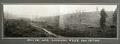
View west on Boyer Avenue, Seattle, December 15, 1911
The Montlake neighborhood of Seattle has a rich history that dates back to its earliest settlement, where both Indigenous Peoples and European settlers acknowledged the significance of the region as a vital portage route for watercraft. This area, being the narrowest stretch of land between Lake Union and Lake Washington, naturally led early inhabitants to envision a future canal connecting…
ID Number:1952.146.1
Date:1911
Photograph
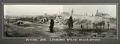
View west on Boyer Avenue, Seattle, March 15, 1913
The Montlake neighborhood of Seattle has a rich history that dates back to its earliest settlement, where both Indigenous Peoples and European settlers acknowledged the significance of the region as a vital portage route for watercraft. This area, being the narrowest stretch of land between Lake Union and Lake Washington, naturally led early inhabitants to envision a future canal connecting…
ID Number:1952.146.2
Date:1913
Photograph
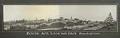
View east on Boyer Avenue, Seattle, March 15, 1913
The Montlake neighborhood of Seattle has a rich history that dates back to its earliest settlement, where both Indigenous Peoples and European settlers acknowledged the significance of the region as a vital portage route for watercraft. This area, being the narrowest stretch of land between Lake Union and Lake Washington, naturally led early inhabitants to envision a future canal connecting…
ID Number:1952.146.3
Date:1913
Photograph
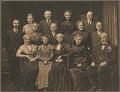
Portrait of Territorial University Alumni, Seattle, November 4, 1911
The University of Washington opened on November 4, 1861, as the Territorial University of Washington on a 10 acre site in Seattle donated by Arthur and Mary Denny, Edward Lander, and Charlie and Mary Terry, about where the Fairmont Olympic Hotel stands today. In 1895 the growing university relocated to the current campus north of downtown. This studio portrait of…
ID Number:1952.245.c
Date:1911
Document
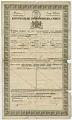
Henry Van Asselt's military passport, January 12, 1841
Henry Van Asselt was born in the Netherlands in 1817. In 1851, he and several others settled in Washington Territory's Duwamish River valley, where Boeing now stands. Van Asselt's land claim is slightly older than that of the Denny Party, making him one of the Seattle area's earliest White settlers. Van Asselt was a successful farmer and furniture maker. In…
ID Number:1952.525.F
Date:1841
Photograph
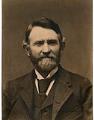
Portrait of David Denny, Seattle, circa 1890
David Thomas Denny (1832-1903) was the first member of the Denny Party (led by his older brother Arthur) to arrive in the future city of Seattle in 1851. He staked a claim to the future site of Seattle Center and in 1853 married fellow pioneer Louisa Boren (1827-1916). Denny pursued a diverse career as a community leader, capitalist, streetcar operator,…
ID Number:1952.986.47
Date:Circa 1890
Document
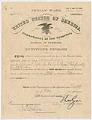
Survivor's Pension Certificate issued to Carson D. Boren, May 20, 1903
Carson Dobbins Boren (1824-1912) arrived in Seattle in 1851 as part of the group of White settlers known as the Denny party. He built a cabin at what is now the corner of Second and Cherry in downtown Seattle. Mr. Boren served as King County's first sheriff and also helped explore wagon routes over the Cascades. He preferred a solitary…
ID Number:1952.986.56
Date:1903
Architectural drawing
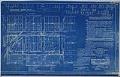
Improvement of Third Avenue et al Lighting System, Seattle, July 1927
The 1927 map pictured here was created by the Seattle City Engineer's office. It shows a roughly 12-block area of downtown Seattle between Yesler Way and Jackson Street, and Third Avenue and Fifth Avenue, on land platted as D. S. Maynard's Addition to the City of Seattle. The map shows the locations where new posts and street lamps were to…
ID Number:1952.986.57.6
Date:1927
Ephemera
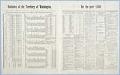
Statistics of the Territory of Washington, 1886
These statistics from 1886 were compiled from the Records of the Office of the Territorial Secretary, during the period that Watson C. Squire held the Territorial Governorship. Statistics compiled here include, among many others: County Seats, Vote totals, Vote on each side of the mountain, and names of County Surveyors and School Superintendents. Women's Suffrage was granted in 1883 in…
ID Number:1952.986.57.7
Date:1886