79 results for: Wilse, Anders Beer
Photograph
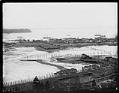
Waterfront and tidal flats from Beacon Hill, circa 1898
Tidal mudflats once extended all the way to the foot of Seattle's Beacon Hill. Roads and railroad tracks were built over the flats on wooden trestles. Developers bought these tidelands and filled it in for sawmills, shipyards, flour mills, and other waterfront industries.This photo by Anders Wilse, probably taken in 1898, shows what much of Seattle's waterfront looked like before…
ID Number:1983.10.6049.2
Date:Circa 1898
Photograph
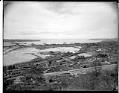
Waterfront and tideflats from Beacon Hill, Seattle, circa 1898
Tidal mudflats once extended all the way to the foot of Seattle's Beacon Hill. Roads and railroad tracks were built over the flats on wooden trestles. Developers bought these tidelands and filled it in for sawmills, shipyards, flour mills, and other waterfront industries. This photo by Anders Wilse, probably taken in 1898, shows what much of Seattle's waterfront looked like…
ID Number:1983.10.6049.4
Date:Circa 1898
Photograph
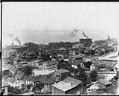
Downtown Seattle from courthouse, Seattle, circa 1898
This photo was taken from the old King County courthouse on Seventh and Jefferson. Visible in the view is the Henry Yesler residence at left center; the Burke Building at right center; and the Methodist-Episcopal Church at far right. Original photo by Anders Wilse was acquired by Webster & Stevens. Handwritten on sleeve: Business Section from Court House.Webster & Stevens…
ID Number:1983.10.6055
Date:Circa 1898
Photograph
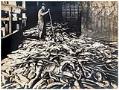
10,000 salmon on cannery wharf and Chinese worker, circa 1900
In the salmon industry, people of different races held different jobs. White workers caught the fish and took care of the equipment while Chinese laborers sorted, butchered, and canned the fish. In this photo, a Chinese worker sorts salmon into various kinds and sizes. The photo was taken by Anders B. Wilse at a Puget Sound cannery wharf sometime around…
ID Number:1990.45.20
Date:Circa 1900
Photograph
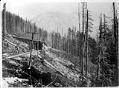
Great Northern Railway snowshed no. 2-B, circa 1898
In the steep areas of Stevens Pass, Washington, where avalanches were common, Great Northern Railway workers built snowsheds to keep snow off the railroad tracks. Early snowsheds were built of logs which were easily cut in the nearby woods. This photo, taken around 1898 by Norwegian photographer Anders Wilse, shows a log snowshed near Stevens Pass.
ID Number:1994.44.12
Date:Circa 1898
Photograph
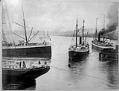
Seattle waterfront, 1899
In 1899, Seattle was still crowded with gold seekers heading to and from the Alaska and Yukon gold fields. Elliott Bay continued to be busy with ships leaving for Skagway, St. Michael and other Alaskan ports.This photo shows a group of ships in Elliott Bay. A crowd waits at the pier (right) for the arrival of the steamer "Al-Ki" (right).…
ID Number:1994.44.15
Date:1899
Photograph
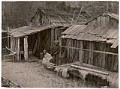
Native American couple posing outside of wooden shack, Seattle, circa 1900
Anders Beer Wilse (1865-1949) emigrated from Norway in 1884, arriving in Seattle in 1890 to work for the United States Geological Survey. Photography was an important part of his job, and in 1897 he decided to become a full time outdoor photographer. Until his return to Norway in 1900, Wilse took many photographs in and around Seattle, documenting the bustle…
ID Number:2011.1.156
Date:Circa 1900
Photograph
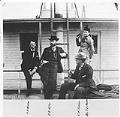
Group portrait with A. B. Wilse, Seattle, circa 1895
Anders Beer Wilse (1865-1949) emigrated from Norway in 1884, arriving in Seattle in 1890 to work for the United States Geological Survey. Photography was an important part of his various jobs as civil engineer, cartographer, and property tax assessor. In 1897, however, he decided to become a full time outdoor photographer. Until his return to Norway in 1900, Wilse took…
ID Number:Lib1985.72.2
Date:Circa 1895
Photograph
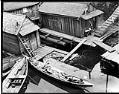
Canoes at boathouse, Seattle, circa 1900
Caption on image: S.P.Co.Photographer's Reference Number: 418
ID Number:Lib1988.33.22
Date:Circa 1900
Photograph
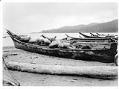
Whaling canoe at Neah Bay, 1900
The Makah people of the northwest tip of the Olympic Peninsula refer to themselves as Kwih-dich-chuh-ahtx, which translates roughly to "the people who live by the rocks and seagulls." The early Makah were skilled mariners, using several types of canoes which they carved from western red cedar for various purposes - war, whaling, fishing, sealing, carrying cargo, and long voyages.…
ID Number:Lib1988.33.23
Date:1900