121 results for: Japanese American Incarceration
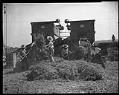
Photograph
Migrant workers harvesting hay, 1944
The entrance of the United States into World War II created a shortage of farm laborers, as American men left to serve in the war. In the Yakima Valley and western Washington, the labor shortage was exacerbated by the incarceration of Japanese-Americans, many of whom worked on farms. The Braceros program, a series of laws and diplomatic agreements between the…
ID Number:1986.5.2905.1
Date:1944
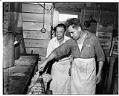
Photograph
Two men cooking in a kitchen of migrant camp, 1944
The entrance of the United States into World War II created a shortage of farm laborers, as American men left to serve in the war. In the Yakima Valley and western Washington, the labor shortage was exacerbated by the incarceration of Japanese-Americans, many of whom worked on farms. The Braceros program, a series of laws and diplomatic agreements between the…
ID Number:1986.5.2905.2
Date:1944
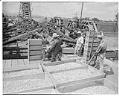
Photograph
Migrant workers harvesting, Skagit Valley, 1943
The entrance of the United States into World War II created a shortage of farm laborers, as American men left to serve in the war. In the Yakima Valley and western Washington, the labor shortage was exacerbated by the incarceration of Japanese-Americans, many of whom worked on farms. The Braceros program, a series of laws and diplomatic agreements between the…
ID Number:1986.5.2907.1
Date:1943
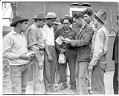
Photograph
Migrant workers, Skagit Valley, 1943
The entrance of the United States into World War II created a shortage of farm laborers, as American men left to serve in the war. In the Yakima Valley and western Washington, the labor shortage was exacerbated by the incarceration of Japanese-Americans, many of whom worked on farms. The Braceros program, a series of laws and diplomatic agreements between the…
ID Number:1986.5.2907.2
Date:1943
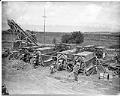
Photograph
Mexican farm workers operating pea sheller, Skagit Valley, August 1943
The entrance of the United States into World War II created a shortage of farm laborers, as American men left to serve in the war. In the Yakima Valley and western Washington, the labor shortage was exacerbated by the incarceration of Japanese-Americans, many of whom worked on farms. The Braceros program, a series of laws and diplomatic agreements between the…
ID Number:1986.5.2907.6
Date:1943
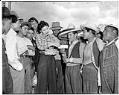
Photograph
Mexican farm workers receiving paychecks, Skagit Valley, 1943
The entrance of the United States into World War II created a shortage of farm laborers, as American men left to serve in the war. In the Yakima Valley and western Washington, the labor shortage was exacerbated by the incarceration of Japanese-Americans, many of whom worked on farms. The Braceros program, a series of laws and diplomatic agreements between the…
ID Number:1986.5.2907.10
Date:1943
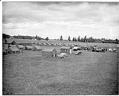
Photograph
Migrant workers camp, Skagit Valley, 1943
The entrance of the United States into World War II created a shortage of farm laborers, as American men left to serve in the war. In the Yakima Valley and western Washington, the labor shortage was exacerbated by the incarceration of Japanese-Americans, many of whom worked on farms. The Braceros program, a series of laws and diplomatic agreements between the…
ID Number:1986.5.2907.12
Date:1943
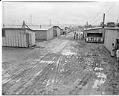
Photograph
Barracks at Puyallup Assembly Center, Puyallup, 1942
In the spring of 1942, persons of Japanese descent living on the West Coast were forcibly removed by the US Army into temporary "assembly centers" while permanent incarceration camps were built. The Puyallup Assembly Center, euphemistically named “Camp Harmony," was hastily constructed at the Washington State fairgrounds, and temporarily housed over 7,000 residents of Seattle, Tacoma, and Alaska.This photo shows…
ID Number:1986.5.6680.1
Date:1942
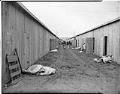
Photograph
Incarcerees moving into barracks at the Puyallup Assembly Center, Puyallup, March 1942
In the spring of 1942, persons of Japanese descent living on the West Coast were forcibly removed by the US Army into "assembly centers" while permanent incarceration camps were built. The Puyallup Assembly Center, euphemistically named "Camp Harmony," was hastily constructed at the Washington State fairgrounds in Puyallup and temporarily housed over 7,000 residents of Seattle, Tacoma and Alaska. Here,…
ID Number:1986.5.6680.2
Date:1942
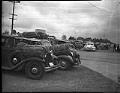
Photograph
Cars packed with belongings during forced removal of Japanese Americans, Bainbridge Island, March 1942
In the spring of 1942, persons of Japanese descent living on the West Coast were forcibly removed by the US Army to assembly centers while permanent incarceration camps were built. The Puyallup Assembly Center, euphemistically named "Camp Harmony," was hastily constructed at the Washington State fairgrounds in Puyallup and temporarily housed over 7,000 residents of Seattle, Tacoma and Alaska. Buses…
ID Number:1986.5.6680.3
Date:1942