23 results for: African Immigrants
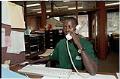
Photograph
William Deng working at the International Rescue Committee office, Seattle, August 2001
In August 2001, the U.S. Census Bureau reported that Washington state had gained more foreign residents in the past decade than in the previous thirty years combined. Sudan-born William Deng, 24, was one new Seattle resident. After his village was attacked, he and other children escaped across thousands of miles of desert and spent years in refugee camps before arriving…
ID Number:2000.107.20010803.5.07
Date:2001
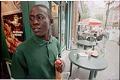
Photograph
William Deng holding a bottle of mango juice outside store, Seattle, 2001
In August 2001, the U.S. Census Bureau reported that Washington state had gained more foreign residents in the past decade than in the previous thirty years combined. Sudan-born William Deng, 24, was one new Seattle resident. After his village was attacked, he and other children escaped across thousands of miles of desert and spent years in refugee camps before arriving…
ID Number:2000.107.20010803.5.31
Date:2001
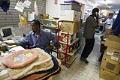
Photograph
Abdinasir Ali Nur at the Maka Mini Mart, Seattle, July 16, 2002
Three small South Seattle groceries owned by Somali immigrants were caught up in the wake of the September 11 terror attacks. In late 2001, federal agents raided Maka Mini Mart and Halal Meat, owned by Abdinasir Ali Nur, during a raid on a neighboring money-wiring business with alleged links to terrorism. Although unrelated to that neighboring business, the agents confiscated…
ID Number:2000.107.20020716.CD02.03.001
Date:2002
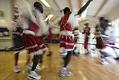
Photograph
Sudanese dancers rehearsing for performance at Highline YMCA, Burien, October 20, 2002
Many young people from southern Sudan fled their home country during its second civil war in the 1980s and 1990s, becoming known as the "Lost Boys" and "Lost Girls" of Sudan. About 3800 boys and 90 girls who fled the war were resettled in the United States, with about 100 settling in Western Washington. There, a group of about 12…
ID Number:2000.107.20021020.CD03.01.001
Date:2002
Photograph
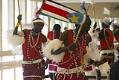
Mayen Akoon leading Sudanese dancers, October 20, 2002
Many young people from southern Sudan fled their home country during its second civil war in the 1980s and 1990s, becoming known as the "Lost Boys" and "Lost Girls" of Sudan. About 3800 boys and 90 girls who fled the war were resettled in the United States, with about 100 settling in Western Washington. There, a group of about 12…
ID Number:2000.107.20021020.CD03.01.002
Date:2002
Photograph
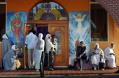
Exterior of St. Gebriel Ethiopian church, Seattle, January 2003
Seattle's Ethiopian community has grown rapidly since the 1970s, when many Ethiopians fled their home country to escape war, famine, and ethnic violence. In the early 2000s, there were several thousand Ethiopians living around Seattle, and five Ethiopian churches (three Protestant, two Ethiopian Orthodox) served their spiritual needs. The Ethiopian churches met more worldly needs as well, such as sharing…
ID Number:2000.107.20030105.CD01.001
Date:2003
Photograph
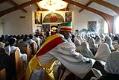
Worshipers at St. Gebriel Ethiopian church, Seattle, January 2003
Seattle's Ethiopian community has grown rapidly since the 1970s, when many Ethiopians fled their home country to escape war, famine, and ethnic violence. In the early 2000s, there were several thousand Ethiopians living around Seattle, and five Ethiopian churches (three Protestant, two Ethiopian Orthodox) served their spiritual needs. The Ethiopian churches met more worldly needs as well, such as sharing…
ID Number:2000.107.20030105.CD01.01.001
Date:2003
Photograph
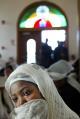
Yeshihareg Wibie at St. Gebriel Ethiopian church, Seattle, January 2003
Seattle's Ethiopian community has grown rapidly since the 1970s, when many Ethiopians fled their home country to escape war, famine, and ethnic violence. In the early 2000s, there were several thousand Ethiopians living around Seattle, and five Ethiopian churches (three Protestant, two Ethiopian Orthodox) served their spiritual needs. The Ethiopian churches met more worldly needs as well, such as sharing…
ID Number:2000.107.20030105.CD01.002
Date:2003
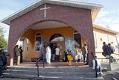
Photograph
Exterior of St. Gebriel Ethiopian church, Seattle, January 2003
Seattle's Ethiopian community has rapidly grown since the 1970s, when many Ethiopians fled their home country to escape war, famine, and ethnic violence. In the early 2000s, there were several thousand Ethiopians living around Seattle, and five Ethiopian churches (three Protestant, two Ethiopian Orthodox) served their spiritual needs. The Ethiopian churches met more worldly needs as well, such as sharing…
ID Number:2000.107.20030105.CD01.02.001
Date:2003
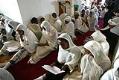
Photograph
Church members at St. Gebriel Ethiopian church, Seattle, January 2003
Seattle's Ethiopian community has rapidly grown since the 1970s, when many Ethiopians fled their home country to escape war, famine, and ethnic violence. In the early 2000s, there were several thousand Ethiopians living around Seattle, and five Ethiopian churches (three Protestant, two Ethiopian Orthodox) served their spiritual needs. The Ethiopian churches met more worldly needs as well, such as sharing…
ID Number:2000.107.20030105.CD01.03.001
Date:2003