1951 results for: ACT-UP/Seattle
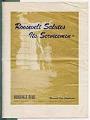
Serial
Roosevelt High School News Memorial Day supplement, Seattle, May 28, 1945
In September 1922, Roosevelt High School opened in the then-outer limits of the Seattle School District, serving 1,300 students and 47 teachers, led by Principal V. K. Froula. A dedication ceremony took place on October 27, the birthday of President Theodore Roosevelt, for whom the school was named.This image is of a Memorial Day supplement to Roosevelt High School's student…
ID Number:MS.COLL.1124
Date:1945
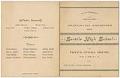
Program
Seattle High School graduation program, June 4, 1886
Public education began in Seattle in 1854, and the University of Washington was founded as the Territorial University in 1861. In the early years of the college, 1861-1867, most of the students were Seattle school children, with very few students at the collegiate level. By 1882 the student population had outgrown a number of temporary housing situations, and what is…
ID Number:MS.COLL.1214
Date:1886
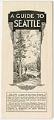
Ephemera
A Guide to Seattle, circa 1925
This pamphlet was published by the Seattle Chamber of Commerce in order to highlight places of interest for tourists visiting Seattle. The "Brief History" section highlights Seattle as a quick growing city able to offer a "range of attractions" that are argued to be unmatched on the continent. The pamphlet highlights many of the city's parks and outdoor recreational activities.…
ID Number:MS.COLL.1362.1
Date:Circa 1925
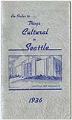
Ephemera
An Index to Things Cultural in Seattle, 1936
The Seattle Chamber of Commerce published a pocket-sized booklet of events in music, drama, and the arts scheduled for the first few months of 1936. The guide also includes general information on shopping, nightlife, schools, climate, and things to do on Sundays. The booklet was intended for visitors and residents alike. The included essay by Carl F. Gould, Chair of…
ID Number:MS.COLL.1363
Date:1936
Document
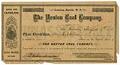
Arthur Denny's Renton Coal Company stock certificate, August 7, 1875
The Denny-Renton Clay and Coal Company was founded in 1892 by Arthur A. Denny (1822-1899) when he bought out predecessor company Puget Sound Fire Clay Company. Clay's popularity over wood as a building material grew substantially after the Great Seattle Fire in 1889. It is unclear if the Renton Coal Company is connected to the Denny-Renton Clay and Coal Company.…
ID Number:MS.COLL.1426
Date:1875
Ephemera
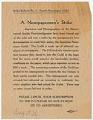
Seattle Newspaper Guild Strike Bulletin No. 1, August 1936
Spurred by "arbitrary" dismissals and assignment changes and other 'efficiency' moves" by the Seattle Post-Intelligencer, 35 newspaper writers went on strike from August 19 to November 29, 1936. This small group of strikers was able to force P-I owner William Randolph Hearst to recognize the union. Through the strike, the union was able to negotiate a 40-hour work week, originally…
ID Number:MS.COLL.1432
Date:1936
Ephemera
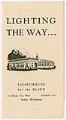
Lighthouse for the Blind brochure, Seattle, circa 1935
Seattle's Lighthouse for the Blind was started in 1916 and incorporated in 1918. The organization was founded as a means to "advance the general welfare of the blind." To accomplish this goal, the Lighthouse for the Blind ran employment and recreational training programs intended to help blind individuals regain their financial independence. In the early days these activities focused on…
ID Number:MS.COLL.1442
Date:Circa 1935
Manuscript
My First Trip to Seattle, by Nora Leonard Vandeventer, circa 1938
In her story "My First Trip to Seattle," Nora Leonard Vandeventer (1863-1944) recounts the trip she made with her family, as a child of around 10, when they moved from Tumwater to Seattle. She recounts the perilous January trip on the Zephyr, a sternwheel steamer of the Puget Sound Mosquito Fleet. Nora traveled with her parents Amy and Thomas Austin…
ID Number:MS.COLL.1523
Date:Circa 1938
Photograph
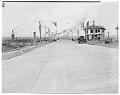
Decorating Ballard Bridge for reopening celebration, Seattle, May 1940
The Ballard Bridge, also known as the 15th Avenue Bridge, is a double-leaf bascule bridge in Seattle which connects Ballard to the Magnolia and Queen Anne neighborhoods. Opened in 1917 and spanning the Lake Washington Ship Canal, the Bridge originally had wooden approaches intended to last only ten years. The bridge was closed for repairs in 1939 and the approaches…
ID Number:PI20464
Date:1940
Photograph
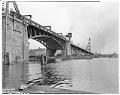
Ballard Bridge crossing Salmon Bay, Seattle, May 1940
The Ballard Bridge, also known as the 15th Avenue Bridge, is a double-leaf bascule bridge in Seattle which connects Ballard to the Magnolia and Queen Anne neighborhoods. Opened in 1917 and spanning the Lake Washington Ship Canal, the Bridge originally had wooden approaches intended to last only ten years. The bridge was closed for repairs in 1939 and the approaches…
ID Number:PI20465
Date:1940