170 results for: Hotels
Photograph
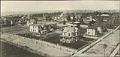
Corner of Terry and Columbia streets on First Hill, Seattle, circa 1895
One of Seattle’s seven hills, First Hill was city’s first “neighborhood” to be settled in the 1870s. Rising 366 feet above Elliott Bay, the once-forested slope was an easy walk to the city’s commercial district. By 1883, the hill entered a new era as the retreat of its “first families,” including mayors, judges, industrialists, timber barons, and art collectors. Over…
ID Number:SHS1006
Date:Circa 1895
Photograph
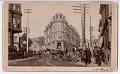
Occidental Hotel, circa 1886
In 1884, John Collins opened his Occidental Hotel at the junction of James Street and Mill Street (now Yesler Way) in Seattle. The ornate, four-story brick building was at the center of the city, just off of what is now Pioneer Square. It was considered to be the grandest hotel in Washington Territory. A bank occupied part of the ground…
ID Number:SHS1581
Date:Circa 1886
Photograph
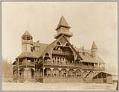
C.C. Calkins' Hotel at East Seattle, circa 1890
Wisconsin-born C.C. Calkins arrived in Seattle in 1887 and bought a homestead at the north end of Mercer Island. By 1890, he had laid out the town of East Seattle and built an elegant resort hotel. The hotel flourished for a few years but closed during the national depression of 1893. After serving as a school, a sanatorium and a…
ID Number:SHS2823
Date:Circa 1890
Photograph
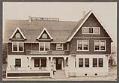
Hotel Redmond, circa 1905
Redmond, originally named Salmonberg, was settled in the early 1870s. By 1900 it had become a commercial center for local lumber mills and farms. Judge William White and his wife Emma opened the Hotel Redmond in 1899. With its 14 rooms, marble fireplaces and large drawing room, the hotel catered to wealthy guests who came to enjoy an evening of…
ID Number:SHS9380
Date:Circa 1905
Photograph
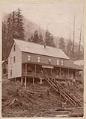
Mountain View House, Silverton, Washington, circa 1895
In 1891, a group of Washington miners named their new town Silverton for its veins of silver-bearing ore. The central Snohomish County community had a population of over 150 people in 1892. In 1897, Silverton's amenities included six hotels, five saloons, two lumber mills, four general stores, a newspaper and a band.This photo, taken in the 1890s, shows one of…
ID Number:SHS9469
Date:Circa 1895
Photograph
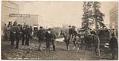
Men on the street of Atlin, British Columbia, May 24, 1899
The Klondike was not the only gold mining area. In the late 1890s, gold was also found Atlin, British Columbia, to the east of White Pass. Many gold seekers left Dawson to try their luck in Atlin.//This photo, taken by Anton Vogee, shows a group of men in the street at Atlin, B.C. Three men ride a single horse (center…
ID Number:SHS11958
Date:1899
Photograph
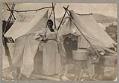
Laundry woman during gold rush, circa 1902
While some women traveled to the gold fields with their husbands, others made the trip on their own. Women worked on mining claims, taught school, or set up businesses of their own. They did laundry, cooked meals, ran hotels and dance halls, and otherwise provided services to others in the community.This photo shows an African American woman at her laundry…
ID Number:SHS12965
Date:Circa 1902
Photograph
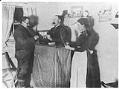
Weighing gold at the Jo Jo Hotel, circa 1900
During the Klondike and Nome gold rushes, gold dust and nuggets could be used to pay for almost anything: food, a hotel room, pack horses, a bottle of liquor, and many other business transactions.This photo shows two men weighing gold at the Jo Jo Hotel, probably so that the one on the left can have a room for the night.…
ID Number:SHS15038
Date:Circa 1900
Photograph
Portrait of Chin Yook-Nui, Seattle, circa 1925
This photograph shows Chin Yook-Nui (circa 1865-1946), the wife of prominent Chinese-American community leader, diplomat, and businessperson Goon Dip (circa 1862 -1933). Chin and Goon married in China in the late 1870s. At that time, Goon had previously lived in Portland, Oregon but returned to China for a few years. He moved back to Portland some time before 1882. Some…
ID Number:SHS15758
Date:Circa 1925
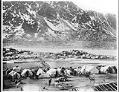
Photograph
Gold rush tent city, probably Lake Bennett, 1898
In early spring 1898, an estimated 10,000 gold seekers were camped on the shore of Lake Bennett waiting for the ice to clear. They assembled their supplies and built boats and scows to take them down the Yukon River. Until the railroad was completed in 1900, Bennett continued to be a major jumping off spot for the Klondike gold fields.…
ID Number:SHS15876
Date:1898