187 results for: Haller, Grant M.
Photograph
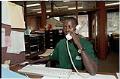
William Deng working at the International Rescue Committee office, Seattle, August 2001
In August 2001, the U.S. Census Bureau reported that Washington state had gained more foreign residents in the past decade than in the previous thirty years combined. Sudan-born William Deng, 24, was one new Seattle resident. After his village was attacked, he and other children escaped across thousands of miles of desert and spent years in refugee camps before arriving…
ID Number:2000.107.20010803.5.07
Date:2001
Photograph
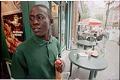
William Deng holding a bottle of mango juice outside store, Seattle, 2001
In August 2001, the U.S. Census Bureau reported that Washington state had gained more foreign residents in the past decade than in the previous thirty years combined. Sudan-born William Deng, 24, was one new Seattle resident. After his village was attacked, he and other children escaped across thousands of miles of desert and spent years in refugee camps before arriving…
ID Number:2000.107.20010803.5.31
Date:2001
Photograph
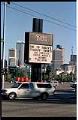
Seattle Center event cancellation sign, September 11, 2001
In the immediate aftermath of the terrorist attacks of September 11, 2001, people across the country and around the world reacted with shock and grief, while authorities in the U.S. acted swiftly to secure public buildings and landmarks seen as potential targets, in case another incident was yet to come. In Seattle, authorities evacuated downtown skyscrapers and closed federal buildings.…
ID Number:2000.107.20010911.1.10
Date:2001
Photograph
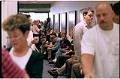
People waiting to donate blood at Puget Sound Blood Center, September 11, 2001
In the aftermath of the September 11, 2001 terrorist attacks, people across the country overwhelmed blood banks. They waited in long lines to donate out of a impulse to do something to help, and in anticipation of thousands of casualties. Upwards of a half million more units of blood were collected in the 2 months following the attacks than was…
ID Number:2000.107.20010911.9.34
Date:2001
Photograph
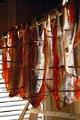
Strips of steelhead hanging in drying shed, July 26, 2002
In 1989, the Columbia River Inter-Tribal Fish Commission (CRITFC) and the Environmental Protection Agency (EPA) began studying health risks for four Indigenous tribes living in the Columbia River basin: the Yakama Nation in Washington, the Nez Perce Tribe in Idaho, the Confederated Tribes of the Umatilla Indian Reservation in Oregon, and the Confederated Tribes of the Warm Springs in Oregon.…
ID Number:2000.107.20020726.CD01.01.001
Date:2002
Photograph
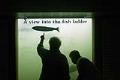
Sandra and Roger Crabtree watching steelhead on Bonneville Dam fish ladder, July 26, 2002
In 1989, the Columbia River Inter-Tribal Fish Commission (CRITFC) and the Environmental Protection Agency (EPA) began studying health risks for four Indigenous tribes living in the Columbia River basin - the Yakama Nation in Washington, the Nez Perce Tribe in Idaho, the Confederated Tribes of the Umatilla Indian Reservation in Oregon, and the Confederated Tribes of the Warm Springs in…
ID Number:2000.107.20020726.CD01.02.001
Date:2002
Photograph
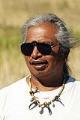
James Kiona speaking about fishing on the Columbia River, July 26, 2002
In 1989, the Columbia River Inter-Tribal Fish Commission (CRITFC) and the Environmental Protection Agency (EPA) began studying health risks for four Indigenous tribes living in the Columbia River basin - the Yakama Nation in Washington, the Nez Perce Tribe in Idaho, the Confederated Tribes of the Umatilla Indian Reservation in Oregon, and the Confederated Tribes of the Warm Springs in…
ID Number:2000.107.20020726.CD01.03.001
Date:2002
Photograph
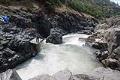
Leonard Dave, Sr. dipping for fish with a hoop net, July 26, 2002
In 1989, the Columbia River Inter-Tribal Fish Commission (CRITFC) and the Environmental Protection Agency (EPA) began studying health risks for four Indigenous tribes living in the Columbia River basin - the Yakama Nation in Washington, the Nez Perce Tribe in Idaho, the Confederated Tribes of the Umatilla Indian Reservation in Oregon, and the Confederated Tribes of the Warm Springs in…
ID Number:2000.107.20020726.CD01.04.001
Date:2002
Photograph
Larry King of the Yakama Nation fishing in the Klickitat River, July 26, 2002
In 1989, the Columbia River Inter-Tribal Fish Commission (CRITFC) and the Environmental Protection Agency (EPA) began studying health risks for four Indigenous tribes living in the Columbia River basin - the Yakama Nation in Washington, the Nez Perce Tribe in Idaho, the Confederated Tribes of the Umatilla Indian Reservation in Oregon, and the Confederated Tribes of the Warm Springs in…
ID Number:2000.107.20020726.CD01.04.002
Date:2002
Photograph
Pierre Parent having his blood pressure checked at the Monroe Correctional Complex, August 14, 2002
In August 2002, the Seattle Post-Intelligencer reported on long-standing issues in Washington's prison health care system, including incomplete or inaccurate patient records, lack of proper staff training, missed diagnoses, poor handling of emergencies, and severe medical staff shortages. At the time, Washington prisons had more than 15,000 inmates, but only five full-time staff doctors, and prison wardens instead of doctors…
ID Number:2000.107.20020814.CD01.02.001
Date:2002