1580 results for: City of Seattle
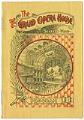
Program
Grand Opera House program, Seattle, 1902
Seattle’s Grand Opera House, at 213-217 Cherry Street, was designed by Edwin H. Houghton, a prominent Pacific Northwest theater designer. Owned by John Cort, the theater stood at the northern end of Seattle’s entertainment district. It was the city’s most important live theater when built, but its popularity declined as the city expanded northwards. It became a movie theater, and…
ID Number:1978.6598.15
Date:1902
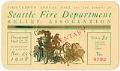
Ephemera
SFD annual charity ball ticket, November 25, 1908
The Seattle Fire Department (SFD) was organized as an all-volunteer organization in 1876. The City Charter was amended in 1883 to fund equipment, but a paid, professional unit was not organized until after the great fire in 1889. Two years later the Seattle Fire Department Relief Association was founded as a result of the tragic death of Herman Larsen, the…
ID Number:1978.6700.13
Date:1908
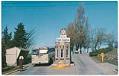
Postcard
Bus driving through south gate at Fort Lawton, Seattle, circa 1960
In 1897, the city of Seattle donated land on Magnolia Bluff to the US government to build a new Army post as part of a defense system for Puget Sound; this was designated as Fort Lawton in 1900. During most of its active service, the fort served as an embarkation station where troops gathered before being sent to duty in…
ID Number:1979.6782.x24
Date:Circa 1960
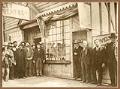
Photograph
Markus and Albert Mayer jewelry store in Dawson City, Yukon, Canada, 1898
Soon after striking gold on the banks of the Klondike River in Canada's Yukon Territory, brothers Albert Mayer (1871-1929) and Markus Mayer (1877-1950) established a watch and jewelry making business in Dawson City. Their older brother, Joseph Mayer (1868-1937), started Joseph Mayer Bros. in Seattle, which began by selling souvenir spoons, flatware, and wholesale jewelry, and grew into a major…
ID Number:1979.6792.1
Date:1898
Photograph
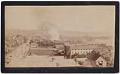
The start of the Great Seattle Fire, June 6, 1889
The Great Fire of June 6, 1889, was a significant turning point in Seattle's history and changed both the physical and political landscapes of the city. The fire started at 2:30 p.m. in a paint and woodwork shop at Front Street (now First Avenue) and Madison Street and over the course of the next 18 hours swept a southward across…
ID Number:1979.6815.3
Date:1889
Book
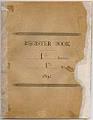
Voters' Register Book, First Precinct, First Ward, Seattle, 1892
Several months after gaining statehood in 1889, Washington legislators passed an “act to provide for and to regulate the registration of voters in cities.” This act required Washington State electors living in cities with populations over 250 to annually register to vote in that year’s elections. A required “Notice to Register” ran in newspapers for 10 days at the beginning…
ID Number:1979.6833.1
Date:1892
Photograph
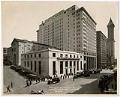
Financial district, 2nd Ave. and Columbia St., Seattle, 1925
This view of the southeast corner of Second Avenue and Columbia Street in downtown Seattle includes several buildings that remain standing. In the center of the frame The Seattle National Bank Building (now the United Way Building), built in 1921, stands at 720 Second Avenue. Moving south on Second Avenue, the 15-story Dexter Horton building is at 710 Second Avenue,…
ID Number:1980.6877.32
Date:1925
Photograph
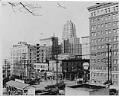
Intersection of Fifth Avenue and Spring Street, Seattle, circa 1930
This Seattle city view from around 1930s documents Fifth Avenue and Spring Street. Businesses visible in photograph include: Hotel Hungerford, Spring Dye Works, Arctic Super Service, and the Spring Apartment HotelStamped on verso: Pierson Photo Co. Commercial Photographers 401 Bay Bldg. Main 0204 Seattle, Wash.Photographer's Reference Number: 1018x
ID Number:1980.6877.34
Date:Circa 1930
Photograph
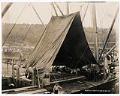
Seattle Tent & Awning Co. employees, Seattle, circa 1925
Seattle Tent and Awning Company was begun by S. W. Robb (1866-1929) when he arrived in Seattle in 1896; in 1919 he sold the business to Thomas H. McGroge. The company advertised as "Manufacturers and Jobbers" of silk and canvas tents and goods for mountaineers, sportsmen, and lumber camps. During WWI the plant was the largest producer of goods in…
ID Number:1980.6877.95
Date:Circa 1925
Photograph
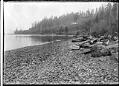
Golden Gardens beach, Seattle, circa 1910
During hot weather, Seattle residents went to nearby swimming beaches. They could travel north by automobile or streetcar to Golden Gardens, on Shilshole Bay. The city purchased the popular beach in 1923, and the park opened several years later. This photo was taken by Carl Henry Moen, who was born in Seattle in 1892 to Norwegian immigrant parents. His family…
ID Number:1980.6880.235
Date:Circa 1910