172 results for: Agriculture and Farms
Photograph
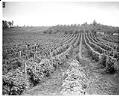
Indigenous workers in berry field, Vashon Island, June 1943
The United States' entry into World War II in December 1941 created labor shortages as many men left civilian jobs to join the military. On the West Coast, the shortage was exacerbated by the forced removal of Japanese Americans, many of whom were farmers.In the summer of 1943, the Vashon Island Packing Company hired 80 First Nations people from British…
ID Number:PI23858
Date:1943
Photograph
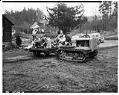
Uni group assisting returning Japanese Americans, 1945
On December 18, 1944, the United States Government announced that Japanese Americans in incarceration camps could return to their homes after January 1, 1945. In Seattle, and elsewhere on the West Coast, this was a controversial issue. When the first returnees arrived in Seattle in January, some found a cold welcome and vandalized property. The Seattle Civic Unity Committee, the…
ID Number:PI28082
Date:1945
Photograph
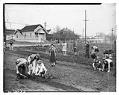
Ballard High School victory garden, Seattle, February 16, 1943
Although backyard vegetable gardens have been popular for years, they were especially common during World War II. All over the United States, people turned unused yard space and vacant lots into Victory Gardens to raise fresh produce. This 1943 photo shows Ballard High School students and teachers working in their garden. Note from MOHAI records: Photo includes botany teacher Bess…
ID Number:PI28244
Date:1943
Photograph
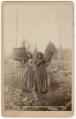
Indigenous women picking hops, Snoqualmie Hop Ranch, circa 1895
From the late 1860s to the early 1890s, hop farming was an important activity in the valleys of the Puget Sound region, including Puyallup, White River, and Snoqualmie. Indigenous workers came from throughout the Pacific Northwest, Canada, and Alaska (but especially from regional tribes like the Puyallup, Snoqualmie, Muckleshoot, Duwamish, Sammamish, Lummi, and Nisqually) as a seasonal labor force to…
ID Number:SHS1052
Date:Circa 1895
Photograph
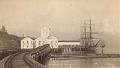
West Seattle grain elevator, circa 1895
Colonel Thomas Ewing, the major developer of West Seattle, foresaw a great industrial center on the peninsula. In 1890, Ewing built a grain elevator and hailed it as the key to Seattle's future as a worldwide grain exporter. Ewing convinced the Northern Pacific Railroad to build a trestle across the tide flats to reach his grain elevator. The railroad carried…
ID Number:SHS1053
Date:Circa 1895
Photograph
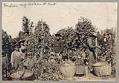
Indigenous men, women, and children working in hop field, Kent, circa 1895
From the late 1860s to the early 1890s, hop farming was an important activity in the valleys of the Puget Sound region, including Puyallup, White River, and Snoqualmie. Indigenous workers came from throughout the Pacific Northwest, Canada, and Alaska (but especially from regional tribes like the Puyallup, Snoqualmie, Muckleshoot, Duwamish, Sammamish, Lummi, and Nisqually) as a seasonal labor force to…
ID Number:SHS1975
Date:Circa 1895
Photograph
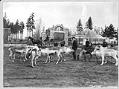
Reindeer and Sami at Woodland Park, 1898
In 1892, the United States government started bringing reindeer from Siberia into Alaska as a new food source for the native peoples. In 1898, the government brought in Norwegian reindeer, along with Sami herdsmen and their families. They stopped in Seattle to wait for a ship to Alaska. Some Sami remained in Alaska, while others eventually returned to Seattle or…
ID Number:SHS2899
Date:1898
Photograph
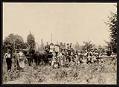
Hop pickers near Auburn, Washington, circa 1900
Brewers use the fruit of the hop plant to flavor beer. Beginning in the 1880s, hop growing brought great prosperity to western Washington state. In 1888 alone, over three quarters of a million pounds of hops were harvested in the area. The boom waned in the early 1890s when the fields were attacked repeatedly by an insect pest.This photo, taken…
ID Number:SHS6026
Date:Circa 1900
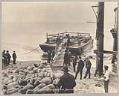
Photograph
Landing sheep at Nome for Carstens Brothers & Dashley, circa 1900
There is no harbor at Nome, Alaska, and when the Nome gold rush started in 1899, there wasn't even a city. It was a challenge for ships to bring in passengers and supply the new town with food and fuel. Vessels anchored in deep water and barges brought freight and passengers to the shore through the shallows. Each year, supplies…
ID Number:SHS9552
Date:1900
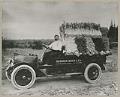
Photograph
Richard Desimone in his family’s produce truck, Seattle, circa 1946
Desimone has been a big name in the history of Seattle’s Pike Place Market. Giuseppe “Joe” Desimone, a Neapolitan immigrant, farmed successfully in the South Park area, and sold his produce at the Market. He invested his earnings in real estate and business, and by 1941, had become the majority owner of the Pike Place Market. Richard Desimone, Joe’s son,…
ID Number:SHS10720
Date:Circa 1946