1951 results for: ACT-UP/Seattle
Ephemera
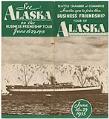
Brochure for Business Friendship Tour of Alaska, June 1933
In June 1933, the Seattle Chamber of Commerce sponsored a business cruise to Alaska for Pacific Northwest executives, their families, and friends. During the 14-day cruise on the steamship Aleutian, participants could enjoy the scenery and network with one another. The brochure includes a map and itinerary as well as information on meals, entertainment, costs, and how to make reservations.
ID Number:2018.3.3.114
Date:1933
Diary
Klondike diary of Harry V. McComb, 1897-1900
In 1896 gold was discovered on the banks of the Klondike River in Canada's Yukon Territory, triggering a stampede of prospectors into Seattle and an era of prosperity that lasted for more than a decade. In this diary of his gold rush travels, Harry V. McComb (1866-1947) of Seattle describes trips between Seattle and Alaska, and writes about stops in…
ID Number:2018.3.3.115
Date:1897-1900
Program
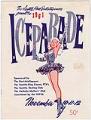
Ice Parade program, November 10-12, 1961
The Seattle Skating Club (SSC) was formed in 1931, and for at least 10 years held an ice skating exhibition event called Iceparade. Proceeds from the event went to the Seattle Post-Intelligencer's Annual Christmas Fund which provided hot lunches, clothing, and medical and dental care throughout the year for under-privileged children attending public or parochial schools in Seattle and King…
ID Number:2018.3.3.116
Date:1961
Program
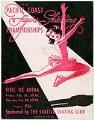
Pacific Coast Figure Skating Championship program, February 1953
In February 1953, the Seattle Skating Club sponsored the Pacific Coast Figure Skating Championships at the city's Civic Ice Arena (later Mercer Arena). The program contains images of the skaters, lists of the officials and competitors, a complete schedule of events, facts about figure skating, and a description of scoring and judging.
ID Number:2018.3.3.117
Date:1953
Ephemera
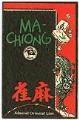
Admiral Oriental Line Ma-Chiong instruction booklet, March 1, 1923
The Admiral Line (also American Mail Line, and later Admiral Oriental Line) was a steamship company based in Seattle which operated five ocean liners sailing from Seattle to Japan and China. Pictured here is an instruction manual for Ma-Chiong, a game played on the Admiral Line ships which appears to be similar to Mahjong. The booklet was issued to passengers…
ID Number:2018.3.3.118
Date:1923
Ephemera
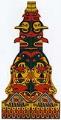
Alaska Steamship Company brochure, circa 1925
The Alaska Steamship Company was formed in 1894, initially to ship passengers and fishing products between Alaska and the Pacific Northwest. The company was able to quickly expand service to the Yukon during the 1896-1899 gold rush, and the company prospered until World War II, when the government took over the company's ships.The brochure pictured here is in the shape…
ID Number:2018.3.3.119
Date:Circa 1925
Program
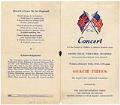
Gracie Fields benefit concert program, January 24, 1941
Dame Gracie Fields (1898-1979) was an English actress, singer, comedian, and star of both cinema and music hall. During World War II, Ms. Fields lived in California and spent much of her time entertaining Allied troops and otherwise supporting the war effort outside Great Britain. The program pictured here is from a concert featuring Gracie Fields held in Seattle at…
ID Number:2018.3.3.120
Date:1941
Ephemera
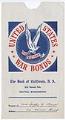
War Bond envelope, circa 1942
Sarah Sophia "Sophie" (Frye) Bass (1867-1947) was a granddaughter of Seattle pioneers Arthur Armstrong Denny (1822-1899) and Mary Ann (Boren) Denny (1822-1910). She wrote two children's books about the early history of Seattle, "When Seattle Was A Village," and "Pigtail Days in Old Seattle." Ms. Bass was a prolific collector of historical books and manuscripts, and in 1914 donated her…
ID Number:2018.3.3.121
Date:Circa 1942
Ephemera
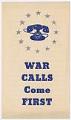
Leaflet on war-time telephone calls, July 1942
During World War II, the telephone company called on citizens to keep personal phone calls to a minimum so lines would be free for war-related communication. This leaflet from Seattle's Pacific Telephone and Telegraph Company, gives guidelines for making long distance and local calls.
ID Number:2018.3.3.125
Date:1942
Ephemera
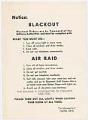
Hotel Frye air raid blackout notice, circa 1943
Seattle, with its military bases and industries, was considered an important target for Japanese air raids. Homes and businesses turned out lights and covered windows to darken the city at night. In order to keep guests safe, Seattle's Hotel Frye posted notices detailing how to black out rooms and what to do in case of an air raid.
ID Number:2018.3.3.126
Date:Circa 1943