733 results for: Labor and Labor Unions
Photograph
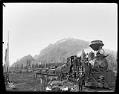
Logging train at Mt. Si, circa 1904
At first, logging companies cut trees along rivers and other bodies of water. They floated the logs downstream to the sawmill. After these areas were logged over, companies began using railroads to haul logs to a river or directly to the mill. The tracks could be moved as needed.This photo shows a Shay locomotive, the train crew, and flatcars full…
ID Number:1983.10.6916
Date:Circa 1904
Photograph
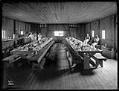
Logging camp cookhouse, circa 1904
Loggers ate their meals in the lumber camp's cookhouse. They needed three big meals to give them enough energy for ten hours of work in the woods. At a typical meal they might eat boiled corned beef, baked beans, potatoes, hash, pancakes, biscuits, butter, and coffee. Most lumber camp cooks were men.This photo shows the inside of a lumber camp…
ID Number:1983.10.6917
Date:Circa 1904
Photograph
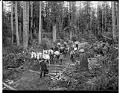
Horse team hauling logs on skid road, circa 1904
At first, loggers used oxen to haul logs out of the woods. Later, they used horses, which were more intelligent and easier to handle. The teams pulled the logs along skid roads to a river or railroad line. Skid roads were built of logs laid across or along the track. Greasing the skid road logs made it easier to pull…
ID Number:1983.10.6919
Date:Circa 1904
Photograph
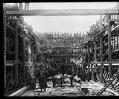
Thomas Barker talking to shipyard workers inside the hull of a wooden ship, 1918
When the United States entered World War I in 1918, Seattle's shipyard workeers were called on to help win the war.In this photo, Thomas Barker, representing the U.S. Department of Labor, speaks to several hundred shipyard workers about the importance of their work to the nation's war effort. The men are sitting on the beams and scaffolding of a large…
ID Number:1983.10.7236.3
Date:1918
Photograph
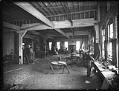
Hoffman Carriage Co., Seattle, circa 1905
Handwritten on sleeve: Hoffman Carriage Co.Webster & Stevens number: 3509A
ID Number:1983.10.7381
Date:Circa 1905
Photograph
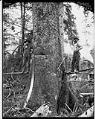
Fallers cutting a tree, circa 1905
The loggers who cut down trees were called fallers. Using their axes, they cut notches in the trunk for springboards. They then stood on the springboards and felled the tree with a crosscut saw. Cutting above ground level was easier because the trunk was narrower, and there was less pitch to gum up the saws. Even so, it might take…
ID Number:1983.10.7393
Date:Circa 1905
Photograph
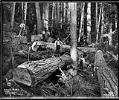
Bucking logs, circa 1905
Buckers got the logs ready to be hauled out of the woods. They cut off branches, and cut the trunks into proper lengths for the sawmill. They also beveled the ends of the logs to make them easier to move. Like all logging, bucking was very dangerous work, particularly on steep slopes. At any time, a log might roll over…
ID Number:1983.10.7394
Date:Circa 1905
Photograph
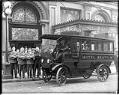
Hotel Seattle bus, 1905
The Hotel Seattle was a very popular and convenient place to stay, particularly for businessmen and people heading to Alaska. Guests could take the hotel bus to or from the nearby railroad stations and docks.This photo shows the Hotel Seattle's bus and a group of hotel workers. Webster & Stevens number: 4388
ID Number:1983.10.7472.2
Date:1905
Photograph
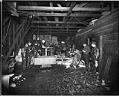
Men working inside San Juan Fish Co., Seattle, 1905
The San Juan Fish & Packing Company was one of Seattle's largest and most successful canneries. It was located at the foot of Pine Street. In this photograph, cannery workers are weighing the catch and boxes of canned salmon are stacked in the background. Handwritten on sleeve: San Juan Fish Co. Ints. 1905.Webster & Stevens number: 4414
ID Number:1983.10.7485
Date:1905
Photograph
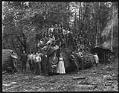
Loggers with large log, circa 1907
Handwritten on sleeve: Group of Loggers on large log.Photographer's Reference Number: 5366
ID Number:1983.10.7590
Date:Circa 1907