1669 results for: Webster
Photograph
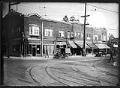
West Seattle Junction, circa 1925
The primary commercial district in the West Seattle neighborhood, commonly called the Junction, was originally formed in 1907 at the crossroads of two street car lines along what are now California Avenue SW and SW Alaska Street. Heavy promotion encouraged a residential real estate boom to the area, and the 1920s saw significant commercial growth. This image of the intersection…
ID Number:1983.10.12198.1
Date:Circa 1925
Photograph
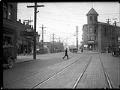
View along Ballard Avenue with City Hall building, Seattle, October 19, 1925
The cornerstone for Ballard's city hall was laid in May 1899, and the building was completed about nine years later, about the same time that Ballard was incorporated as part of Seattle. The building housed a jail, city offices, the fire department, community meeting rooms, a ballroom, and later, a police precinct. This view shows automobiles parked in front of…
ID Number:1983.10.12223.1
Date:1925
Photograph
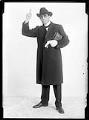
Mayor Doc Brown posing dressed as a preacher, Seattle, 1925
Edwin J. "Doc" Brown (1864-1941) was a two-term mayor of Seattle, elected in May 1922 and again in 1924. He graduated from Kansas City School of Law in 1899, and worked as a dentist, thus earning the nickname "Doc" Brown. As a politician during prohibition, Brown personally did not drink alcohol, but supported the public's right to drink.In late 1925,…
ID Number:1983.10.12247.2
Date:1925
Photograph
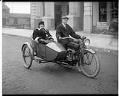
Trixie Friganza in sidecar of Harley-Davidson motorcycle, Seattle, 1917
Trixie Friganza (1870-1955) was an American actress working in vaudeville, theater, and film. When Friganza's work brought her to Seattle in 1917, H.D. Taintor of the Hirsch Cycle Company, a Harley-Davidson distributor, offered her a trip around Seattle in the sidecar of the new 1918 Harley-Davidson motorcycle. Taintor had heard that Friganza once said that she would prefer to be…
ID Number:1983.10.12263
Date:1918
Photograph
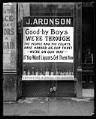
J. Aronson Liquor sign at start of Prohibition, Seattle, circa 1916
In Washington state, Prohibition lasted from 1916 until 1933. During that time, making, selling, owning, or drinking alcoholic beverages was against the law. This photo shows a farewell sign in the window of a liquor store. Sign in image: J. Aronson - Good-by Boys - We're Through - The People and the Courts Have Handed Us Our Ticket - We're…
ID Number:1983.10.12278
Date:Circa 1916
Photograph
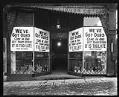
Keystone Liquor Company signs at start of Prohibition, Seattle, circa 1916
In Washington state, Prohibition lasted from 1916 until 1933. During that time, making, selling, owning, or drinking alcoholic beverages was against the law. This photo shows farewell signs in the windows of a liquor store. Signs in image: We've Got Ours - Come In and Get Yours Before It Is Too late - Open Evenings.Handwritten on sleeve: Keystone Liquor Co.Webster…
ID Number:1983.10.12279
Date:Circa 1916
Photograph
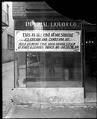
Imperial Liquor Co. sign at start of Prohibition, Seattle, circa 1916
In Washington state, Prohibition lasted from 1916 until 1933. During that time, making, selling, owning, or drinking alcoholic beverages was against the law. This photo shows a farewell sign in the window of a liquor store. Signs in image: Imperial Liquor Co. This is the end of our sinning! Ice cream and candy for us - Help us move this…
ID Number:1983.10.12280
Date:Circa 1916
Photograph
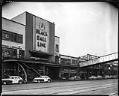
Black Ball ferry terminal, Seattle, 1946
The Black Ball Line began operating ferries on Puget Sound in 1928, running ferries between downtown Seattle's Colman Dock and both Bremerton and Port Orchard, and between Seabeck and Brinnon. This photo shows the terminal on the Seattle waterfront. Signs in image: Sunde & d'Evers Co. Ye Olde Curiosity Shop. Campbell [Ba...]. Black Ball Line. Cafe - Sea Foods. Palace…
ID Number:1983.10.12301
Date:1946
Photograph
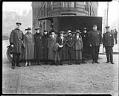
Seattle police women and police van, 1919
The Seattle Police Department hired women to look after female prisoners in the city jail and to work with women and children in cases of crime or domestic violence. As early as 1901, a police matron was assigned to King Street Station to protect women traveling alone. Another early police matron cared for runaway children in her home, because the…
ID Number:1983.10.12318
Date:1919
Photograph
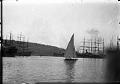
Yacht Pirate sailing on Lake Union, Seattle, April 7, 1926
The R-class racing yacht "Pirate" was designed by Ted Geary and built by the Lake Union Drydock Company in 1926. The Pirate was built for Tommy Lee, son of Los Angeles yachtsman Don Lee, as a reward for winning the Pacific Coast Star Championship in 1925, and embodies the most advanced skills and talents in both yacht design and yacht…
ID Number:1983.10.12357.2
Date:1926