3503 results for: Seattle Photographic Co.
Photograph
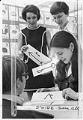
Provisional Junior League members assessing students during a reading clinic, Seattle, April 1970
For more than a century, Junior League members have confronted society’s most pressing issues and tackled its toughest problems, leaving an unrivaled legacy of reform. Since its inception in 1923, members of the Junior League of Seattle (JLS) have worked to improve our community through mission-driven projects and hands-on work with many community partners. To join the JLS, women first…
ID Number:2000.107.101.36.02
Date:1970
Photograph
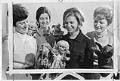
Provisional Junior League members with hand puppets, Seattle, April 1970
For more than a century, Junior League members have confronted society’s most pressing issues and tackled its toughest problems, leaving an unrivaled legacy of reform. Since its inception in 1923, members of the Junior League of Seattle (JLS) have worked to improve our community through mission-driven projects and hands-on work with many community partners.To join the JLS, women first became…
ID Number:2000.107.101.36.03
Date:1970
Photograph
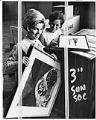
Two Seattle Junior League members with art works, Seattle, April 1971
For more than a century, Junior League members have confronted society’s most pressing issues and tackled its toughest problems, leaving an unrivaled legacy of reform. Since its inception in 1923, members of the Junior League of Seattle (JLS) have worked to improve our community through mission-driven projects and hands-on work with many community partners.Over the years, the Northwest Art Project…
ID Number:2000.107.101.36.04
Date:1971
Photograph
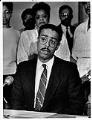
James Kelly speaking at press conference at Mt. Zion Baptist Church, Seattle, December 5, 1988
James Kelly came to Seattle from his native Illinois in 1976, and received a Masters degree in Social Work from the University of Washington in 1980. Kelly worked as an investigator for Washington State Child Protective Services, and in the Seattle City Attorney’s Office, before being appointed by Governor Booth Gardner to head the newly created Commission on African-American Affairs…
ID Number:2000.107.103.19.01
Date:1988
Photograph
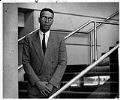
James Kelly standing outside building, Seattle, November 8, 1991
James Kelly came to Seattle from his native Illinois in 1976, and received a Masters degree in Social Work from the University of Washington in 1980. Kelly worked as an investigator for Washington State Child Protective Services, and in the Seattle City Attorney’s Office, before being appointed by Governor Booth Gardner to head the newly created Commission on African-American Affairs…
ID Number:2000.107.103.19.02
Date:1991
Photograph
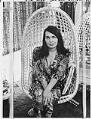
Christina Kempf, Seattle, December 1976
In January 1977, the Seattle Post-Intelligencer ran a feature over two days about transgender people. An article titled "Women Trapped in Men's Bodies" told the stories of two transgender women, Thea Williamson and Christina Kempf. The women discussed their pasts and experiences before, during, and after their transitions. An article the following day titled "Mind and Body Should Match" discussed…
ID Number:2000.107.103.27.02
Date:1976
Photograph
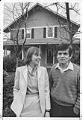
Jack and Christine King in front of their home, Kirkland, February 28, 1986
In this photo, Christine and Jack King stand outside their home in Kirkland. The couple formed Tymco. Inc., a tiny software company. Tymco's program reminds busy executives about appointments and when their professional goals have - and haven't - been met. Caption information derived from captions written by Post-Intelligencer staff and attached to the back of the photograph.
ID Number:2000.107.105.23.01
Date:1986
Photograph
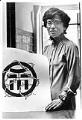
Cherry Kinoshita holding symbol of Japanese American incarceration, Seattle, July 22, 1988
Born in Seattle, Cherry Tanaka Kinoshita (1923-2008) was incarcerated at Minidoka Relocation Center during World War II. She married, returned to Seattle in 1950, and raised a family. Kinoshita was particularly active in efforts to obtain an apology and reparations from the United States government for the wartime incarceration of Japanese Americans. In 1980, Kinoshita became a founder of the…
ID Number:2000.107.105.35.01
Date:1988
Photograph
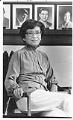
Cherry Kinoshita, Seattle, July 22, 1988
Born in Seattle, Cherry Tanaka Kinoshita (1923-2008) was interned at Minidoka Relocation Center during World War II. She married, returned to Seattle in 1950, and raised a family. Kinoshita was particularly active in efforts obtain an apology and reparations from the United States government for the wartime incarceration of Japanese Americans. In 1980, Kinoshita became a founder of the Washington…
ID Number:2000.107.105.35.02
Date:1988
Photograph
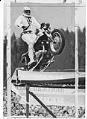
Evel Kneivel attempting a 13-car jump, Seattle, April 5, 1970
This image shows daredevil Robert "Evel" Knievel (1938-2007) at Seattle International Raceway attempting to jump over 13 parked cars on his motorcycle. He narrowly missed this jump, with his rear wheel catching on the landing ramp and throwing him and his motorcycle into the air. Knievel attributed his failure to poor traction on the grass, and shortly after this jump…
ID Number:2000.107.107.02.02
Date:1970