1580 results for: City of Seattle
Photograph
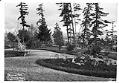
Kinnear Park, Seattle, circa 1898
Kinnear Park is located on the southwest slope of Queen Anne Hill, near Smith Cove. In 1889, George Kinnear gave the park to the City of Seattle for one dollar. Over the next ten or so years, the city built paths and flower beds, and added seats and a pavilion. Landslides plagued the lower part of the park until the…
ID Number:Lib1988.33.229
Date:Circa 1898
Photograph
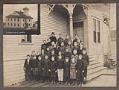
Latona School, Seattle, January 22, 1900
In 1891, a new Latona School building was built in Wallingford. This was the same year that the neighborhood became part of the city of Seattle. The wood-frame school had four large classrooms and four teachers, each paid $900.00 for the year. A new, larger school was built next door in 1906, and the older building was torn down.This photo…
ID Number:Lib1988.33.426
Date:1900
Serial
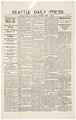
Seattle Daily Press, June 8, 1889
The Great Seattle Fire of June 6, 1889, was a significant turning point in the city's history and changed both the physical and political landscapes. The fire was accidentally started in a paint and woodwork shop at Madison Street and Front Street (now First Avenue) at 2:30 p.m., and over the course of the next 18 hours, swept a southward…
ID Number:Lib1989.19.2
Date:1889
Serial
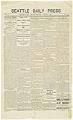
Seattle Daily Press, June 10, 1889
The Great Seattle Fire of June 6, 1889, was a significant turning point in the city's history and changed both the physical and political landscapes. The fire was accidentally started in a paint and woodwork shop at Madison Street and Front Street (now First Avenue) at 2:30 p.m., and over the course of the next 18 hours, swept a southward…
ID Number:Lib1989.19.3
Date:1889
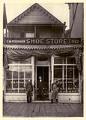
Photograph
C. M. Pessemier in doorway of his shoe store, Seattle, circa 1891
Belgium-born Camille M. Pessemier (1863-1947) first appears in a Seattle City Directory in 1891, living with his family above his shoe store at 912 Second Avenue. In 1905, "C. M.," as he was known, opened another shoe store in Tacoma with his brother, Henry J. Pessemier (1869-1940), a grocer. The Pessemier Bros. shoe stores grew to six locations in Seattle,…
ID Number:Lib1990.9.1
Date:Circa 1891
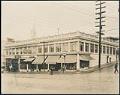
Photograph
Northwest corner of S. Jackson St. and 6th Ave S., Seattle, circa 1925
The Rainier Heat & Power Company was founded in 1912 by William M. Chappell (1867-1921). A successful businessman and gold prospector, he came to Seattle in 1900 to invest in real estate. The Rainier Heat & Power Co. maintained a heating plant and developed buildings in Seattle's Chinatown - International District. Rainier Heat & Power Co. is listed in city…
ID Number:Lib1990.21.2
Date:Circa 1925
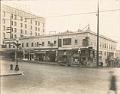
Photograph
Southeast corner of S. Jackson St. and 6th Ave S., Seattle, circa 1925
The Rainier Heat & Power Company was founded in 1912 by William M. Chappell (1867-1921). A successful businessman and gold prospector, he came to Seattle in 1900 to invest in real estate. The Rainier Heat & Power Co. maintained a heating plant and developed buildings in Seattle's Chinatown - International District. Rainier Heat & Power Co. is listed in city…
ID Number:Lib1990.21.4
Date:Circa 1925
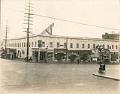
Photograph
Southwest corner of S. Jackson St. and 6th Ave S., Seattle, circa 1925
The Rainier Heat & Power Company was founded in 1912 by William M. Chappell (1867-1921). A successful businessman and gold prospector, he came to Seattle in 1900 to invest in real estate. The Rainier Heat & Power Co. maintained a heating plant and developed buildings in Seattle's Chinatown - International District. Rainier Heat & Power Co. is listed in city…
ID Number:Lib1990.21.5
Date:Circa 1925
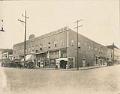
Photograph
Corner of S. King St. and 6th Ave S., Seattle, circa 1925
The Rainier Heat & Power Company was founded in 1912 by William M. Chappell (1867-1921). A successful businessman and gold prospector, he came to Seattle in 1900 to invest in real estate. The Rainier Heat & Power Co. maintained a heating plant and developed buildings in Seattle's Chinatown - International District. Rainier Heat & Power Co. is listed in city…
ID Number:Lib1990.21.8
Date:Circa 1925
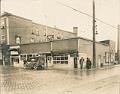
Photograph
Corner of S. King St. and 5th Ave S., Seattle, circa 1925
The Rainier Heat & Power Company was founded in 1912 by William M. Chappell (1867-1921). A successful businessman and gold prospector, he came to Seattle in 1900 to invest in real estate. The Rainier Heat & Power Co. maintained a heating plant and developed buildings in Seattle's Chinatown - International District. Rainier Heat & Power Co. is listed in city…
ID Number:Lib1990.21.12
Date:Circa 1925