1892 results for: Washington (State). Office of the Secretary of State
Ephemera
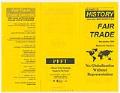
"Be part of history: Join the big march for fair trade" flier, 1999
The Third Ministerial Conference of the World Trade Organization (WTO) was held in Seattle from November 30 to December 3, 1999. Trade ministers and other officials from the WTO’s 135 member nations met in an unsuccessful attempt to plan negotiations to further deregulate free trade. Tens of thousands of activists for many causes gathered to protest what they saw as…
ID Number:2018.3.3.20
Date:1999
Document
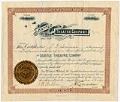
Seattle Theatre Company stock certificate, 1893
This stock certificate for the Seattle Theatre Company was issued on December 20, 1893, to J. D. Lowman for 12.5 shares, valued at $1250. The company, of which Mr. Lowman was also president, owned the Seattle Theatre, located on the northeast corner of Third Avenue and Cherry Street. A prominent Seattle business and civic leader, James D. Lowman (1856-1947) also…
ID Number:2018.3.3.23
Date:1893
Ephemera
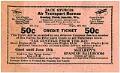
Jack Sturgis Air Transport Bureau ticket, circa 1930
This ticket offers a 50¢ credit to be used at any aviation company that is a member of the Jack Sturgis Air Transport Bureau. The bureau was run out of the Municipal Airport (also known as Boeing Field) in Seattle's Georgetown neighborhood. Services offered ranged from passenger tickets to Portland, San Francisco, and Los Angeles, to aerial tours over downtown…
ID Number:2018.3.3.24
Date:Circa 1930
Program
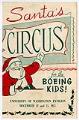
Boeing Children's Christmas Party program, 1953
The workforce and economy of Seattle from WWII through the 1970s was largely dependent on the Boeing Company and the commercial-airplane market. In 1957 business was booming due to the rise of the jet airplane. At the time Boeing employed about 100,000 people, including half of King County's manufacturing workers, while the Seattle's total population was only 550,000. This program…
ID Number:2018.3.3.31
Date:1953
Program
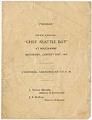
Chief Seattle Day program, 1915
The Tilikums of Elttaes were a fraternal, civic organization composed primarily of influential white Seattle area businessmen, who used Native American imagery to promote tourism and the economic development of the city. In 1912 the Tilikums ("Friends" in Chinook Jargon; Elttaes is Seattle spelled backward) organized the first Potlatch celebration (an early version of Seafair) and financed the statue of…
ID Number:2018.3.3.32
Date:1915
Program
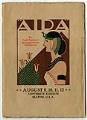
Aida program, August 1927
"Aida" is an opera in four acts composed by Giuseppe Verdi (1813-1901) to an Italian libretto by Antonio Ghislanzoni (1824-1893). Set in Egypt, it was commissioned by and first performed at Cairo's Khedivial Opera House on December 24, 1871. The opera has since been performed thousands of times all over the world, and remains a central piece in the operatic…
ID Number:2018.3.3.33
Date:1927
Program
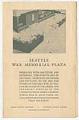
Seattle War Memorial Plaza opening program, January 1951
During World War II, the King County War Finance Committee's Victory Square in downtown Seattle was a gathering place and symbol of Seattle's war efforts. After the war, Mayor William F. Devin (1898-1982) established a War Memorial Committee who oversaw design and construction of a memorial plaza that was built as part of the new Public Safety Building. The building…
ID Number:2018.3.3.34
Date:1951
Program
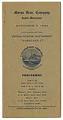
Launch of Nebraska program, 1904
In 1901, the Moran Brothers shipyard of Seattle won the bid to build one of three battleships for the US Navy. Construction of the ship, named Nebraska, began with a keel laying ceremony on July 4, 1902, at the shipyard located at the foot of South Charles Street south of Pioneer Square. Over 1,000 workers helped build the ship, which…
ID Number:2018.3.3.35
Date:1904
Poster
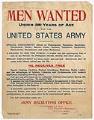
U. S. Army recruitment poster, 1917
The Men Wanted poster pictured here was issued by the U. S. Army recruiting office in March 1917, just a month before the U. S. declared war on Germany and entered the global conflict known as World War I, which had begun in 1914.
ID Number:2018.3.3.36
Date:1917
Ephemera
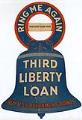
Third Liberty Loan advertisement, 1918
During World War I, the United States began selling war bonds called Liberty bonds or Liberty loans to support the allied cause. Subscribing to the bonds became a symbol of patriotic duty in the U. S. and introduced the idea of financial securities to many citizens for the first time. The Act of Congress which authorized the Liberty Bonds is…
ID Number:2018.3.3.37
Date:1918