142 results for: Johnson, B. W.
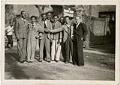
Photograph
Musicians from Earl Whaley's band in China, September 7, 1938
Many American jazz musicians traveled to Shanghai during the city's golden age in the 1930s, when "the Paris of the Orient" was the newest horizon on an increasingly international jazz music scene. For Black musicians, who were often excluded from white musicians' unions in the U. S. and subjected to other forms of segregation, Shanghai provided steady, well-paid work, and…
ID Number:2016.84.2.9.3
Date:1938
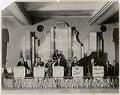
Photograph
Earl Whaley's band on stage in Shanghai, China, December 20, 1934
Many American jazz musicians traveled to Shanghai during the city's golden age in the 1930s, when "the Paris of the Orient" was the newest horizon on an increasingly international jazz music scene. For Black musicians, who were often excluded from white musicians' unions in the U. S. and subjected to other forms of segregation, Shanghai provided steady, well-paid work, and…
ID Number:2016.84.2.10.1
Date:1934
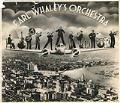
Photograph
Earl Whaley's Orchestra photo collage, circa 1937
Many American jazz musicians traveled to Shanghai during the city's golden age in the 1930s, when "the Paris of the Orient" was the newest horizon on an increasingly international jazz music scene. For Black musicians, who were often excluded from white musicians' unions in the U. S. and subjected to other forms of segregation, Shanghai provided steady, well-paid work, and…
ID Number:2016.84.2.10.2
Date:Circa 1937
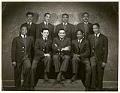
Photograph
Earl Whaley's band, Shanghai, China, circa 1937
Many American jazz musicians traveled to Shanghai during the city's golden age in the 1930s, when "the Paris of the Orient" was the newest horizon on an increasingly international jazz music scene. For Black musicians, who were often excluded from white musicians' unions in the U. S. and subjected to other forms of segregation, Shanghai provided steady, well-paid work, and…
ID Number:2016.84.2.10.3
Date:Circa 1937
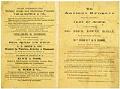
Program
Ye Ancient Syngers concert program, Seattle, December 9, 1884
Ye Ancient Syngers was a group Seattle musicians that performed from sometime in the 1880s through the early 1910s. While notices of the group are inconsistent, they seemed to have hosted semi-regular events throughout the year, especially at Christmas. By the 1910s, their events are affiliated with Methodists churches in Seattle.This program announces a "Feast of Musick" on the evening…
ID Number:2019.3.42
Date:1884
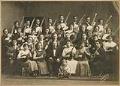
Photograph
Seattle Mandolin Orchestra, circa 1915
Mandolin orchestras were popular in the United States in the late 1890s and early 1900s. The orchestras were composed primarily of musicians playing various instruments in the mandolin family. This photo of the Seattle Mandolin Orchestra shows musicians with mandolins, saxophones, and 5-string banjos, and a conductor seated in the front row.The man in the second row from bottom, third…
ID Number:2022.38.9
Date:Circa 1915
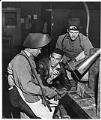
Photograph
George Dunlap training Herb Johnson and Jack Ferris, In-Plant Training Department at Todd Pacific Shipyards, Seattle Division, circa 1945
The Seattle Division of Todd Shipyard Corporation originated in 1916, when the William H. Todd Corporation purchased the Seattle Construction and Dry Dock Company (formerly Moran Brothers Shipyard). Originally located on the Seattle waterfront, the shipyard built cargo vessels for the U.S. Shipping Board during World War I. Todd moved the operation to a new plant on Harbor Island in…
ID Number:2023.36.79
Date:Circa 1945
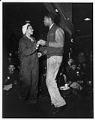
Photograph
Employees dancing at Puget Sound Bridge and Dredging Company, Seattle, January 19, 1944
Founded in 1889, the Puget Sound Bridge and Dredging Company was also called Puget Sound Bridge and Drydock, Associated Shipbuilders, and Lockheed Shipbuilding and Construction Company. The company participated in most major construction sites in the Pacific Northwest, and they are responsible for many ships, including some of the Washington State ferries and many naval vessels during and after World…
ID Number:Lib1988.13.w545
Date:1944
Photograph
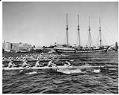
University of Washington crew team rowing near yacht Fantome, Seattle, 1954
The sailing yacht Fantome, owned by beer magnate Ernest Guinness, was stranded in Seattle in 1939 at the start of World War II. It was moored in Portage Bay for 14 years, detained after the war by King County officials hoping to collect back property taxes from Guinness. The boat was eventually converted to a tourist ship, and sank in…
ID Number:Lib1993.20.289
Date:1954
Photograph
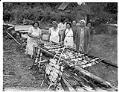
Women cooking salmon, Muckleshoot Reservation, circa 1950
The Muckleshoot Indian Tribe is made up of descendants of the Duwamish and Upper Puyallup peoples who lived near Puget Sound and its associated waterways since time immemorial. Muckleshoot ancestors lived in villages that were tied together by marriage bonds, trade, shared ceremonies, and use of the same land. This network of interconnected villages extended far beyond the Upper Puyallup…
ID Number:PI23907
Date:Circa 1950