1951 results for: ACT-UP/Seattle
Photograph
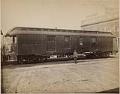
Seattle, Lake Shore & Eastern baggage car, Seattle, circa 1890
The Seattle, Lake Shore & Eastern Railway had a passenger depot and freight office at the foot of Madison Street along the waterfront. This photo shows a railroad employee standing in front of a baggage car near that location.
ID Number:2016.81.6
Date:Circa 1890
Photograph
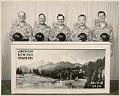
Bowling teammates posing together at tournament, Seattle, 1954
In 1954, Seattle hosted the country's then-largest sporting event, the 51st Annual American Bowling Congress Open Tournament, at the Seattle Field Artillery Armory, a building now known as the Seattle Center Armory. The tournament opened on March 20 and consisted of 95,000 games played over 45 days on 32 alleys. Over 3,000 teams made up of 16,000 players competed for…
ID Number:2016.82.6
Date:1954
Ephemera
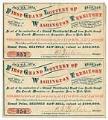
First Grand Lottery of Washington Territory tickets, July 4, 1876
In 1875, Seattle pioneer lumberman Henry Leiter Yesler (1810-1892) was property-rich but cash-poor, so he came up with a plan to liquidate much of his property by holding a lottery. The lottery had been authorized by the territorial legislative assembly the previous year in an act that stipulated 10 percent of the proceeds should be used to finance construction of…
ID Number:2016.84.1.1
Date:1876
Ephemera
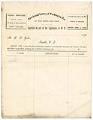
First Grand Lottery of Washington Territory ticket order form, July 4, 1876
In 1875, Seattle pioneer lumberman Henry Leiter Yesler (1810-1892) was property-rich but cash-poor, so he came up with a plan to liquidate much of his property by holding a lottery. The lottery had been authorized by the territorial legislative assembly the previous year in an act that stipulated 10 percent of the proceeds should be used to finance construction of…
ID Number:2016.84.1.2
Date:1876
Poster
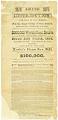
First Grand Lottery of Washington Territory broadside, Seattle, 1876
Twenty-three years after settling in Seattle, pioneer lumberman Henry Leiter Yesler (1810-1892) was property-rich but cash-poor, so he came up with a plan to liquidate much of his property by holding a lottery. The lottery was authorized by the Washington Territorial Assembly in 1875 in an act that stipulated 10 percent of the proceeds should be used to finance construction…
ID Number:2016.84.1.3
Date:1876
Poster
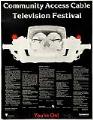
Community Access Cable Television Festival poster, Seattle, November 12-16, 1979
The poster pictured here advertises the Community Access Cable Television Festival, an event held in Seattle by the City of Seattle's Office of Cable Communications. Local viewers were invited to sample programming on and about local access networks. Caption information source: The Seattle Times, November 11, 1979, p. 206.
ID Number:2016.88.1
Date:1979
Photograph
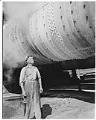
Oscar Lindgren at Pacific Coast Cement Company, Seattle, circa 1953
The Pacific Coast Cement Company was located on a 20-acre site along the East Duwamish waterway near Charleston Street from 1928-1947. The plant was designed to be easily accessible by highway, railroad, and ship along a private 460-foot wharf. At its peak, the Pacific Coast Cement Company was capable of producing 3,400 barrels of cement a day. Cement is mixed…
ID Number:2016.92.3
Date:Circa 1953
Photograph
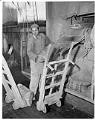
Dallas Graham, cement packer at Pacific Coast Cement Company, Seattle, circa 1953
The Pacific Coast Cement Company was located on a 20-acre site along the East Duwamish waterway near Charleston Street from 1928-1947. The plant was designed to be easily accessible by highway, railroad, and ship along a private 460-foot wharf. At its peak, the Pacific Coast Cement Company was capable of producing 3,400 barrels of cement a day. Cement is mixed…
ID Number:2016.92.16
Date:Circa 1953
Photograph
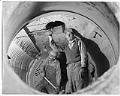
A. Koch and John Grim at Pacific Coast Cement Company, Seattle, December 12, 1952
The Pacific Coast Cement Company was located on a 20-acre site along the East Duwamish waterway near Charleston Street from 1928-1947. The plant was designed to be easily accessible by highway, railroad, and ship along a private 460-foot wharf. At its peak, the Pacific Coast Cement Company was capable of producing 3,400 barrels of cement a day. Cement is mixed…
ID Number:2016.92.24
Date:1952
Photograph
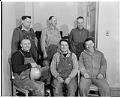
Plant foremen at Pacific Coast Cement Company, Seattle, 1952
The Pacific Coast Cement Company was located on a 20-acre site along the East Duwamish waterway near Charleston Street from 1928-1947. The plant was designed to be easily accessible by highway, railroad, and ship along a private 460-foot wharf. At its peak, the Pacific Coast Cement Company was capable of producing 3,400 barrels of cement a day. Cement is mixed…
ID Number:2016.92.39
Date:1952