771 results for: Transportation
Photograph
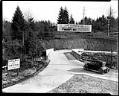
Burke Farrar Boulevard, circa 1919
As more people bought cars, Burke & Farrar and other Seattle-area real estate developers built roads between the growing towns east of Lake Washington. This photo, taken northeast of the lake in about 1919, is likely at Wayne, near Bothell. A sign directs drivers along the paved road, now 96th Ave NE, leaving the Pacific Highway, now NE Bothell Way,…
ID Number:1983.10.1481
Date:Circa 1919
Photograph
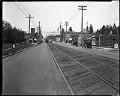
Passengers boarding trolley at West Seattle Junction, circa 1925
The primary commercial district in the West Seattle neighborhood, commonly called the Junction, was originally formed in 1907 at the crossroads of two street car lines along what are now California Avenue SW and SW Alaska Street. Heavy promotion encouraged a residential real estate boom in the area, and the 1920s saw significant commercial growth. This image of California Avenue…
ID Number:1983.10.1577.3
Date:Circa 1925
Photograph
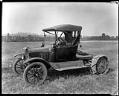
Model T Ford adapted to be a tractor, circa 1919
One of the many add-on devices made for Model T Fords is the rear tire assembly of this vehicle, which adapted the car for use as a farm tractor. Several versions of this type of conversion kit were made by different companies, one advertised under the slogan of Make-a-Tractor. Handwritten on sleeve: Kenneth [...] (negative torn)Webster & Stevens number: 75247
ID Number:1983.10.1636.5
Date:Circa 1919
Photograph
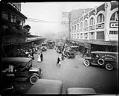
Pike Place Market with trucks and cars, 1920
In the early days of the Pike Place Market, all produce was brought to market by horse and wagon. Farmers had to get up well before dawn to make sure they got a good place to sell. By 1920, motorized trucks and cars had replaced most of the old delivery wagons. This meant a shorter and easier trip for both…
ID Number:1983.10.1659.3
Date:1920
Photograph
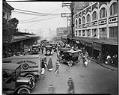
Pike Place Market, Seattle, circa 1919
This view looking north on Pike Place along the Corner Market building shows bustling activity and traffic. The old Armory building that was demolished in the 1960s can be seen in the distance on the west side of the street. Handwritten on sleeve: Public MarketWebster & Stevens number: 75356
ID Number:1983.10.1659.6
Date:Circa 1919
Photograph
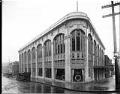
McHugh building on Hubbel Place, Seattle, circa 1920
This image of the McHugh Building was likely taken facing southwest at the intersection formed by the meeting of Hubble Way and Terry Avenue at Pike Street. The two-story automobile sales building was built for entrepreneur Thomas C. McHugh (18624-1934) by the Seattle Building Co. In 1922 the H. C. McCulloch Co. occupied the building, listed at 925 Pike Street…
ID Number:1983.10.2137
Date:Circa 1920
Photograph
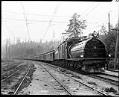
Chicago, Milwaukee, and St. Paul Railroad silk train, circa 1921
By the end of the 1920s, the single most valuable import coming through Seattle was Japanese silk. This luxury material came to Seattle on fast steamships and was sent by express train to eastern markets. Because it was both expensive and perishable, silk needed to be handled very carefully. One train carried a cargo of silk valued at $5 million.…
ID Number:1983.10.2199.1
Date:Circa 1921
Photograph
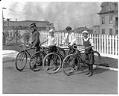
Boys and their bicycles, circa 1921
Chain-driven bicycles were invented in the 1870s and had become very popular by the 1920s, even on Seattle's steep hills. In this photo, taken about 1921, a group of Seattle boys pose with their bikes after winning a contest. Webster & Stevens number: 86522
ID Number:1983.10.2216.5
Date:Circa 1921
Photograph
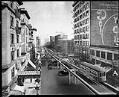
Second Avenue monorail, circa 1921
As early as 1910, inventors and businessmen believed that a monorail would solve Seattle's downtown traffic problems. The Universal Elevated Railway Company tried to convince the city to build a monorail on Second Avenue, but the city decided to purchase a ground-level system instead.This photo shows an artist's idea of what Seattle's monorail might look like. The drawing was made…
ID Number:1983.10.2219.2
Date:Circa 1921
Photograph
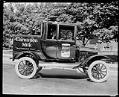
Carnation Milk truck, circa 1921
A small evaporated milk company which opened in Kent in 1899 grew to become the nationally known Carnation Company. Canned milk had a small market at first, but was soon accepted by hungry babies and gold-rush miners alike. By 1926, the company had six Seattle-area dairies and six local evaporated milk plants, plus 24 evaporated milk plants elsewhere in the…
ID Number:1983.10.2230.1
Date:Circa 1921