257 results for: Washington Territory
Photograph
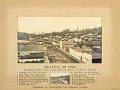
"Seattle in 1865" photo with key to locations, Seattle, 1915
This hand-colored print of an 1865 Curtis & Miller photograph of Seattle was created in 1915 by E. Jenner for the Washington Title Insurance Company. Included in the display is a guide listing some of the landmarks visible in the image. The photograph was taken from about Main Street, looking North along Commercial Street (now First Avenue South). Visible at…
ID Number:1995.50.1
Date:1915
Photograph
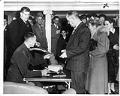
Arrivals from Alaska, Seattle, December 25, 1952
The 1952 McCarran Act combined various disparate United States immigration laws into a single statute. One effect of the law required that residents of the Territory of Alaska arriving in the continental U.S. had to prove their identity. Seattle's first test of the new law was the arrival of the S.S. Baranof from Seward, Alaska.Here, District Immigration Director John P.…
ID Number:2000.107.095.22.01
Date:1952
Photograph
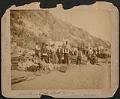
Coast Salish group on beach, circa 1885
By the late 19th century, most Seattle-area Coast Salish peoples had been moved to reservations and were excluded from living in the city. Sometime before 1895, visiting Native peoples started camping on Ballast Island, at the foot of Washington Street. After 1895, waterfront development forced the encampment further from the central waterfront.In this photo, taken during the 1880s, a Coast…
ID Number:2000.107.096.06.01
Date:Circa 1885
Photograph
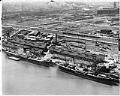
Aerial view of Foreign Trade Zone, Seattle, September 21, 1949
Foreign-Trade Zones (FTZs) are duty-free, quota-free, secured areas in a designated customs “port of entry,” considered outside U. S. Customs territory and exempt from customs tariffs. The FTZ program was established in 1934 to stimulate economic growth and development in the United States by lowering the cost of international trade.This image shows two ships docked at Seattle's FTZ: the French…
ID Number:2000.107.173.01.03
Date:1949
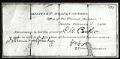
Photograph
C.W. Parker's Military pass during anti-Chinese riots, Seattle, 1886
During the mid-1880s, a nationwide economic depression led to widespread unemployment. Many white workers accused immigrants of taking their jobs. On the west coast, Chinese laborers were the targets of anger and mob violence.In the fall of 1885, anti-Chinese feelings in Seattle led to four months of riots aimed at driving the Chinese out of the city. Some Seattle citizens…
ID Number:2002.3.156
Date:1886
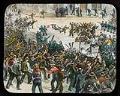
Photograph
Anti-Chinese riots, Seattle, 1886
During the mid-1880s, a nationwide economic depression led to widespread unemployment. Many white workers accused immigrants of taking their jobs. On the west coast, Chinese laborers were the targets of anger and mob violence.In the fall of 1885, anti-Chinese feelings in Seattle led to four months of riots aimed at driving the Chinese out of the city. Some Seattle citizens…
ID Number:2002.3.410
Date:1886
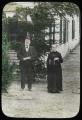
Photograph
Henry and Sarah Yesler, Seattle, 1883
Henry Yesler arrived in Seattle in 1852 looking for a waterfront sawmill location. Other settlers moved the boundaries of their land claims to accommodate space for the mill, its pier, and a skid road, now Yesler Way. Yesler's sawmill, the first steam-powered mill on Puget Sound, started operation in the spring of 1853. In addition to his mill, Yesler owned…
ID Number:2002.3.488
Date:1883
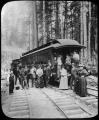
Photograph
Opening of Seattle, Lake Shore & Eastern Railway, Seattle, circa 1887
The Seattle, Lake Shore & Eastern Railroad Company was formed in 1885 by Daniel Gilman, Judge Thomas Burke, and other Seattle businessmen. By 1887, it ran from the Seattle waterfront to Smith Cove, across Salmon Bay, and along the northwest side of Lake Washington. By 1888, the line reached Fall City to the east and Snohomish to the north, eventually…
ID Number:2002.3.936
Date:Circa 1887
Ephemera
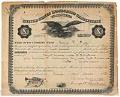
George F. Frye Master of Steam Vessels Certificate, 1873
Born in Germany, George F. Frye arrived in Seattle in 1853 at the age of 20. Frye assisted Henry Yesler with the construction of his steam sawmill. Frye also became close friends with Arthur and Mary Denny, and in 1860 he married their 17-year-old daughter Louisa. Together, George and Louisa Frye ran Seattle's first meat market, opened the Frye Opera…
ID Number:2005.38.2.1
Date:1873
Ephemera
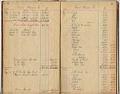
Frye's Opera House ledger, Seattle, 1887-1888
In 1883, Seattle businessman George F. Frye and his wife Louisa Denny Frye commissioned the building of a first-class opera house for the growing city. Located at the corner of First Avenue and Marion Streets, the elegant 1300-seat hall opened in 1884. Frye managed the house himself. It featured performances by national and international touring groups and provided a gathering…
ID Number:2005.38.4
Date:1887-1888