3246 results for: Seattle Post-Intelligencer
Photograph
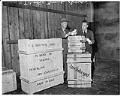
Customs officials working at Foreign Trade Zone, Seattle, March 1950
Foreign-Trade Zones (FTZs) are duty-free, quota-free, secured areas in a designated customs “port of entry,” considered outside U. S. Customs territory and exempt from customs tariffs. The FTZ program was established in 1934 to stimulate economic growth and development in the United States by lowering the cost of international trade.In this image M. A. Holderby, deputy collector of customs, left,…
ID Number:1986.5.3508.1
Date:1950
Photograph
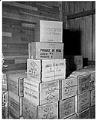
Imported goods at Foreign Trade Zone, Seattle, March 1950
Foreign-Trade Zones (FTZs) are duty-free, quota-free, secured areas in a designated customs “port of entry,” considered outside U. S. Customs territory and exempt from customs tariffs. The FTZ program was established in 1934 to stimulate economic growth and development in the United States by lowering the cost of international trade.In this image, stacked boxes of foreign goods at Seattle's FTZ…
ID Number:1986.5.3508.2
Date:1950
Photograph
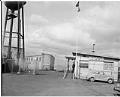
Customs officials standing outside Foreign Trade Zone, Seattle, May 1950
Foreign-Trade Zones (FTZs) are duty-free, quota-free, secured areas in a designated customs “port of entry,” considered outside U. S. Customs territory and exempt from customs tariffs. The FTZ program was established in 1934 to stimulate economic growth and development in the United States by lowering the cost of international trade.In this image Captain Ben Potter and Port Patrol Officer R.…
ID Number:1986.5.3510.1
Date:1950
Photograph
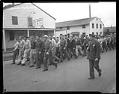
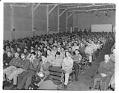
German prisoners at Fort Lawton, Seattle, 1945
In 1897, the city of Seattle donated land on Magnolia Bluff to the US government to build a new Army post as part of a defense system for Puget Sound; this was designated as Fort Lawton in 1900. During most of its active service, the fort served as an embarkation station where troops gathered before being sent to duty in…
ID Number:1986.5.3533.1
Date:1945
Photograph
German prisoners viewing atrocity newsreels at Fort Lawton, Seattle, 1945
In 1897, the city of Seattle donated land on Magnolia Bluff to the US government to build a new Army post as part of a defense system for Puget Sound; this was designated as Fort Lawton in 1900. During most of its active service, the fort served as an embarkation station where troops gathered before being sent to duty in…
ID Number:1986.5.3533.2
Date:1945
Photograph
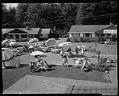
Fourth of July party on NW 120th Street showing neighbors meeting in the street seen from the roof of a nearby house, Seattle, 1961
Handwritten on sleeve: FOURTH OF JULY, Seattle, 1200 block NW 120th, 1961; Randy Clark. Date photograph was filed at the Seattle Post-Intelligencer (date of photograph and file date may differ by a month or more): July 5, 1961.
ID Number:1986.5.3569.2
Date:1961
Photograph
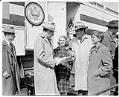
Girl being interviewed by Seattle Post-Intelligencer reporter in front of the Freedom Train at King Street Station, Seattle, April 1948
In 1947, the National Archives created a traveling museum called the Freedom Train, which stopped at 319 cities between 1947 and 1949. As part of an effort to underscore American freedoms in the post-war country, the display inside the rail cars included copies of the Magna Carta, the Mayflower Compact, a draft of the Declaration of Independence penned by Thomas…
ID Number:1986.5.3591.1
Date:1948
Photograph
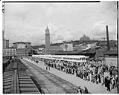
Crowds meeting Freedom Train at King Street Station, Seattle, 1948
In 1947, the National Archives created a traveling museum called the Freedom Train, which stopped at 319 cities between 1947 and 1949. As part of an effort to underscore American freedoms in the post-war country, the display inside the rail cars included copies of the Magna Carta, the Mayflower Compact, a draft of the Declaration of Independence penned by Thomas…
ID Number:1986.5.3595.1
Date:1948
Photograph
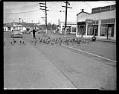
Geese crossing street near Green Lake, Seattle, 1945
Handwritten on sleeve: GEESE, Greenlake.Date photograph was filed at the Seattle Post-Intelligencer (date of photograph and file date may differ by a month or more): March 6, 1945.
ID Number:1986.5.3662.1
Date:1945
Photograph
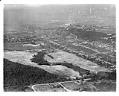
Aerial view of the West Seattle Golf Course, looking northeast, 1937
Henry Chandler Egan, famed architect and accomplished player, laid out the original design for West Seattle Golf Course in 1935. It opened in May of 1940, and continues to operate as one of Seattle's municiple golf courses. Written on sleeve: GOLF, Seattle, West Seattle Course, airview Date photograph was filed at the Seattle Post-Intelligencer (date of photograph and file date…
ID Number:1986.5.3780.1
Date:1937