3246 results for: Seattle Post-Intelligencer, The
Photograph
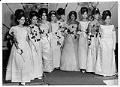
Filipino-American débutantes at Filipino Community Center, Seattle, January 14, 1967
The Filipino Community of Seattle, Inc. (FCS) was formed in 1935 as the Philippine Commonwealth Council of Seattle, and by 1965 had found a permanent home in the Rainier Valley neighborhood. As of 2019 the FCS continues to serve the Filipino American community through educational programs, senior services, dance and language classes, and advocacy. In this image, nine women chosen…
ID Number:2000.107.062.03.01
Date:1967
Photograph
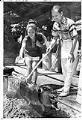
Barbara Bergano and Lope Malle roasting a pig at Seafair Fiesta Filipina, Seattle, August 7, 1971
Fiesta Filipina (also Philippine Festival) began as an annual event commemorating the anniversary of Philippine Independence. The event was held at Seward Park and became part of Seafair, Seattle's ten-week-long summer festival. In 1987 the event was moved to the Seattle Center, where by 1997 it had been renamed Pagdiriwang and become one of the five ethnic and cultural festivals…
ID Number:2000.107.062.03.02
Date:1971
Photograph
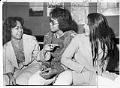
Students discussing Filipino American experience, Seattle, December 8, 1976
In this image Franklin High School students Lucita Villar, right, and Laarni Fernado, left, discuss with Eligio "Joey" Fernando IV, Laarni's brother and a Mercer Junior High School student, their experiences as the children of parents born in the Philippines. All three report their parents are alarmed watching their children becoming "too American." Caption information derived from captions written by…
ID Number:2000.107.062.03.03
Date:1976
Photograph
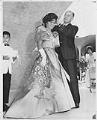
Phebe Porras receiving the Miss Filipina American tiara at Seattle World's Fair, July 7, 1962
In this image, Phebe Anne Porras, a Seattle woman who graduated from Immaculate High School, is crowned Miss Filipina American by John Cherberg, lieutenant governor of Washington State, during Philippines Week at the Seattle World's Fair (Century 21 Exposition). The coronation ceremonies took place on the International Mall and included an exhibition by the Princessa Drill Team of the Filipino…
ID Number:2000.107.062.03.04
Date:1962
Photograph
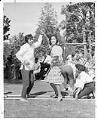
Virginia Ordona, Diana Floresca, and Theresa Ordona dancing at Philippine Festival, Seattle, July 31, 1960
Fiesta Filipina (also Philippine Festival) began as an annual event commemorating the anniversary of Philippine Independence. The event was held at Seward Park and became part of Seafair, Seattle's ten-week-long summer festival. In 1987 the event was moved to the Seattle Center, where by 1997 it had been renamed Pagdiriwang and become one of the five ethnic and cultural festivals…
ID Number:2000.107.062.03.05
Date:1960
Photograph
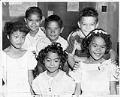
"Little Royalty" court children at Seafair Fiesta Filipina, Seattle, June 1958
Fiesta Filipina (also Philippine Festival) began as an annual event commemorating the anniversary of Philippine Independence. The event was held at Seward Park and became part of Seafair, Seattle's ten-week-long summer festival. In 1987 the event was moved to the Seattle Center, where by 1997 it had been renamed Pagdiriwang and become one of the five ethnic and cultural festivals…
ID Number:2000.107.062.03.06
Date:1958
Photograph
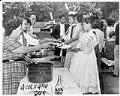
"Little Royalty" court receiving dinner at Seafair Fiesta Filipina, Seattle, August 2, 1964
Fiesta Filipina (also Philippine Festival) began as an annual event commemorating the anniversary of Philippine Independence. The event was held at Seward Park and became part of Seafair, Seattle's ten-week-long summer festival. In 1987 the event was moved to the Seattle Center, where by 1997 it had been renamed Pagdiriwang and become one of the five ethnic and cultural festivals…
ID Number:2000.107.062.03.07
Date:1964
Photograph
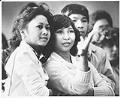
Spectators at Fiesta Filipina at Seattle Center, June 13, 1981
Fiesta Filipina (also Philippine Festival) began as an annual event commemorating the anniversary of Philippine Independence. The event was held at Seward Park and became part of Seafair, Seattle's ten-week-long summer festival. In 1987 the event was moved to the Seattle Center, where by 1997 it had been renamed Pagdiriwang and become one of the five ethnic and cultural festivals…
ID Number:2000.107.062.03.08
Date:1981
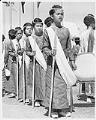
Photograph
Princessa Drill Team performing at Seattle Center, circa 1965
In 1957, Dorothy (Laigo) Cordova (b. 1932) and Frederic Pilar “Fred” Cordova (1931-2013), both second-generation Filipino Americans, founded Filipino Youth Activities of Seattle (FYA) to engage young people in activities that instilled cultural awareness, such as sports, dance, drama, language, and job placement. Two years later FYA began a new drill team they hoped would participate in local parades and…
ID Number:2000.107.062.03.10
Date:Circa 1965
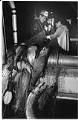
Photograph
Stanley Moses and Jeff Sheldon removing salmon from a gillnet on Lake Washington, July 16, 1984
After the Boldt decision of 1974, Indigenous tribes in western Washington were legally entitled to half the harvestable salmon run each year. Fishers from the Muckleshoot and Suquamish Tribes were allowed to fish from Lake Washington during specific four-hour windows, under the supervision of fishery officials representing both the state and the Tribes.Here, Stanley Moses (Muckleshoot) and his 12-year-old crew…
ID Number:2000.107.064.01.01
Date:1984